
Conflict in Mali: Army and Russian Forces Withdraw from Kidal After Rebel Assaults
In a significant development in the conflict in Mali, the Malian army alongside Russian mercenaries has withdrawn from the northern city of Kidal following intense rebel attacks.[1][2] This retreat marks a setback for the military government, as separatist forces now claim control of the strategic stronghold.[1]
Overview of the Withdrawal
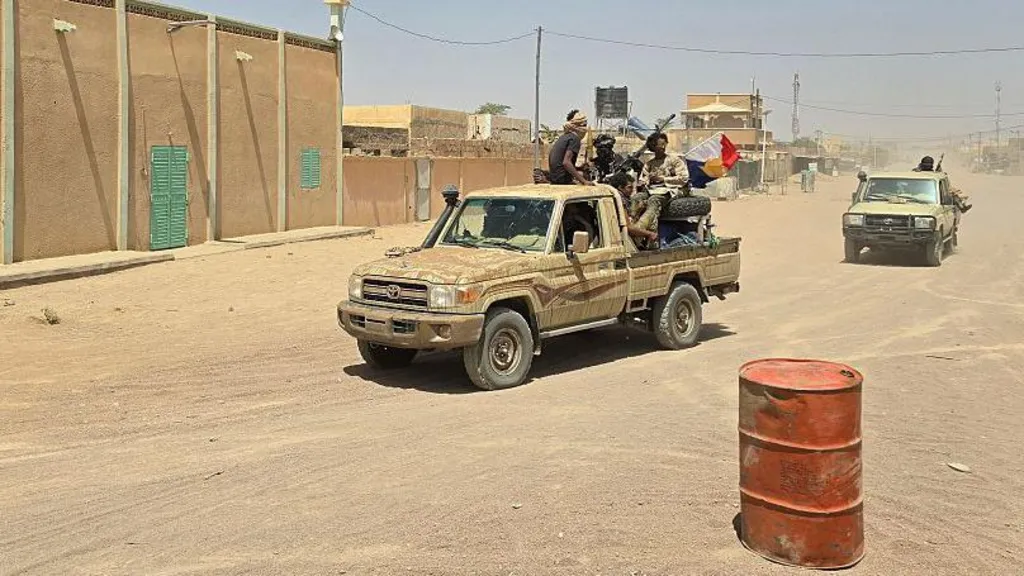
The withdrawal of Malian government troops and Russian Africa Corps mercenaries from Kidal represents a tactical repositioning amid escalating pressures in northern Mali.[1] This move came after two days of sustained and intense combat against separatist forces, prompting a strategic pullback from the city.[1] Russian forces, deployed to bolster the military junta's defenses, officially confirmed their departure from Kidal following the clashes.[2]
Kidal, a longstanding northern stronghold, has been a focal point of tensions due to its position in the Azawad region, where separatist groups have long sought autonomy.[1] The Azawad Liberation Front (FLA), a key separatist faction, has declared full administrative control over the city in the aftermath of the withdrawal.[1] Notably, the retreat was not a chaotic flight but was facilitated through formal negotiations between the Malian government-aligned forces and the opposing separatist factions.[1] This negotiated aspect underscores the complexities of the conflict in Mali, where military engagements sometimes intersect with diplomatic maneuvers to avoid total collapse of positions.
The involvement of Russian mercenaries, operating under the banner of the Africa Corps, highlights the external support that has propped up Mali's junta since their deployment to replace French forces.[2] Their confirmation of the pullout from Kidal signals a recalibration of operations, potentially conserving resources for other fronts amid broader nationwide pressures.[2] For the Malian army, the withdrawal exposes vulnerabilities in holding remote northern territories, where supply lines are stretched and rebel mobility offers tactical advantages.[1] This event disrupts the junta's narrative of consolidating control over the north, a region that has been contested since the 2012 Tuareg rebellion.[3]
Details of the Attacks
Coordinated attacks across Mali by separatist fighters and Islamist militants directly precipitated the withdrawal from Kidal and targeted army positions in multiple locations.[2][3][4] These operations unfolded over the weekend, striking not only in the north but also near the capital Bamako, marking one of the most synchronized offensives in recent years.[3] Jihadist groups, alongside Tuareg separatists, launched assaults on military installations, exploiting coordinated timing to overwhelm defenses.[3][4]
In the north, including Kidal, separatist rebels mounted intense pressure through sustained combat over two days, forcing the government forces into retreat.[1][2] The attacks were nationwide in scope, affecting several cities and creating simultaneous challenges for the junta's military.[4][5] Separatist fighters, including those from the FLA, capitalized on this coordination to seize key positions, with reports indicating that a major northern town—identified as Kidal—fell into rebel hands.[4]
The rebel assaults involved multiple groups, blending ethnic separatist agendas with jihadist ideologies, a recurring dynamic in Mali's fragmented insurgency landscape.[3] These fighters targeted junta positions with precision, demonstrating improved coordination that analysts link to evolving alliances among opposition forces.[3][4] Saturday's attacks on several cities set the stage for the weekend's escalation, catching government troops and their Russian allies off guard in dispersed locations.[5] This multi-pronged strategy not only pressured northern strongholds like Kidal but also tested the junta's ability to respond across the country's vast territory.[2]
Casualties and Government Impact
The coordinated attacks inflicted severe blows on Mali's military leadership, most notably the death of the defence minister during the clashes.[4][5] This high-profile casualty has plunged the junta into a deepened security crisis, compounding the loss of Kidal and exposing leadership vulnerabilities.[4] Reports confirm that the minister was killed amid the nationwide rebel offensives, a loss that reverberates through the military government's command structure.[4][5]
Russia's mercenaries, described in some accounts as fleeing an occupied city, further illustrate the retreat's disarray in certain areas, though official statements frame it as a confirmed pullout.[2][5] The junta, already navigating internal consolidations since the 2020 coup, now faces heightened instability as rebels gain ground in the north.[3] President Assimi Goïta's administration, which has relied on Russian support to counter jihadist threats, confronts a crisis that undermines its authority.[5]
The death of the defence minister disrupts operational continuity, potentially delaying responses to ongoing threats and forcing reshuffles in a time of acute pressure.[4] With a key northern city now reportedly captured by rebels, the government's territorial control is visibly eroded, intensifying the crisis for the military rulers.[4] This combination of casualties and territorial losses has analysts pointing to immediate repercussions for the junta's governance and military posture.[3]
Broader Context and Implications
These events fit into Mali's protracted security challenges, representing the most serious crisis since the 2012 Tuareg uprising that initially destabilized the country.[3] Coordinated attacks by jihadists and Tuareg separatists on positions near Bamako and in the north echo patterns of insurgency that have persisted despite multiple interventions.[3] The junta, in power since the 2020 coup, now confronts what analysts describe as a potential turning point, where opposition forces demonstrate unprecedented coordination.[3]
In the broader conflict in Mali, the loss of Kidal underscores the difficulties of maintaining control over the north, where separatist aspirations for an independent Azawad remain unresolved.[1][3] Negotiated withdrawals and rebel claims of administrative control suggest a shift toward de facto partitions, challenging the central government's writ.[1] The involvement of Russian forces, while bolstering the junta against jihadists, has not prevented setbacks against separatists, raising questions about the sustainability of this partnership.[2]
This crisis amplifies longstanding issues: ethnic separatist grievances intertwined with jihadist expansion, fueled by the Sahel's porous borders and weak state presence.[3][4] For the junta, the weekend's events signal vulnerabilities that could embolden further opposition, potentially altering the balance of power in the region.[3]
What to watch next: Observers will monitor whether the junta can stabilize its positions through reinforcements or negotiations, as rebels consolidate control in Kidal and analysts warn of a possible turning point for the military government.[1][3]