Conflict in Lebanon: Israel and Lebanon Extend Ceasefire for Three Weeks
Israel and Lebanon have extended their ceasefire for three weeks, as brokered by U.S. President Donald Trump, amid ongoing conflicts involving Iranian-backed forces in the conflict Lebanon region.[4] This development comes as tensions persist along the border, with recent military incidents underscoring the fragility of the truce. The extension follows a White House meeting where both sides agreed to the prolongation, reflecting broader diplomatic efforts to curb escalation in the Middle East.
Ceasefire Extension
The recent agreement between Israel and Lebanon to extend their ceasefire for an additional three weeks marks a significant diplomatic intervention in the protracted conflict Lebanon standoff.[4] Brokered by U.S. President Donald Trump during a meeting at the White House, the extension aims to provide a window for further negotiations amid ongoing hostilities. Trump emphasized his commitment to securing "the best deal" to resolve the wider conflict with Iran, positioning the ceasefire as part of a larger strategic push.[4]
This truce builds on previous efforts to de-escalate fighting between Israeli forces and Iranian-backed Hezbollah militants in Lebanon, which has been a focal point of regional instability.[4] The agreement's timing is critical, as it intervenes at a moment when military engagements continue to inflict casualties on both sides. By prolonging the ceasefire, mediators hope to prevent further incursions and create space for substantive talks on long-term security arrangements. The involvement of the U.S. president highlights the international dimension of the conflict, where external powers play a pivotal role in sustaining pauses in violence.[4]
Details from the White House discussions indicate that both Israel and Lebanon committed to upholding the extended terms, though sticking points related to Iranian influence remain unresolved.[4] This mediation effort underscores the challenges of balancing immediate ceasefires with addressing root causes, such as the activities of Hezbollah, designated as a terrorist group by multiple nations. The three-week duration provides a defined period for monitoring compliance, with potential for renewal if progress is made toward Trump's envisioned comprehensive deal.[4] Analysts note that such extensions are often tested by sporadic violations, making enforcement mechanisms essential for their success.
Recent Military Incidents
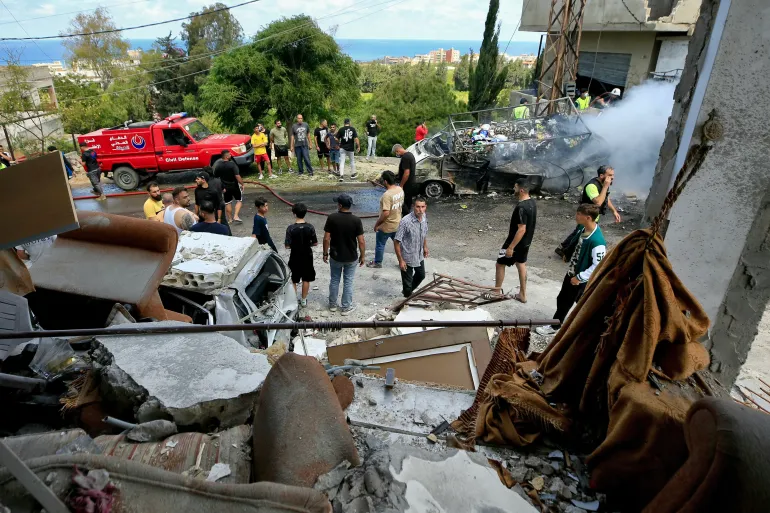
Recent military incidents in southern Lebanon have resulted in injuries to four Israeli soldiers, as reported by Army Radio.[3] This event highlights the persistent risks faced by troops in the area, even as diplomatic efforts intensify. The wounded soldiers were part of operations in a volatile border zone where clashes with Hezbollah forces frequently occur.[3]
Army data further reveals that at least 735 Israeli soldiers have been wounded since the Iran war began on February 28, providing context for the scale of engagements.[3] These figures encompass a range of incidents from direct combat to indirect fire, illustrating the sustained intensity of military activities. The wounding of the four soldiers in southern Lebanon serves as a stark reminder of the human cost involved, with medical evacuations and treatment straining resources on the Israeli side.[3]
Such incidents often stem from ambushes, rocket fire, or ground skirmishes, contributing to the cycle of retaliation that has defined the conflict.[3] The location in southern Lebanon, a stronghold for Hezbollah, amplifies the strategic importance of these events, as control over this territory influences broader security dynamics. Reports from Army Radio emphasize the need for heightened vigilance, even during ceasefire periods, as violations can quickly undermine fragile truces.[3]
Overview of the Ongoing Conflict
The conflict between Hezbollah and Israel, which started in October 2023 following the outbreak of the Israel-Hamas war and escalated significantly in September 2024, has entered a critical phase according to analysis available up to April 24, 2026.[2] This timeline traces the progression from initial cross-border exchanges to more intense confrontations, reshaping the security landscape in Lebanon and beyond.[2]
The synthesized summary from recent data underscores how the Hezbollah-Israel clashes have intensified, drawing in wider regional actors and complicating resolution efforts.[2] Beginning in the wake of the Israel-Hamas conflict, the hostilities expanded into a multi-front challenge, with September 2024 marking a turning point through heightened military operations.[2] By April 2026, the situation had reached a pivotal juncture, characterized by deepened entrenchment and increased stakes for all parties involved.[2]
Key insights from the overview highlight the interconnected nature of these events, where actions in Gaza reverberated northward, fueling Hezbollah's involvement.[2] The critical phase as of April 24, 2026, reflects a period of heightened uncertainty, with both sides demonstrating resolve amid diplomatic overtures. This status report, generated from accessible data, provides a foundation for understanding the conflict's evolution and the imperatives for de-escalation.[2]
Regional and Humanitarian Impacts
Escalation in the Middle East has triggered a humanitarian crisis affecting population mobility in regions including Lebanon, as detailed in mobility reports covering April 15-21, 2026.[5] The International Organization for Migration notes significant impacts across multiple countries such as Iran, Afghanistan, Iraq, Lebanon, and others, where hostilities have strained already fragile contexts.[5]
In Lebanon specifically, the crisis has led to disruptions in national social systems and host community safety networks, exacerbating vulnerabilities for displaced populations.[5] Population mobility has surged due to the intensification of conflicts, with people fleeing active combat zones in search of safety.[5] This movement places additional pressure on infrastructure and resources, complicating aid delivery and long-term stability efforts.[5]
The broader regional scope, encompassing Armenia, Azerbaijan, Pakistan, Syria, Türkiye, and Turkmenistan, illustrates how Middle East escalations ripple outward, creating interconnected humanitarian challenges.[5] In Lebanon's case, the ongoing clashes contribute to internal displacement and cross-border flows, underscoring the need for coordinated international responses.[5] These dynamics highlight the humanitarian toll, where mobility restrictions and safety concerns dominate daily life for affected communities.[5]
Key Casualties and Losses
Indonesia is mourning the death of Private First Class Rico Pramudia, an Indonesian peacekeeper serving with the United Nations Interim Force in Lebanon (UNIFIL).[1] This loss represents a poignant reminder of the dangers faced by international personnel monitoring the volatile border area.[1] Pramudia's passing has prompted national grief in Indonesia, with tributes focusing on his service in maintaining peace amid escalating tensions.[1]
Complementing this, the wounding of four Israeli soldiers in southern Lebanon adds to the tally of casualties, with Army Radio reporting the incident as part of ongoing operations.[3] Army data confirms at least 735 Israeli soldiers wounded since the Iran war commenced on February 28, a figure that encapsulates the cumulative impact of sustained combat.[3] These losses, both military and peacekeeping, illustrate the diverse personnel at risk in the conflict zone.[1][3]
The death of the Indonesian soldier occurred while serving with UNIFIL, whose mandate involves observing ceasefires and supporting Lebanese armed forces, often in high-risk environments.[1] Similarly, Israeli casualties reflect the intensity of engagements against Hezbollah, with injuries ranging from light to severe.[3] Together, these incidents emphasize the human dimension, where individual sacrifices underscore the broader stakes of the conflict.[1][3]
What to watch next: Monitor compliance with the three-week ceasefire extension brokered by President Trump, potential developments in U.S.-Iran negotiations for a "best deal," and updates on population mobility amid the ongoing humanitarian crisis in Lebanon and surrounding regions.[4][5]