Conflict in Lebanon: Ceasefire Extended for Three Weeks
Israel and Lebanon have extended their ceasefire for three weeks, as brokered by President Donald Trump, amid the ongoing conflict in Lebanon.[4] This development comes as tensions persist in the region, with recent casualties reported among peacekeepers and soldiers, highlighting the fragile nature of the truce in southern Lebanon.
Ceasefire Extension
The agreement to extend the ceasefire between Israel and Lebanon for an additional three weeks was formalized during a meeting at the White House, where President Donald Trump played a pivotal role as the broker.[4] This extension builds on previous efforts to halt hostilities between Israeli forces and Iranian-backed Hezbollah militants, which have been a focal point of the conflict in southern Lebanon.[4] Trump's involvement underscores his administration's approach to Middle East diplomacy, as he expressed readiness to pursue "the best deal" in negotiations related to Iran, suggesting a broader strategic linkage between the Lebanon ceasefire and wider regional dynamics involving Tehran.[4]
This truce extension is particularly significant given the history of intermittent fighting, providing a temporary respite that allows for potential de-escalation measures. The White House meeting represents a key diplomatic intervention, aiming to stabilize the border area where clashes have frequently occurred.[4] By committing to three more weeks, both parties signal a willingness to test the durability of the ceasefire amid ongoing pressures from Hezbollah activities and Israeli security operations.[4] The context of Trump's statement on waiting for the optimal agreement with Iran indicates that the ceasefire is not isolated but part of a larger framework addressing proxy conflicts fueled by Iranian support.[4]
Analysts note that such extensions are critical in preventing full-scale escalation, especially since fighting has been one of several sticking points in the region.[4] The brokered deal reflects coordinated international pressure, with the U.S. leveraging its influence to maintain the pause in hostilities. This period could facilitate humanitarian aid delivery and infrastructure repairs in affected areas, though the short-term nature of the extension—precisely three weeks—emphasizes the tentative balance.[4] Previous ceasefires have faced challenges from reported violations, making this renewal a test of commitment from both Israel and Lebanon.[4]
The extension also occurs against the backdrop of heightened regional tensions, where Hezbollah's role as an Iranian proxy has prolonged the standoff.[4] Trump's direct mediation highlights a return to high-level U.S. engagement in Lebanon-Israel relations, potentially paving the way for more permanent arrangements if the truce holds.[4] Details from the White House discussions remain limited, but the public announcement underscores the urgency of sustaining peace efforts.[4]
Recent Casualties and Incidents
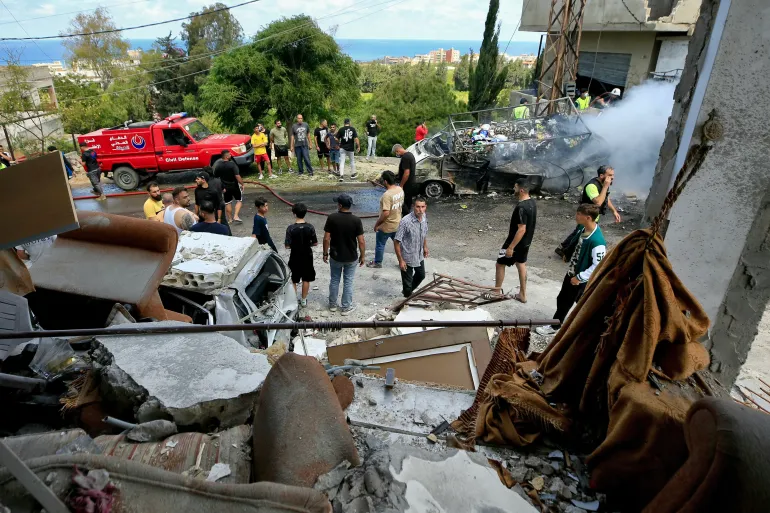
Recent incidents in southern Lebanon have resulted in significant casualties, including at least four Israeli soldiers wounded, as reported by Army Radio.[3] This event adds to the toll, with army data indicating that at least 735 Israeli soldiers have been wounded since the Iran war began on February 28.[3] These injuries highlight the persistent risks faced by troops operating in the area, even during periods of relative calm under ceasefire terms.
The wounding of the four soldiers underscores the volatility of the southern Lebanon border zone, where military engagements continue despite diplomatic efforts.[3] Such incidents often stem from exchanges of fire with Hezbollah militants, contributing to the cumulative strain on Israeli forces.[3] The figure of 735 wounded soldiers since the onset of the Iran war provides a stark metric of the conflict's intensity, reflecting sustained operations across multiple fronts.[3]
These developments occur amid a broader pattern of violence that challenges the ceasefire's effectiveness.[3] Military reports like those from Army Radio serve as primary indicators of ground-level realities, offering real-time insights into the human cost.[3] The injuries not only affect individual soldiers but also impact operational readiness and public sentiment within Israel.[3]
{IMAGE_2}
Death of Indonesian Peacekeeper
An Indonesian peacekeeper, Private First Class Rico Pramudia, serving with the United Nations Interim Force in Lebanon (UNIFIL), has died, prompting national mourning in Indonesia.[1] This loss represents another tragedy for international personnel deployed to monitor the fragile security situation along the Israel-Lebanon border.[1] UNIFIL's mandate involves observing ceasefire compliance and supporting Lebanese armed forces, making peacekeepers frequent targets in active conflict zones.[1]
The death of Pramudia adds to the sacrifices made by multinational contingents striving to maintain stability.[1] Indonesia's expression of grief highlights the global stakes in the conflict in Lebanon, with troop-contributing nations bearing the brunt of peacekeeping risks.[1] Such incidents often occur during patrols or in proximity to hostilities, emphasizing the dangers inherent in UNIFIL's operations.[1]
This casualty serves as a reminder of the international dimension of the Lebanon crisis, where neutral observers are caught in crossfire.[1] Indonesia's military, through the TNI (Indonesian National Armed Forces), has been actively involved in UNIFIL, contributing to efforts that aim to prevent wider escalation.[1] The mourning period reflects the personal and national impact, potentially influencing future commitments to such missions.[1]
Conflict Background
The conflict between Hezbollah and Israel, which began in October 2023 following the outbreak of the Israel-Hamas war, escalated significantly in September 2024.[2] This timeline marks a progression from initial cross-border exchanges to more intense confrontations, entering a critical phase as detailed in crisis situation analyses up to April 24, 2026.[2]
The origins trace back to the broader Israel-Hamas war, with Hezbollah's involvement amplifying tensions along the northern front.[2] By September 2024, the situation had intensified, leading to heightened military activities and displacement.[2] This escalation fits into a synthesized summary of available data, providing key insights into the protracted nature of the hostilities.[2]
Understanding this background is essential for grasping the ceasefire's context, as the conflict's duration—spanning over two years by 2026—has entrenched positions on both sides.[2] The period from October 2023 onward saw a steady buildup, with September 2024 as a turning point toward more severe engagements.[2] Reports generated from data up to April 2026 offer a comprehensive view, noting the conflict's evolution amid regional interconnections.[2]
The involvement of Hezbollah as a primary actor has sustained the fighting, with Israeli responses aimed at neutralizing threats.[2] This historical arc explains the recurring need for ceasefires, as underlying issues remain unresolved.[2]
Humanitarian and Regional Impact
The escalation of hostilities across the Middle East and beyond has triggered a humanitarian crisis spanning multiple regions in an already fragile context, with significant impact on population mobility.[5] Countries including Iran, Afghanistan, Armenia, Azerbaijan, Iraq, Lebanon, Pakistan, Syria, Türkiye, and Turkmenistan are affected, as outlined in mobility reports covering April 15-21, 2026.[5]
In Lebanon specifically, the conflict has exacerbated mobility challenges, forcing displacements and straining resources.[5] National social systems and host community safety networks are under pressure, highlighting the ripple effects of the violence.[5] The report from the International Organization for Migration emphasizes how escalation disrupts daily life, leading to increased movement across borders and within countries.[5]
This crisis manifests in overwhelmed infrastructure, reduced access to services, and heightened vulnerabilities for civilians.[5] The multi-regional scope—encompassing Lebanon within a larger arc—demonstrates interconnected instabilities, where events in one area amplify pressures elsewhere.[5] Population mobility data reveals patterns of flight from conflict zones, complicating humanitarian responses.[5]
The fragile context prior to escalation has been compounded, with social systems struggling to cope.[5] This impact extends to economic strains and long-term displacement risks, as tracked in weekly reports.[5]
{IMAGE_3}
International Involvement
President Donald Trump's brokering of the ceasefire extension at the White House exemplifies key international involvement in mitigating the conflict.[4] His role extends to signaling intentions for a comprehensive deal with Iran, linking U.S. diplomacy directly to the Israel-Lebanon dynamics.[4] This engagement positions the United States as a central mediator, leveraging presidential authority to enforce the three-week extension.[4]
UNIFIL's presence, including Indonesian contributions, represents multilateral efforts to monitor and stabilize the region.[1] The death of peacekeepers like Rico Pramudia illustrates the risks borne by international forces.[1] Broader analyses from organizations like the International Organization for Migration track global repercussions, underscoring collective responses to mobility crises.[5]
Trump's strategy of patience for "the best deal" with Iran suggests ongoing diplomatic maneuvering involving major powers.[4] These efforts aim to address root causes, such as Hezbollah's Iranian backing, through high-level negotiations.[4]
What to watch next: Monitor adherence to the three-week ceasefire extension brokered by Trump, potential progress on Iran talks, continued casualty reports from southern Lebanon, and evolving population mobility trends amid the humanitarian crisis.[4][3][5]