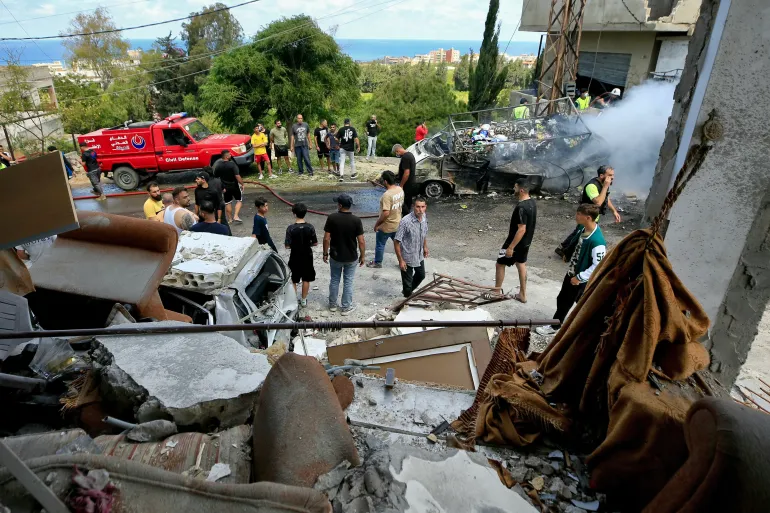
Strike in Lebanon: Israeli Warplanes Target Southern Region Despite Ceasefire
Israeli warplanes have struck southern Lebanon despite a ceasefire agreement, marking a notable strike Lebanon incident amid ongoing tensions in the region.[3] This development comes even as the ceasefire between Israel and Lebanon was recently extended, highlighting persistent challenges to de-escalation efforts.[3] Reports also indicate Hezbollah's involvement in drone operations targeting Israeli troops, alongside the downing of an Israeli drone, while satellite imagery underscores extensive destruction comparable to patterns seen in Gaza.[1][2] Additionally, a UN peacekeeper from Indonesia has succumbed to wounds from an attack on a UNIFIL base, raising concerns over the safety of international forces.[4][5]
Overview of Recent Strikes and Ceasefire Violations
The latest military actions in southern Lebanon represent a clear breach of the fragile ceasefire framework established between Israel and Lebanon. According to reports, Israeli warplanes conducted strikes in southern Lebanon, an action that directly contravenes the terms of the ceasefire agreement.[3] This strike Lebanon event unfolded despite recent diplomatic efforts to bolster the truce, adding to a pattern of violations that undermine regional stability.
The ceasefire itself was extended by three weeks following ambassador-level talks at the White House, an announcement attributed to former U.S. President Donald Trump.[3] These talks were intended to solidify the agreement and prevent further escalations, yet the Israeli airstrikes demonstrate the difficulties in enforcing such pacts amid mutual accusations of infractions. The Anadolu Agency detailed how the attack occurred explicitly "despite ceasefire," emphasizing the timing in relation to the extension.[3] This violation not only tests the resolve of the involved parties but also complicates international mediation efforts.
In the broader context of these strikes, the actions reflect heightened military postures on both sides. The Israeli response appears linked to prior provocations, though specifics on the strike's targets remain tied to the reported aerial operations in southern Lebanon.[3] Such incidents recall previous exchanges, where tit-for-tat operations have prolonged conflict cycles. The extension of the ceasefire by three weeks was a critical step, brokered at a high level, yet its immediate testing underscores the volatility of the border area.[3] Observers note that ambassador-level engagements at the White House signal U.S. involvement in pushing for restraint, but on-ground realities continue to challenge diplomatic gains.[3]
This overview of recent strikes reveals a ceasefire under strain from the outset of its extension. The Israeli warplanes' engagement in southern Lebanon serves as a stark reminder of the enforcement gaps, potentially inviting retaliatory measures and further destabilization.[3] Detailed reporting from Anadolu highlights the strike's occurrence "despite Trump announcement," framing it as a direct affront to the newly prolonged truce.[3] As these violations accumulate, they erode confidence in the agreement's durability, prompting calls for stricter monitoring mechanisms.
Hezbollah's Military Engagements
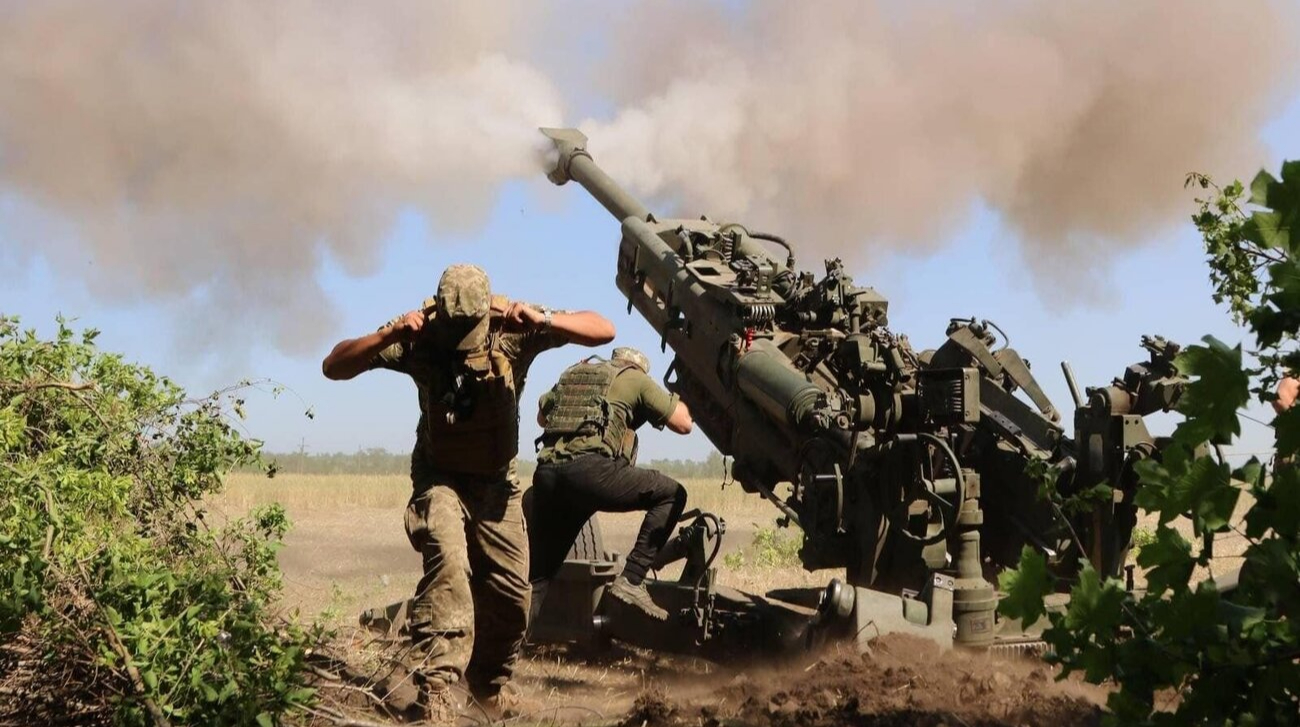
Hezbollah has been actively engaged in military operations against Israeli forces in southern Lebanon, utilizing advanced drone technology to assert its presence.[2] The group announced that it targeted Israeli troops with a drone in southern Lebanon, a move that escalates direct confrontations along the border.[2] This operation was paired with another significant action: Hezbollah claimed to have shot down an Israeli drone in the skies over the Househ area near Tyre using a surface-to-air missile.[2]
These engagements demonstrate Hezbollah's capability in asymmetric warfare, particularly through unmanned aerial vehicles. The targeting of Israeli troops with a drone indicates precise strike capabilities aimed at military personnel, potentially disrupting Israeli positions in the region.[2] Anadolu Agency reported the details succinctly: "Hezbollah says it targeted Israeli troops with drone in southern Lebanon," underscoring the group's public acknowledgment of the attack.[2] The downing of the Israeli drone further highlights Hezbollah's air defense prowess, with the surface-to-air missile deployment neutralizing an aerial threat over a specific locale near Tyre.[2]
The Househ area, located near the coastal city of Tyre, has emerged as a focal point for such skirmishes, given its proximity to the border and strategic importance.[2] Hezbollah's Lebanese group statement also emphasized the shot-down drone, framing it as a successful interception that bolsters their defensive posture.[2] These actions occur within the context of the ceasefire, suggesting that Hezbollah perceives certain Israeli activities as provocations warranting response.[2]
Hezbollah's military engagements reflect a sustained effort to counter Israeli incursions, with drone usage marking a tactical evolution in their arsenal.[2] The dual operations—targeting troops and downing a drone—illustrate coordinated responses that challenge Israeli air superiority in southern Lebanon.[2] Reports from Anadolu provide the core details, noting the use of a surface-to-air missile in the skies over Househ, which adds technical specificity to the incident.[2] Such engagements not only inflict potential losses but also serve propaganda purposes, reinforcing Hezbollah's narrative of resistance.[2]
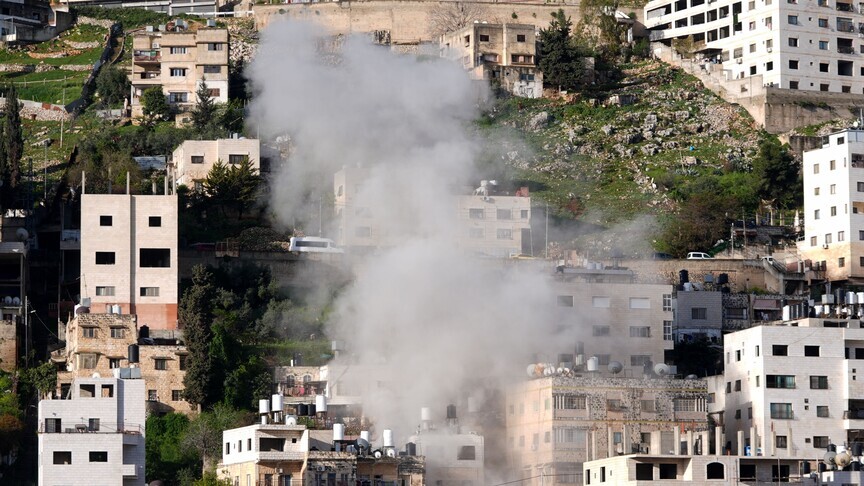
Israeli warplanes strike southern Lebanon despite ceasefire. — Source: anadolu
Ceasefire Extension and Diplomatic Context
The ceasefire between Israel and Lebanon underwent a notable extension, prolonging the truce by three weeks following intensive ambassador-level talks at the White House.[3] This development, announced in connection with former President Trump's statements, aimed to provide additional time for de-escalation and confidence-building measures.[3] The Anadolu Agency coverage explicitly links the Israeli strikes to this backdrop, stating that the warplanes struck "despite Trump announcement that ceasefire between Israel and Lebanon extended by 3 weeks."[3]
Diplomatic maneuvers at the ambassador level underscore international interest in stabilizing the Israel-Lebanon border. The White House talks represent a venue for direct negotiations, focusing on extending the ceasefire to avert wider conflict.[3] However, the subsequent strikes illustrate the limitations of such diplomacy when military actions proceed unabated.[3] This extension was positioned as a pathway to longer-term peace, yet early violations cast doubt on its efficacy.[3]
The three-week prolongation was a direct outcome of these high-stakes discussions, highlighting U.S. mediation in the process.[3] Trump's involvement in the announcement adds a layer of political weight, signaling potential leverage from Washington.[3] Despite this, the reality of Israeli warplanes operating in southern Lebanon post-extension reveals enforcement challenges.[3] Anadolu's reporting frames the strike as occurring "despite ceasefire," directly tying it to the diplomatic timeline.[3]
This diplomatic context provides essential background to the ongoing strike Lebanon dynamics, where agreements are tested almost immediately.[3] The ambassador-level engagement at the White House was crucial, yet the strikes suggest that ground-level tensions override negotiated pauses.[3]
Impact on UN Peacekeeping Operations
UN peacekeeping operations in Lebanon have suffered a tragic blow with the death of an Indonesian peacekeeper, resulting from wounds sustained in an attack on a UNIFIL base.[4][5] The United Nations Interim Force in Lebanon (UNIFIL) confirmed the casualty, noting the peacekeeper died after suffering severe injuries.[4] This incident underscores the perilous environment faced by international forces monitoring the ceasefire and border activities.[4][5]
France24 reported that the Indonesian peacekeeper "died from wounds sustained in a March 29 attack on his base," specifying the date of the assault.[5] UNIFIL's statement highlights the severity of the injuries, which proved fatal despite medical efforts.[4] Antara News detailed the official announcement: "UN peacekeeper from Indonesia dies after Lebanon attack: UNIFIL," emphasizing the connection to the base attack.[4]
The death of this peacekeeper occurs amid broader calls for enhanced stability efforts in the Middle East. French President Emmanuel Macron, arriving at an EU summit in Cyprus, urged the European Union to "intensify its efforts" to restore stability, linking it to the regional context including Lebanon.[5] France24's Beirut correspondent, Renée Davis, provided on-the-ground reporting on the latest developments surrounding this loss.[5]
UNIFIL's role in southern Lebanon involves observing ceasefire compliance and protecting civilians, making attacks on their bases particularly alarming.[4][5] The Indonesian national's death from severe wounds illustrates the direct risks to personnel.[4] This casualty adds to the toll on peacekeeping missions, prompting reflections on force protection amid ongoing hostilities.[5]

Israeli warplanes strike southern Lebanon despite extended ceasefire. — Source: middleeasteye
Details of the UN Peacekeeper Incident
Further examination of the UN peacekeeper incident reveals critical timelines and responses. The attack on the UNIFIL base took place on March 29, with the Indonesian peacekeeper succumbing to his wounds on a subsequent Friday, as per UN mission statements.[5] Antara News corroborated the details, stating the peacekeeper "died after suffering severe..." injuries directly tied to the assault.[4]
UNIFIL's public disclosure emphasized the peacekeeper's Indonesian origin and the base location in Lebanon, framing it as a loss in the line of duty.[4] France24 provided additional context, noting the death occurred from wounds sustained in the specific March 29 incident.[5] This precision in reporting aids in understanding the sequence: attack, severe wounding, and eventual death.[4][5]
The incident's reporting by multiple outlets, including France24's coverage from Beirut, highlights international attention to UNIFIL vulnerabilities.[5] Macron's related comments at the EU summit, while not directly on the death, tie into broader stability pushes affected by such events.[5]
Extent of Destruction in Lebanon
Satellite images have unveiled the extensive scale of Israeli destruction in Lebanon, drawing parallels to tactics observed in Gaza, often referred to as the "Gaza playbook."[1] CNN's analysis, titled "The Gaza playbook: Satellite images reveal scale of Israeli destruction in Lebanon," repeatedly underscores this comparative pattern.[1] The imagery provides visual evidence of widespread damage, mirroring destruction levels and methods previously documented in Gaza.[1]
This revelation through satellite technology offers an objective measure of the conflict's toll on Lebanese infrastructure and landscapes.[1] The "Gaza playbook" descriptor implies a strategic similarity in operational approaches, with satellite images capturing the breadth of impact in southern Lebanon.[1] CNN's focus on these visuals emphasizes their role in quantifying devastation that ground reports might understate.[1]
The scale revealed—comparable to Gaza—highlights systematic destruction patterns, as evidenced by the high-resolution satellite data.[1] Repeated emphasis in the reporting on "Satellite images reveal scale" stresses the evidentiary power of this imagery.[1] In the context of ceasefire violations and strikes, such destruction amplifies the human and material costs.[1]
These images serve as a critical tool for assessing long-term recovery needs, with the Gaza-like patterns informing expectations for rebuilding.[1]
What to watch next
Amid ceasefire violations like the recent Israeli strikes and Hezbollah drone operations, monitoring compliance with the three-week extension remains crucial, as does protection for UNIFIL forces following the Indonesian peacekeeper's death.[3][2][4][5] Further satellite assessments may clarify ongoing destruction patterns.[1]