Conflict in Lebanon: Ceasefire Extended for Three More Weeks
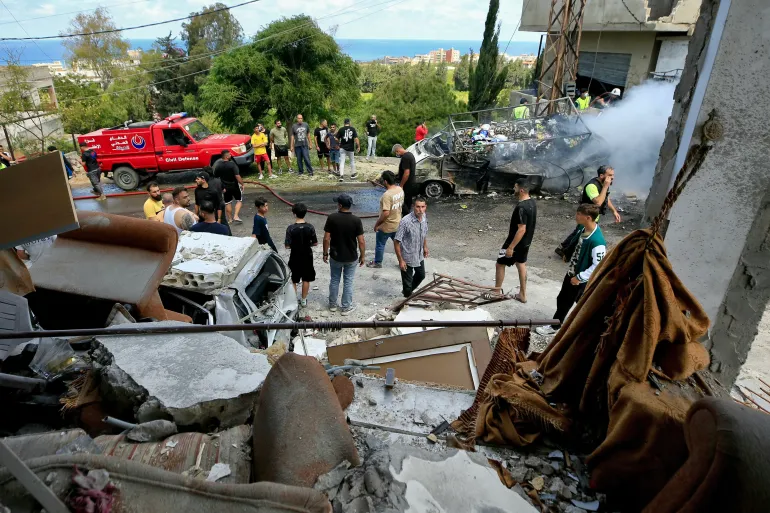
In the ongoing conflict in Lebanon, a ceasefire has been extended for another three weeks amid ongoing tensions and a fragile security environment.[3][4] This development comes as population movements remain tentative and uneven, with Israeli military warnings in place and humanitarian challenges persisting for displaced communities.[2][3]
Ceasefire Extension
The ceasefire between Israel and Lebanon has been formally extended for a further three weeks, marking a continuation of the truce amid persistent regional instability.[3][4] According to updates from the UN Office for the Coordination of Humanitarian Affairs, this extension occurs even as movements of people in affected areas show hesitation and inconsistency, reflecting the underlying uncertainties in the security landscape.[3] Israeli Prime Minister Benjamin Netanyahu has framed the extension positively, stating that it aligns with his vision for a "historic peace" in the region. He has credited diplomatic pressure from the United States on Iran as a key factor in achieving this pause in hostilities.[4]
However, the extension has not quelled all doubts about its durability. Netanyahu has directly accused Hezbollah of "sabotaging" the peace push, pointing to the group's actions as undermining broader efforts toward stability.[4] Hezbollah, in response, has dismissed the ceasefire as "meaningless," citing continued Israeli military operations and retaliatory clashes that have kept tensions high.[4] This exchange highlights the ceasefire's fragile nature, where a temporary halt in major fighting coexists with sporadic incidents and mutual recriminations. The three-week timeframe suggests an intent to test the viability of de-escalation, but prospects for a lasting agreement remain uncertain against the backdrop of wider regional tensions.[4]
The extension builds on prior agreements, yet it underscores the challenges of implementation. With hostilities having escalated previously, the current pause aims to create space for negotiations, though Netanyahu's emphasis on external pressures like those from the US indicates that international dynamics play a pivotal role.[4] Meanwhile, the uneven population movements noted in humanitarian reports signal that civilians are not yet confident enough to resume normal activities, tying directly into the ceasefire's real-world impact.[3] This period will be critical in determining whether the truce can evolve into something more substantive or devolve amid accusations and low-level confrontations.[3][4]
Security Warnings
The Israeli army has issued stark warnings to civilians against returning to villages in southern Lebanon, despite the ceasefire extension, emphasizing restricted zones to maintain security.[2] A military spokesman explicitly stated that it is "not permitted to approach the area of the Litani River, the Salhani Valley, and the Saluki," areas that remain under heightened alert due to potential risks.[2] These directives come in the context of the ongoing conflict in Lebanon, where even a formal truce has not eliminated immediate dangers for residents attempting to go home.[2]
Such warnings reflect the military's assessment that southern Lebanon, particularly border-adjacent regions, continues to pose threats linked to lingering militant activities or unexploded ordnance from prior escalations. The Litani River area, historically significant in military operations due to its strategic position, along with the Salhani Valley and Saluki, are flagged as no-go zones to prevent civilian casualties and inadvertent escalations.[2] This policy persists even as the ceasefire holds on a broader scale, illustrating how localized security concerns can override general de-escalation efforts.
The implications for affected communities are profound, as these restrictions limit access to homes, farmlands, and essential infrastructure in southern Lebanon. Civilians heeding the advice face prolonged displacement, exacerbating vulnerabilities in an already strained environment.[2] The Israeli army's communication underscores a cautious approach, prioritizing force protection and stability over immediate repatriation, which aligns with the ceasefire's tentative status.[2] As the three-week extension unfolds, adherence to these boundaries will be a key test of compliance from all parties involved.
Humanitarian Situation
The humanitarian toll of the conflict in Lebanon remains acute, with a slight but notable 3 percent increase in the number of displaced people in collective shelters, reaching 121,225 individuals as of 23 April 2026.[3] This figure, reported in the UN Office for the Coordination of Humanitarian Affairs' Flash Update #20, captures the snapshot of escalation's aftermath, where even a ceasefire extension has not reversed displacement trends.[3]
The protection environment is described as highly fragile, driven by multiple intersecting factors including widespread insecurity, overcrowded shelter conditions, and limited access to basic services.[3] Collective shelters, often makeshift and under-resourced, house a growing population tentative about returning home due to the uneven security situation.[3] This 3 percent uptick, though modest, signals ongoing pressures that prevent stabilization, with families caught between the risks of staying put and the uncertainties of movement.
Overcrowding in shelters amplifies health and sanitation risks, while insecurity—tied to the fragile truce—further complicates aid delivery and protection efforts.[3] Limited access to essentials like food, water, and medical care compounds these issues, creating a cycle where displacement feeds into vulnerability.[3] The ceasefire's extension offers a potential reprieve, but tentative population movements indicate that trust in its enforcement is low, keeping numbers elevated.[3] Humanitarian actors continue to monitor these dynamics closely, as the next three weeks could determine whether shelter populations stabilize or continue to rise amid any breaches.
International Involvement
Indonesia has stepped into the international spotlight by preparing to repatriate the remains of one of its soldiers killed in the Lebanon conflict, highlighting the global human cost of the hostilities.[1] The Indonesian government is organizing the return of Private First Class Rico Pramudia, identified as the fourth member of the Indonesian National Armed Forces (TNI) to lose his life in the conflict.[1]
This repatriation effort underscores Indonesia's direct stake in the regional turmoil, likely through peacekeeping or support roles that exposed personnel to dangers.[1] The designation of Pramudia as the fourth such casualty points to a pattern of losses, prompting national mourning and logistical coordination for a dignified homecoming.[1] Such actions not only honor the fallen but also draw attention to the broader involvement of non-regional powers in Lebanon's security landscape.
The move by Indonesia reflects how the conflict's repercussions extend far beyond the immediate combatants, affecting troop-contributing nations and their citizens.[1] Repatriation processes involve diplomatic, military, and ceremonial elements, signaling solidarity with international efforts while grieving personal sacrifices.[1] In the context of the ceasefire extension, this development serves as a somber reminder of stakes involved, potentially influencing Indonesia's future engagements in the area.
What to watch next: Monitor population movements and shelter occupancy for signs of stabilization during the three-week extension, alongside any escalations from accusations between Netanyahu and Hezbollah that could test the truce's limits.[3][4]