Russian Strike on Ukraine Kills Seven in Major Attack
A major Russian attack on Ukraine has killed at least seven people and injured dozens across several regions, with Dnipro being the hardest hit.[2][3]
Overview of the Russian Attack
The Russian military launched a significant overnight assault on Ukraine, marking one of the largest barrages in recent months. This strike Ukraine involved a coordinated use of drones and missiles that struck multiple areas, with Dnipro in southeastern Ukraine emerging as a primary target.[2] Reports indicate the attack unfolded across at least eight regions, demonstrating the broad scope of the operation.[4] In Dnipro, the impact was particularly severe, as a residential structure suffered catastrophic damage, underscoring the assault's focus on civilian areas.[2][3] The operation's scale, involving hundreds of projectiles, reflects a pattern of intensified Russian aerial campaigns aimed at overwhelming Ukrainian defenses.[2][4] Eyewitness accounts and official statements highlight the sudden nature of the barrage, which began in the early hours and persisted, forcing residents into shelters and disrupting daily life across the affected zones.[2] This event fits into the ongoing conflict dynamics, where such large-scale attacks test Ukraine's air defense capabilities and infrastructure resilience.[4]
Casualties and Injuries
Casualty figures from the Russian strike Ukraine varied across reports, reflecting the challenges in real-time accounting during active rescue efforts. One outlet reported seven deaths and dozens wounded, capturing the attack's heavy toll.[2][3] Another assessment noted six fatalities across Ukraine from the strikes.[1] Additional sources cited five deaths and around 30 injuries, while others mentioned four killed alongside numerous wounded.[4][5] These discrepancies arise from ongoing operations at strike sites, where initial counts evolve as debris is cleared and medical teams provide updates.[2][3] The injuries, described as dozens in multiple accounts, likely include shrapnel wounds, blast trauma, and those requiring hospitalization from collapsing structures.[2][4][5] In the hardest-hit areas, emergency services responded swiftly, but the human cost was evident in the reports of families affected and communities mourning losses.[3] The convergence of these figures—at least four to seven dead and dozens injured—paints a picture of substantial loss, with officials urging caution on final tallies until all sites are secured.[1][2][5] This variation is common in conflict reporting, where preliminary data from local authorities is cross-verified over time.[4]
Impact in Dnipro
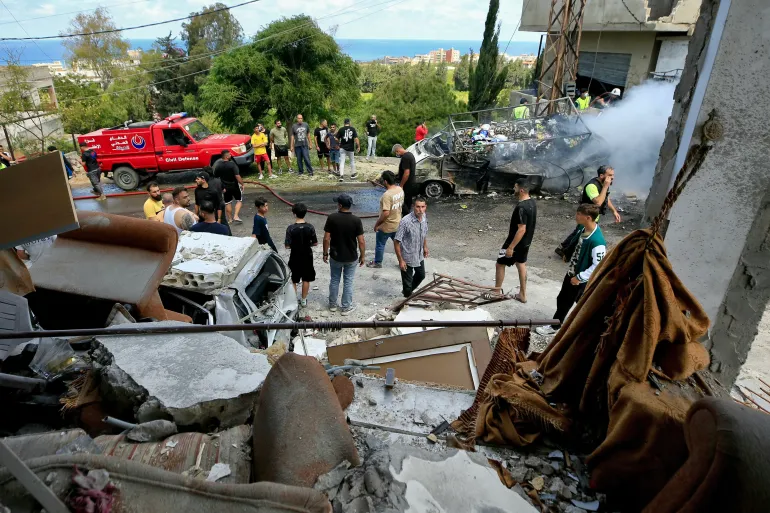
Dnipro bore the brunt of the assault, with a direct strike Ukraine causing a large portion of an apartment building to collapse, trapping residents and complicating rescue operations.[2][3] Officials confirmed four deaths specifically from this residential building hit, highlighting the precision—or lack thereof—in targeting that endangered civilians.[3] The structural failure led to widespread debris, with images and descriptions showing exposed interiors and mangled facades.[2] Beyond the immediate fatalities, the strike disrupted essential services in the city, as emergency crews worked amid potential secondary risks like fires or further instability.[4] Dnipro's role as a key southeastern hub amplified the incident's significance, affecting not just housing but also the local economy and morale.[2] Reports emphasized the overnight timing, which caught many in their homes, exacerbating the casualty risk.[3] Local authorities coordinated with national defenses to mitigate further damage, but the collapse served as a stark reminder of vulnerabilities in urban centers.[2][4] Recovery efforts focused on searching for survivors, with the event drawing international attention to Ukraine's civilian endurance.[3]
Scale of the Assault
The attack's magnitude was underscored by the sheer volume of weaponry deployed, with Russia launching over 660 drones and missiles in a massive barrage.[2] Another detailed count specified more than 600 drones alongside 47 missiles, illustrating the multifaceted nature of the assault combining decoys, loitering munitions, and high-explosive warheads.[4] This represents one of the most extensive single-night operations, designed to saturate air defenses and strike deep into Ukrainian territory.[2] The inclusion of both drones—often used for reconnaissance and attrition—and missiles points to a resource-intensive effort, likely involving multiple launch platforms from Russian territory or occupied areas.[4] Ukrainian forces intercepted a portion, but the volume overwhelmed some sectors, allowing impacts in targeted regions.[2] Such tactics have been observed in prior escalations, where quantity compensates for quality in penetrating layered defenses.[4] The overnight execution maximized surprise, with the barrage hitting in waves to prolong pressure on responders.[2]
Broader Regional Effects
While Dnipro suffered the most visible devastation, the assault rippled across at least eight Ukrainian regions, affecting a wide swath of the country.[2][4] Strikes were reported in various locales, contributing to the overall casualty count and infrastructure strain.[1][2] Regions beyond the southeast faced drone and missile interceptions or direct hits, though specifics on damage outside Dnipro remained less detailed in initial reports.[4] This dispersed targeting strategy aimed to dilute defensive resources, forcing Ukraine to spread its anti-air systems thin.[2] Casualties accumulated nationwide, with deaths reported across Ukraine rather than confined to one area.[1] The eight-region scope, as confirmed by authorities, included both frontline and rear areas, signaling an intent to impose psychological and logistical burdens.[4] Power outages, transport disruptions, and shelter activations were likely outcomes, mirroring patterns from similar barrages.[2] The multi-regional nature amplified the national impact, drawing a unified response from Ukrainian leadership.[4]
What to watch next: Officials across Ukraine continue to update casualty figures and damage assessments as rescue teams clear sites and investigate the strikes, with varying reports expected to converge on precise tolls.[1][2][3][4][5]