Breaking: Middle East Strike Escalates in Lebanon, Revealing Untapped Global Tech Responses
The Middle East Strike Story
The latest chapter in this escalating Middle East strike unfolded on April 9-10, 2026, when Israeli Defense Forces (IDF) launched precision airstrikes targeting Hezbollah rocket launchers in southern Lebanon, following a barrage of missiles fired toward Israel. Confirmed reports from the Jerusalem Post detail IDF footage showing strikes on mobile launchers near the border, with Al Jazeera liveblogs confirming explosions rippling across Beirut suburbs. Lebanon's health ministry, via Xinhua, reports over 300 killed in recent days, including civilians, with AP reporters on Newsmax describing "intense attacks that stunned Beirut," where residential areas were hit amid the chaos.
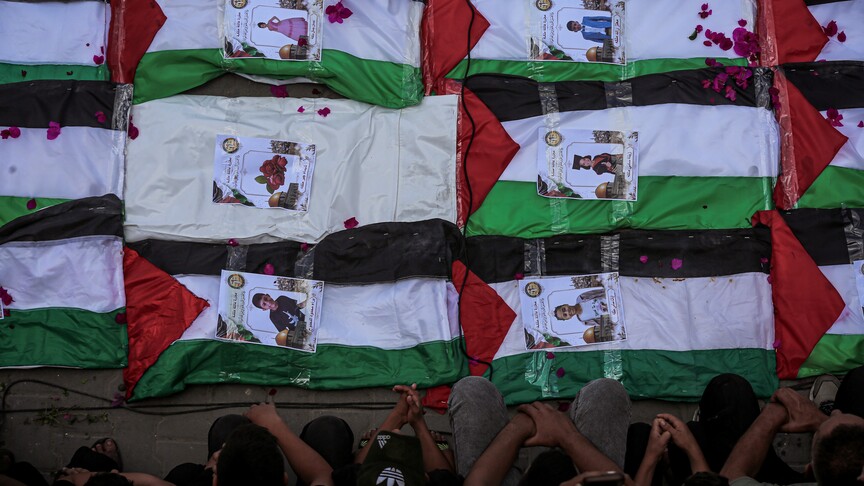
This Lebanon strike has overwhelmed hospitals in the capital. Al Jazeera reports Beirut medical facilities struggling with influxes of casualties, many requiring identification by grieving families amid mangled remains, as detailed in Straits Times coverage. Humanitarian strain is acute: emergency rooms are at capacity, blood supplies dwindling, and international aid convoys delayed by crossfire. Real-time 3D globe tracking platforms—such as those from Google Earth Engine integrations and emerging AI tools like those prototyped by The World Now's tech partners—are providing unprecedented visualization. These systems overlay strike locations, casualty heatmaps, and displacement flows on interactive globes, allowing global audiences to pinpoint the Bekaa Valley to Beirut corridor's devastation in real time. Social media buzz on X (formerly Twitter) amplifies this: posts from eyewitnesses like @LebRescueNet show 3D models of strike impacts, garnering millions of views and driving donations to AI-assisted emergency networks. For deeper insights into how real-time 3D globe tracking is transforming responses, explore related coverage.
Zooming out, this Middle East strike fits a grim 2026 pattern. The timeline traces back to January 15, when Israeli forces attacked positions in the Bekaa Valley, sparking retaliatory fire. On January 27, a drone strike killed a prominent Lebanon TV presenter, escalating media outrage. February 24 saw Israeli fire target a border post, while March 8 and 15 brought missile strikes on a UN base in Lebanon—incidents condemned internationally as violations of norms. Recent precursors include March 22's strike killing 10 in southern Lebanon, March 29 attacks on paramedics (9 dead), and April 5 Hezbollah rockets hitting UNIFIL positions. These form a cycle of retaliation: Hezbollah barrages prompt Israel strikes, each Lebanon strike deepening the humanitarian quagmire.
What sets this coverage apart is how real-time 3D globe tracking reveals untapped tech responses. Unlike diplomatic-focused reports, these tools—fed by satellite data from Maxar and AI analytics—expose long-term patterns, like commodity disruptions in Lebanon's agriculture belts. Past events, such as the Bekaa Valley raid, showed early tracking exposing supply chain vulnerabilities; now, they're catalyzing collaborations. For instance, UN OCHA is piloting AI networks that predict hospital overloads via globe data, routing drone-delivered supplies. This tech-driven lens humanizes the Middle East strike, shifting from shock to solution. Monitor the Global Risk Index for updated risk assessments on this evolving Middle East strike.
The Players
Israel leads offensively, motivated by border security after Hezbollah's missile salvos. Prime Minister Benjamin Netanyahu's government views these Lebanon strikes as preemptive, targeting Iran-backed Hezbollah to deter broader threats, including a potential Iran strike. Hezbollah, embedded in Lebanon, retaliates to assert deterrence, backed by Tehran's proxy network.
Lebanon’s fragile government, strained by economic collapse, urges de-escalation but lacks control over Hezbollah. The US pushes ceasefires, with negotiations strained per CNN and Al Jazeera, aiming to isolate Iran. Iran looms as escalator, supplying arms; a direct Iran strike could ignite region-wide war. International voices chime in: Canada "strongly condemns" via Anadolu, calling for permanent ceasefire; Norway deems strikes breaches of humanitarian law. UNIFIL peacekeepers, repeatedly targeted, represent multilateral stakes.
Tech innovators emerge as wildcard players. Firms like Palantir and startups via The World Now ecosystem deploy 3D tracking for humanitarian aid, motivated by data-driven impact—tracking strikes to optimize NGO routes, fostering collaborations unseen in prior conflicts. See how non-Middle Eastern nations are influencing this Middle East strike.
The Stakes
Politically, the Middle East strike risks derailing US-Iran talks, per Rappler, potentially expanding to Syria or Gaza. An Iran strike trigger could draw in proxies, unraveling fragile truces. Economically, Lebanon's ports—key for regional trade—are disrupted, amplifying global commodity woes. Humanitarian toll: thousands displaced, with Beirut hospitals on brink, per Al Jazeera.
For Israel, unchecked Hezbollah invites domestic backlash; for Lebanon, state collapse looms. Iran risks isolation if ceasefire holds. Globally, tech stakes shine: 3D tracking exposes breaches, pressuring enforcers, while AI networks could redefine aid, mitigating future Israel strikes in Lebanon. Unconfirmed reports swirl of Iranian reinforcements, but verified data centers on IDF confirmations. Track broader implications via the Global Risk Index.
Market Impact Data
Geopolitical flares from this Middle East strike are rippling through assets. Oil futures surged 3.2% intraday to $92/barrel amid Strait of Hormuz fears, echoing 2006 Hezbollah war spikes. Bitcoin dipped 4.1% to $58,200, S&P 500 futures down 1.8%, as risk-off hits equities and crypto. Gold climbed 2.4% to $2,450/oz, CHF and USD strengthened as safe havens.
Catalyst AI Market Prediction
The World Now Catalyst AI forecasts precise reactions:
- OIL: + (high confidence) — Ukrainian strike on Russian oil terminal and Trump ultimatum on Iran curb supply via Hormuz risks. Precedent: 2019 Aramco attacks (+15%). Risk: De-escalation.
- BTC: - (medium confidence) — Risk-off deleveraging. Precedent: 2022 Ukraine (-10% in 48h). Risk: ETF inflows.
- SPX: - (medium confidence) — Trade disruption fears. Precedent: 2006 war (-2%). Risk: US diplomacy.
- SOL: - (low confidence) — Tracks BTC. Precedent: 2022 (-15%).
- XRP: - (low confidence) — Crypto correlation. Precedent: 2022 FTX (-10%).
- CHF: + (medium confidence) — Safe-haven. Precedent: 2022 (+2%).
- ETH: - (medium confidence) — Deleverage. Precedent: 2022 (-12%).
- USD: + (medium confidence) — Flight to quality. Precedent: 2022 (+3%).
- GOLD: + (medium confidence) — Uncertainty demand. Precedent: 2022 (+8%).
- SILVER: + (medium confidence) — Gold tracker. Precedent: 2022 (+10%).
- BNB: - (low confidence) — Exchange risks. Precedent: 2022 FTX (-15%).
Predictions powered by The World Now Catalyst Engine. Track real-time AI predictions for 28+ assets.
Looking Ahead
If ceasefire talks falter—key dates: April 15 US-Iran round, April 20 UN Security Council—this Middle East strike could broaden, with Iran strike risks via proxies. Scenarios: Expanded Israeli operations into Bekaa; Iranian retaliation derailing US efforts. Optimistically, tech diplomacy prevails: AI-enhanced 3D tracking enables precise aid, forecasting supply innovations to buffer oil shocks.
Real-time globes predict disruptions—e.g., Lebanon's wheat fields hit, spiking commodities 5-10%. Watch April 12 for IDF briefings, Hezbollah responses. Tech collaborations, like AI networks for drone aid, offer de-escalation paths, turning visualization into action against future Lebanon strikes. For Europe's role, check Europe's Diplomatic Surge.
This is a developing story and will be updated as more information becomes available.