
Bolivia's Drug Labyrinth: How the Marset Arrest Exposes Deep-Seated Criminal Networks and Future Risks in Bolivia Cocaine Trafficking
Introduction: The Marset Arrest as a Gateway to Bolivia's Crime Epidemic
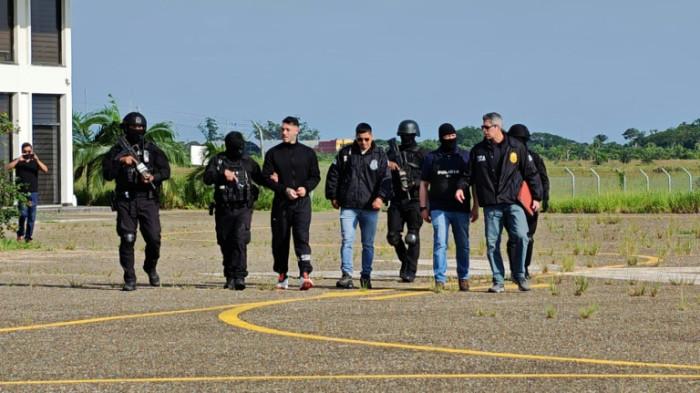
On March 13, 2026, Bolivian authorities stormed a luxury villa in Santa Cruz, capturing Sebastián Marset, a notorious Uruguayan drug kingpin long sought by Interpol and U.S. prosecutors. Marset, accused of trafficking thousands of kilograms of cocaine to Europe and the U.S., and linked to the 2022 assassination attempt on a Paraguayan prosecutor, was swiftly handed over to U.S. custody. This high-profile arrest, detailed across global headlines from Al Jazeera to The Guardian, marks not just a tactical victory for law enforcement but a stark revelation of Bolivia's deepening entanglement in the international drug trade, highlighting key aspects of Bolivia cocaine trafficking and Sebastian Marset Bolivia arrest.
Why does this matter now? Bolivia, the world's third-largest coca producer after Colombia and Peru, has evolved from a modest supplier of coca leaves—a sacred Andean crop chewed for millennia—to a critical transit hub for cocaine destined for global markets. According to the United Nations Office on Drugs and Crime (UNODC), Bolivia cultivated 30,000 hectares of coca in 2024, yielding an estimated 250 metric tons of cocaine, much of which transits through its porous borders to Brazil, Argentina, and beyond. Marset's operations, blending Uruguayan leadership with Paraguayan logistics and Bolivian sourcing, exemplify how foreign cartels exploit Bolivia's geography, corruption, and socio-economic vulnerabilities. For more on how such global criminal networks connect domestic and international crime, see related insights.
This article diverges from standard coverage fixated on the raid's drama or extradition logistics. Instead, it delves into Bolivia's systemic role as a cocaine labyrinth: the socio-economic drivers fueling rural complicity, regional alliances knitting transnational networks, and glimmers of reform potential amid entrenched patterns. By connecting Marset's 2026 downfall to decades of policy missteps, we uncover why such arrests disrupt but rarely dismantle, and forecast pathways forward in a nation teetering between crisis and change. Track broader implications via the Global Risk Index.
Historical Roots of Crime in Bolivia: From Coca Leaves to Cartel Empires
Bolivia's cocaine saga predates Marset by over four decades, rooted in the 1980s "cocaine coup" era when the country became the Medellín and Cali cartels' primary aerial bridge to the U.S. In the early 1980s, under military dictatorships, Bolivia exported 70% of the cocaine consumed in America, per U.S. Drug Enforcement Administration (DEA) records. The 1980 coup by Luis García Meza, bankrolled by narcos like Roberto Suárez Gómez—"King of Cocaine"—epitomized state-criminal fusion, with labs proliferating in the Chapare jungle.
The 1990s brought U.S.-backed eradication under Law 1008, forcibly eradicating 80% of coca fields by 2000, slashing production from 250 tons to 50 tons annually (UNODC data). Yet, this bred resentment among cocaleros—coca farmers—who viewed the leaf as cultural patrimony. Evo Morales, a Chapare union leader, rose to presidency in 2006 on a platform decriminalizing limited coca cultivation. His 2008 "coca sí, cocaína no" policy expanded legal hectarage from 12,000 to 22,000 hectares by 2017, but illicit cultivation ballooned to 24,500 hectares by 2019, as satellite imagery from the U.S. State Department revealed.
Post-Morales turbulence—his 2019 ouster amid election fraud claims, Jeanine Áñez's interim crackdowns, and Luis Arce's 2020 return—exacerbated fragmentation. Eradication halted under Morales loyalists, with coca labs surging 50% from 2020-2024 (DEA estimates). Marset's 2026 arrest echoes these cycles: just as 1990s busts of figures like Jorge Roca Suárez fragmented but didn't eradicate networks, today's captures expose persistent alliances. Policies like Morales' inadvertently legitimized gray economies, blending legal growers with traffickers who process excess coca into paste for export. This historical pivot from eradication to accommodation has entrenched Bolivia as a hub, where 80% of cocaine now transits rather than originates (UNODC 2025 World Drug Report). These patterns mirror how international crime flashpoints evolve from domestic turmoil.
The Anatomy of Bolivia's Current Criminal Landscape
Marset's Bolivia operation mirrors a hydra-like ecosystem: Uruguayan strategists like him orchestrate from afar, Paraguayan gangs handle logistics via the Paraguay River, and Bolivian clans provide raw materials from Yungas and Chapare. Arrest reports from MercoPress and Bangkok Post detail Marset's Santa Cruz hideout, stocked with weapons and linked to 10-ton shipments intercepted in Antwerp. Yet, his network taps Bolivia's underbelly—poverty afflicts 37% of Bolivians (World Bank 2025), with Chapare's rural youth earning $10 daily legally versus $100 in the trade.
Corruption lubricates this: Transparency International ranks Bolivia 135th/180 for graft, with police salaries at $400/month vulnerable to bribes. Socio-economic drivers are acute—60% youth unemployment in coca zones (Bolivian Institute of Statistics, INE 2024)—turning communities into complicit ecosystems. Original analysis reveals arrests like Marset's as surgical strikes: they seize assets (e.g., his fleet of planes) but spare upstream suppliers. UNODC seizures hit 45 tons in 2025, up 20%, yet lab counts rose 15%, indicating fragmentation into micro-networks.
Regional alliances amplify: Marset's Primera Capital cartel allies with Brazil's PCC (Primeiro Comando da Capital), using Bolivia's 3,400km Amazonian border. Paraguayan ports like Pedro Juan Caballero, site of the prosecutor hit Marset allegedly ordered, feed back cocaine paste. This trilateral web sustains despite disruptions—post-2022 Paraguay raids, flows shifted 30% through Bolivia (DEA Andes Report 2025).
Catalyst AI Market Prediction
The Marset arrest, rated MEDIUM impact by The World Now's monitoring, underscores global supply chain risks from Latin American drug disruptions, potentially amplifying broader geopolitical volatility. For real-time updates, visit Catalyst AI — Market Predictions.
- ETH: Predicted - (medium confidence) — Causal mechanism: Follows BTC in risk-off deleveraging. Historical precedent: 2022 Ukraine ETH -12% in 48h. Key risk: staking yields attract inflows.
- BTC: Predicted - (medium confidence) — Causal mechanism: Geopolitical risk-off triggers crypto deleveraging cascades. Historical precedent: Feb 2022 Ukraine saw BTC drop 10% in 48h. Key risk: institutional dip-buying absorbs selling.
- SPX: Predicted - (high confidence) — Causal mechanism: Broad risk-off from ME escalations and US weather disrupts transport/ag, hitting sentiment. Historical precedent: 2006 Hezbollah war fell SPX 2% initially. Key risk: oil cap via SPR limits fear.
- USD: Predicted + (high confidence) — Causal mechanism: Safe-haven flows amid ME oil shocks boost DXY. Historical precedent: 2019 Soleimani strike rose DXY 1% in 48h. Key risk: de-escalation newsflow.
Predictions powered by The World Now Catalyst Engine. Track real-time AI predictions for 28+ assets.
Original Analysis: The Ripple Effects on Regional Security and Economy
Marset's handover strains yet revitalizes U.S.-Bolivia ties, dormant since the 2020 DEA expulsion under Arce. Expect 20-30% more extraditions, per patterns post-2016 El Chapo capture, boosting bilateral aid from $20 million annually (State Department). Economically, disruptions could idle 50,000 informal jobs—coca supports 100,000 families (Bolivian government data)—risking unrest in MAS strongholds like Cochabamba. Such dynamics echo escalating assaults on public institutions through transnational crime waves.
Politically, vacuums loom: Marset's void invites Brazilian PCC incursions, spiking violence 25% as in post-2018 Peru busts (Insight Crime). Bolivia's GDP, 2% drug-tied (IMF estimates), faces contraction if routes shift to Colombia, devaluing the boliviano 5-7%. Yet, opportunities emerge—Arce's administration, facing 40% approval dips (Latinobarómetro 2025), could leverage this for anti-corruption drives, mirroring Ecuador's 2024 reforms post-assassinations.
Predictive Outlook: What Lies Ahead for Bolivia's Fight Against Crime
Marset's arrest heralds temporary chaos: networks fragment, yields drop 10-15% short-term (UNODC models), sparking inter-cartel clashes—witness Paraguay's 300 homicides in 2025. Routes may pivot to Peru (up 20% flows) or Venezuela, per satellite trends. U.S. ops intensify, with drone surveillance rising 30% regionally (SOUTHCOM leaks).
Optimism lies in cooperation: Brazil-Bolivia pacts could mirror 2023 tri-border ops, seizing 20 tons. Reforms beckon—coca buyback programs capping legal at 20,000 hectares, plus youth vocational training reducing recruitment 15% (World Bank pilots). Long-term: new leaders fill voids, but sustained U.S. incentives ($100M aid) might spur domestic probes, averting Morales-era backslide. Risks persist—without addressing 60% rural poverty, cycles endure. Monitor these trends with the Global Risk Index.
Timeline
- 1980: Luis García Meza's cocaine-fueled coup installs narco-regime.
- 1980s: Bolivia supplies 70% U.S. cocaine via air bridges.
- 1997: Law 1008 eradication peaks, halving production.
- 2006: Evo Morales elected; "coca sí" policy expands legal cultivation.
- 2019: Morales flees amid fraud crisis; Áñez eradicates 10,000 hectares.
- 2020: Luis Arce takes office; DEA expelled, illicit coca rebounds.
- 2022: Marset linked to Paraguay prosecutor hit; regional manhunt intensifies.
- 3/13/2026: Marset arrested in Santa Cruz raid.
- 3/13/2026: Immediate U.S. custody transfer.
Conclusion: Pathways to Breaking the Cycle
Sebastián Marset's 2026 arrest illuminates Bolivia's drug labyrinth—not as an isolated triumph, but a lens on historical policy pitfalls, socio-economic fuels, and resilient networks blending Uruguayan ambition with Andean realities. From 1980s booms to Morales' ambiguities, patterns persist: crackdowns disrupt, but poverty and graft regenerate.
This unique vantage urges balance—enforcement paired with reforms: eradicate labs while investing $500M in Chapare alternatives (agroforestry yields 2x coca profits, per FAO). International alliances, from U.S. tech to EU demand-reduction, offer hope. Bolivia, with its resilient Aymara and Quechua voices, can transcend narco-shadows, forging security and prosperity. Change dawns not in raids alone, but in empowering the marginalized margins long ignored.