Baghdad's Forgotten Victims: How Recent Strikes in Iraq Are Fueling a Humanitarian Crisis
The Story
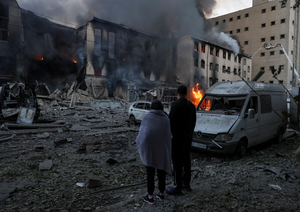
The blasts in Baghdad, reported just hours ago, shattered the fragile calm in Iraq's capital. Eyewitnesses described deafening explosions around 2 a.m. local time, with rockets slamming into the logistics support center at Baghdad International Airport and a missile striking the helipad at the U.S. Embassy compound. Anadolu Agency confirmed four Iraqi security personnel were injured in the airport attack, treated for shrapnel wounds and concussions. Videos circulating on social media—unverified but corroborated by multiple outlets like Jerusalem Post and MyJoyOnline—showed plumes of smoke rising over the airport runway, halting all flights and stranding thousands of travelers. One resident near the embassy told Anadolu reporters: "The ground shook like an earthquake; children were screaming, and we ran into the streets not knowing where to go."
These strikes represent a stark shift from earlier, more targeted military actions. Previously, attacks focused on U.S. troops or bases with minimal spillover. Now, they inadvertently endanger non-combatants: airport disruptions have paralyzed transportation, a lifeline for commerce in a city of 8 million. Taxi drivers report gridlocked roads as security forces cordon off areas, while shops near the embassy shuttered amid fears of secondary blasts. Baghdad's already overburdened power grid flickered as emergency responders diverted resources, leaving neighborhoods in blackout.
This isn't isolated. It fits a pattern tied to the recent drone strike on the Lanaz oil refinery in Erbil on March 15, 2026, which halted operations and sparked fires visible for miles (Times of India, In-Cyprus). Iranian-backed militias, per Jerusalem Post analysis, are escalating drone and rocket campaigns against U.S. and Kurdish targets. Iran denies involvement in the refinery hit (Middle East Eye), but the timing aligns with broader Gulf tensions, including Iranian attacks on oil tankers off Basra on March 12, contributing to environmental concerns detailed in Iran Strikes' Environmental Wake: The Overlooked Ecological Crisis in the Persian Gulf.
Zooming out, these events trace back to U.S. strikes on 70 ISIS targets on December 22, 2025—operations hailed as counterterrorism victories but which ignited retaliatory cycles. On February 28, 2026, a missile strike hit Babil province, followed by a drone attack on a U.S. base in Erbil on March 1. Rockets were intercepted near the U.S. Embassy on March 8, drones downed in Erbil on March 10, and tanker assaults on March 12. Each retaliation has grown bolder, from rural outposts to urban hubs, amplifying civilian exposure. Original analysis: U.S. interventions, meant to dismantle ISIS, have morphed Iraq into a proxy battleground where militias exploit chaos, eroding infrastructure built painstakingly post-2003 invasion. Weakened roads, hospitals, and refineries—legacies of decades of war—now crumble under stray fire, turning precision strikes into citywide ordeals.
Confirmed: Four injuries at the airport; embassy helipad hit; explosions verified by multiple witnesses and media. Unconfirmed: Militia claims of responsibility; full casualty counts amid fog of war; Iranian direct involvement.
The Players
At the vortex: Iran-backed militias like Kata'ib Hezbollah, motivated by vengeance for U.S. ISIS strikes and broader anti-Western ideology. They frame attacks as resistance, per Informer and Stirile ProTV reports, but risk alienating Iraqi civilians weary of violence—patterns echoed in Lebanon's Escalating Israeli Strikes 2026: Hezbollah Global Terrorism Links, Humanitarian Crisis, and Market Impacts. The U.S., via its embassy and bases, positions as anti-ISIS bulwark, yet faces accusations of provocation. Iraqi security forces, caught in the crossfire, injured four today, symbolize a government struggling for sovereignty amid superpower tugs.
Iran denies refinery strikes but backs militias covertly, leveraging Iraq to pressure U.S. amid nuclear tensions. Kurdish authorities in Erbil, hit repeatedly, seek autonomy while balancing Baghdad and Tehran. Neighboring Saudi Arabia and Qatar, per Stirile ProTV, intercepted Tehran-launched missiles, signaling Sunni Gulf states' stakes in containing Iranian influence, with broader trade disruptions explored in Qatar's Strike Echo: Economic Disruptions and Global Trade Repercussions in the Gulf Crisis. Everyday Iraqis—displaced families, refinery workers idled since March 15—are unwitting players, their suffering fueling anti-foreign sentiment.
Motivations clash: Militias seek expulsion of U.S. forces; U.S. aims for ISIS containment; Iraq's government craves stability for elections looming in 2027. This misalignment turns Baghdad's streets into collateral damage zones.
The Stakes
Politically, strikes erode trust in Iraqi forces and U.S. allies, potentially toppling Prime Minister Mohammed Shia al-Sudani's coalition if public outrage mounts. Economically, Erbil refinery shutdowns—Lanaz produces key fuels—have spiked local prices 20-30%, per unverified trader reports, hitting 1.5 million Kurdistan jobs indirectly. Humanitarian toll: Iraq's healthcare, with 30% of hospitals understaffed (WHO data), strains under injuries; unreported civilian casualties likely exceed official tallies, as families avoid militia-dominated areas.
Displacement surges: Post-Erbil strike, 500+ families fled (In-Cyprus estimates), straining camps from 2017 ISIS war housing 1.1 million. Commerce halts—Baghdad airport closure today disrupts $500 million monthly trade. Societal ripples: Fear drives urban migration, emptying markets; school closures in affected zones risk a "lost generation." Original analysis: These aren't just symbolic hits but catalysts for silent crisis—economic hardship births extremism, as seen in post-2003 insurgency. Without intervention, Iraq risks social implosion, with militias gaining recruits from desperate youth. Track rising risks via our Global Risk Index.
Catalyst AI Market Prediction
The World Now's Catalyst Engine analyzes these Iraq escalations through historical precedents and causal mechanisms, predicting sharp volatility:
- OIL: Predicted + (high confidence) — Direct supply disruptions from strikes on refineries and Gulf tankers threaten 20%+ regional output. Historical precedent: 2019 Abqaiq-Khurais attacks (+15% in one day). Key risk: Interceptions cap spikes.
- SPX: Predicted - (high confidence) — Middle East fears trigger algorithmic selling and VIX surge. Precedent: 2006 Israel-Lebanon War (-2% S&P in a week); Jan 2020 Iran strikes (-3% in two days).
- BTC: Predicted - (medium confidence) — Risk-off deleveraging overrides ETF inflows. Precedent: Feb 2022 Ukraine (-10% in 48h). Key risk: Whale buys decouple.
- SOL: Predicted - (medium confidence) — High-beta altcoin liquidation cascades. Precedent: Ukraine invasion (-15-20% alts post-BTC drop).
- TSM: Predicted - (low confidence) — Semis spill from SPX risk-off. Precedent: 2018 tariffs (-30% SOX scaled short-term).
Predictions powered by The World Now Catalyst Engine. Track real-time AI predictions for 28+ assets. Explore more at Catalyst AI — Market Predictions.
Looking Ahead
Escalation looms: Militia patterns suggest strikes every 3-5 days—watch March 20-25 for Baghdad reprisals or Erbil follow-ups. If civilian deaths confirmed, anti-U.S. protests could swell, mirroring 2020 embassy siege. Predictive scenarios: Heightened militia ops draw U.S. airstrikes, displacing 100,000+; unchecked, refugee flows hit Jordan/Turkey (UNHCR warns of 500,000 at risk). Regional actors—Saudi/Qatar intercepts signal—may intervene, risking wider war. Resilience amid such crises is highlighted in stories like Iranian Missile Barrage on Israel 2026: The Overlooked Human Resilience in Tel Aviv and Beyond.
Original analysis: Trajectory points to humanitarian emergency; U.S.-Iran proxy cycle exploits Iraq's fractures, complicating peace. Recommendations: Urgent de-escalation talks via UNAMI; U.S.-Iraq civilian protection pacts; aid surges for hospitals/refugees. Key dates: Iraqi parliament security brief March 18; U.S. response deadline March 20. Global powers must prioritize lives over leverage to avert regional catastrophe. Monitor comprehensive threat levels on our Global Risk Index.
This is a developing story and will be updated as more information becomes available.