
2,961 Flights Disrupted as Anak Krakatau Ash Closes Jakarta Airport in Volcano Eruption Today
Mount Anak Krakatau in Indonesia erupted on Saturday, spewing lava and a massive ash plume that forced the closure of eight airports including Jakarta's Soekarno-Hatta, disrupting nearly 3,000 flights and stranding more than 340,000 passengers until operations resumed early Tuesday amid the volcano eruption today. [1]
Eruption Timeline and Immediate Impact
The continuous eruption episode lasted approximately 25 hours from Friday evening 4 September 2026 to Sunday 6 September 2026, after which activity returned to Strombolian type while the volcano remains at Level III Siaga alert. [3] Mount Anak Krakatau, about 150km from Jakarta, erupted on Saturday, spewing a fountain of lava and a plume of volcanic ash. [1] Ash plumes rose as high as 15 kilometres, spreading volcanic material over Java and Sumatra and prompting immediate flight restrictions. [2] The episode began at 23.07 WIB on 4 September 2026 and ended at 00.04 WIB on 6 September 2026. [3] Following the continuous phase, the volcano returned to Strombolian activity but stayed under Level III Siaga status. [3]
Flight Disruptions and Passenger Stranding
Ash plume from Anak Krakatau eruption disrupts flights at Jakarta airport. — Source: gdelt
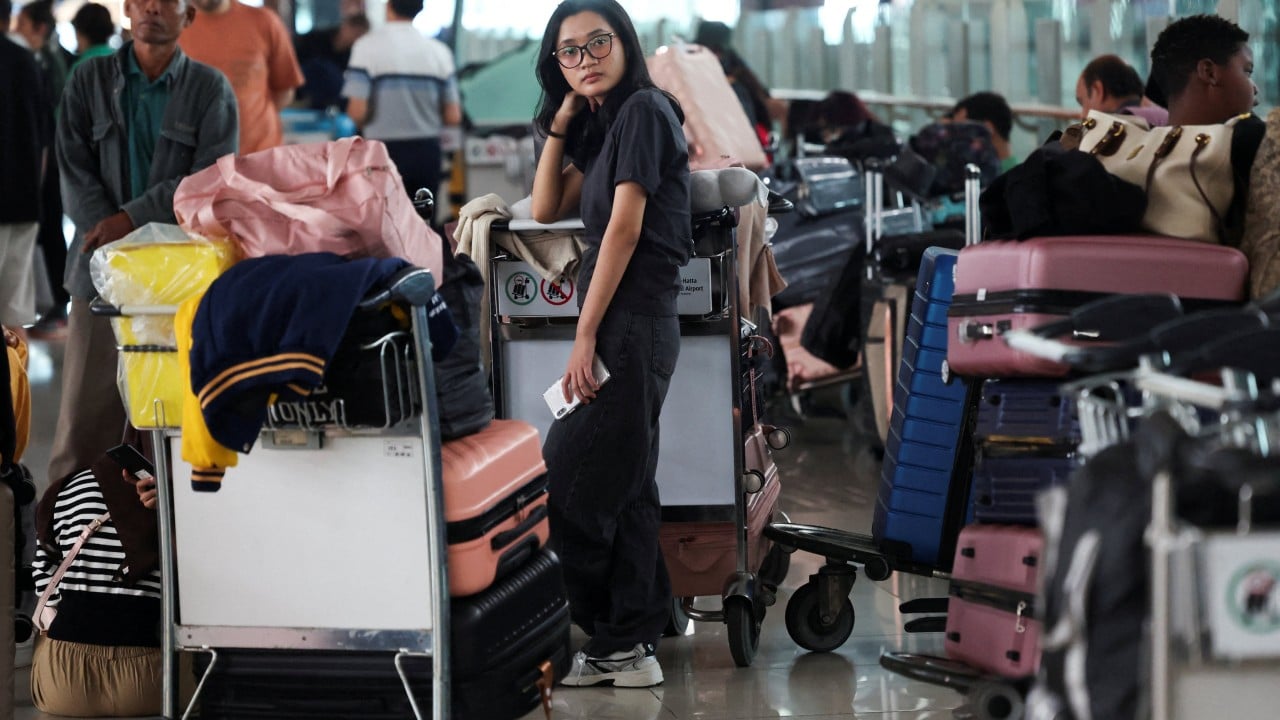
Volcanic ash from Mount Anak Krakatau has affected 2,961 domestic and international flights and stranded approximately 341,000 passengers as of Monday afternoon, following the extended closure of seven regional airports. [5] The disruptions included cancellations, delays, and diversions across 2,339 domestic flights and 622 international flights. [5] Seven airports across Java and Sumatra stayed closed until 23:59 WIB on Monday due to dynamic wind conditions carrying ash. [2] Passengers at Soekarno-Hatta International Airport spent hours checking flight status boards, with some sleeping on benches while waiting for updates. [2] One stranded passenger, Spaniard Carlos Zabala, stated that the situation left travellers able only to wait. [2] Australian traveller Liz Kendall described remaining in her hotel room for three days watching volcanic dust fall from the sky, noting that it caused a sore throat and itchy eyes. [2] Between 5 September and 7 September, volcanic ash forced the cancellation of 520 flights comprising 254 arrivals and 266 departures, disrupting travel for 86,760 passengers. [4]
Airport Reopening and Safety Measures
Indonesia’s main airport and several other air travel hubs reopened early on Tuesday after days of closure due to ash from a volcanic eruption, the Transport Ministry said. [1] Jakarta’s main airport announced that following the current volcanic eruption activity of Mount Anak Krakatau, Soekarno-Hatta International Airport has resumed flight operations. [1] The ministry extended the closure of seven affected airports until Monday at 11:59 p.m. Western Indonesian Time as a conservative measure to safeguard aviation safety amid highly dynamic wind conditions. [5] Initial on-site tests for ash deposits at several airside facilities returned negative results, yet officials required formal clearance from the Volcanic Ash Advisory Center in Darwin, Australia, before reopening. [5] Airport ground crews inspected and cleared airside infrastructure including runways, taxiways, and aprons while airlines conducted mandatory inspections to ensure aircraft engines and fuselages remained free of volcanic ash particles. [5] The Transportation Ministry continues to monitor VAAC advisory updates to assess when normal air traffic can safely resume. [5]
Immigration Response for Foreign Travelers
Indonesia's immigration authority is issuing emergency stay permits and waiving overstay fees for foreign nationals stranded by widespread flight cancellations following the eruption of Mount Anak Krakatau. [4] Director General of Immigration Hendarsam Marantoko described the policy as a necessary humanitarian response to a force majeure event, stating that the government is committed to providing legal certainty for affected foreign nationals. [4] Immigration checkpoints at affected departure airports issued emergency stay permits valid for up to 30 days free of charge, which can be extended if airspace closures persist. [4] As of Monday, the Soekarno-Hatta Immigration Office had processed 26 emergency stay permit applications, while five applications were processed at the Central Jakarta Immigration Office, four at the North Jakarta Immigration Office, two each at the Depok and South Jakarta Immigration Offices, and one each at the Ngurah Rai, Juanda, Bekasi, and Tangerang Immigration Offices. [4] All applications received thorough review to maintain immigration security and order. [4]
Indonesia's Volcanic Context and Current Alerts
Indonesia has 71 volcanoes recorded as active since 1800, the highest total globally, and currently maintains Level III Siaga status on five volcanoes: Anak Krakatau, Lewotobi Laki-laki, Merapi, Semeru and Sinabung. [3] Data from the Global Volcanism Program per 31 March 2026 recorded 101 Holocene volcanoes in Indonesia, of which 71 have been active since 1800 and 55 since 1960. [3] The 1883 Krakatau eruption killed more than 36,000 people mainly through tsunami, and a 2018 partial collapse of Anak Krakatau also generated a deadly tsunami. [3] In addition to Anak Krakatau, the other Level III Siaga volcanoes include Lewotobi Laki-laki in Nusa Tenggara Timur, Merapi on the border of Central Java and Yogyakarta, Semeru in East Java, and Sinabung in North Sumatra. [3] Semeru experienced an eruption on Sunday 6 September 2026 with a column reaching about 1,000 metres above the peak. [3] Indonesia’s position at the intersection of tectonic plates along the Pacific Ring of Fire contributes to its high concentration of volcanic activity. [3]
Ongoing Monitoring and Risk Management
Indonesian geological services confirmed that the probability of another eruption remains high, with threats including ejection of incandescent rocks, dense ash clouds, and potential lava flows if activity resumes. [2] Monitoring continues because volcanic dynamics can change based on developments in monitoring parameters. [3] Authorities advise obtaining updates on volcanic activity from official sources such as PVMBG, MAGMA Indonesia, the Geological Agency, and local governments. [3] The temporary shutdown allowed aviation authorities and carriers to carry out critical safety protocols while wind conditions remained dynamic. [5] Public safety and security remain the government’s primary considerations in managing the impact of the eruption. [5] The episode of continuous eruption at Anak Krakatau serves as a reminder that volcanic activity can increase even in areas where communities have long coexisted with volcanoes. [3]
What to watch next: Authorities will continue monitoring VAAC advisories and on-site conditions to determine further adjustments to airport operations while maintaining Level III Siaga status at Anak Krakatau and the four other listed volcanoes.