
17 US Service Members Killed as Iran War Expands to Gulf Targets and Hormuz Shipping
The Iran war that began on February 28 has seen the United States conduct multiple rounds of strikes on Iranian targets while Iran has launched attacks on US forces and facilities across the Gulf region, including Bahrain and Kuwait, with 17 confirmed US service member deaths and Iranian strikes disrupting shipping in the Strait of Hormuz. [1][3]
Current Military Engagements
US Central Command announced continued strikes targeting Iranian military capabilities used against commercial vessels in the Strait of Hormuz. [1] Iran’s Islamic Revolutionary Guard Corps reported launching its 23rd wave of operations, targeting US facilities including Sakhir Air Base and Salman Port in Bahrain and Camp Arifjan in Kuwait. [1] Kuwait’s military said its air defence systems were responding to hostile missile and drone attacks, while Bahrain’s Interior Ministry reactivated warning sirens and urged residents to remain calm and move to the nearest safe location. [1] Bahrain’s Defence Force said it had intercepted several Iranian aerial attacks, accusing Tehran of deliberately targeting civilians and critical infrastructure. [1] Bahrain’s Foreign Ministry also condemned attacks on civilian facilities and aviation navigation equipment. [1] US strikes hit sites in Tabriz, Shiraz and Bushehr inside Iran. [1] In Bushehr, governor Mohammad Mozaffari stated that several locations in Bushehr city were hit by American projectiles. [5] Iranian authorities reported at least 50 killed and over 500 wounded in recent US strikes overall. [3]
US Fatalities and Operational Context
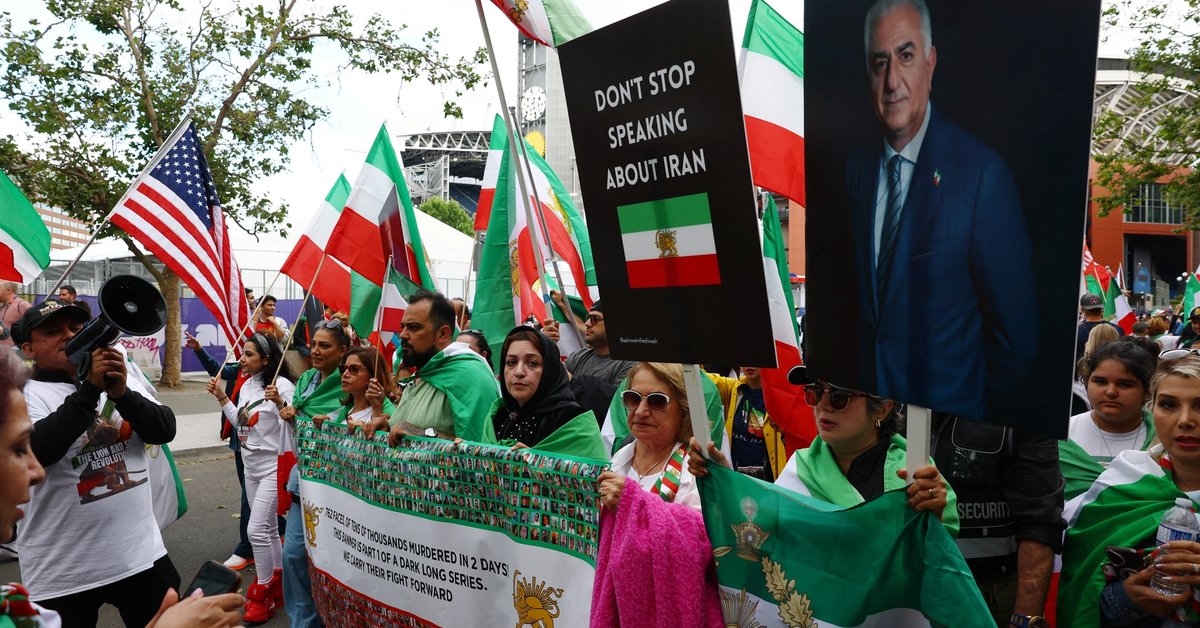
Reza Pahlavi speaks in support of US military action against Iran to halt regional bloodshed. — Source: iraninternational US Central Command said a US service member had been killed in northern Iraq while disposing of unexploded ordnance from an Iranian drone, bringing the total US deaths to 17 since February 28. [1][3] The deaths reflect the complicated reality that American boots do not need to be on the ground for there to be lethal risks in a conflict that involves drones, missiles and airplanes. [3] Shortly after the Iran war began on Feb. 28, an Iranian drone strike at a civilian port in Kuwait killed six American soldiers who were part of a supply and logistics unit based in Iowa. [3] A seventh soldier died more than a week after being wounded during a March 1 attack by Iran on the Prince Sultan Air Base in Saudi Arabia. [3] Later in March, six service members were killed when a KC-135 refueling aircraft supporting U.S. military operations against Iran crashed in Iraq. [3] On Monday, the U.S. military said a Navy pilot died in a helicopter crash in the Arabian Sea. [3] On Saturday, the U.S. Central Command said two service members were killed in Jordan on Friday while defending against Iranian ballistic missile and drone attacks. [3] A third service member was missing after that attack, and the military said unidentified remains were found and were being examined. [3] The latest U.S. military death from the conflict was on Saturday in northern Iraq when an American service member was killed during a controlled detonation of unexploded ordnance from a downed Iranian drone. [3][5] A second service member was wounded and was receiving medical treatment for a minor injury. [3]
Regional Diplomatic Coordination
Saudi Arabia coordinated with Egypt, Qatar and Jordan to de-escalate tensions. [1] Saudi Foreign Minister Prince Faisal bin Farhan held telephone talks on Monday with his counterparts in Egypt, Qatar and Jordan to coordinate efforts to contain the escalating conflict and reinforce regional security. [1] Qatar and Pakistan proposed that Tehran and Washington return to pre-July 9 positions to restart negotiations. [1] Iranian President Masoud Pezeshkian acknowledged the country is in a full-scale war requiring unity. [1] He said the reality is that today the Islamic Republic of Iran is engaged in a full-scale war and added that the country must be realistic and accept the natural consequences of this resistance. [5] Iranian foreign ministry spokesman Esmaeil Baqaei said diplomatic exchanges with the United States via mediators were ongoing. [5]
Strait of Hormuz and Shipping Disruptions

Seventeen US service members died in the expanding Iran war involving Gulf strikes and Hormuz shipping attacks. — Source: gdelt Attacks on shipping included two Greek-managed vessels struck off Oman, with one tanker catching fire and its crew rescued. [1] Greek shipping company Dynacom Tankers said two vessels under its management were struck by projectiles of unknown origin while sailing off the coast of Oman. [1] The Malta-flagged tanker Cavomalias was hit twice, triggering a fire in its engine room and forcing the crew to abandon ship. [1] Omani authorities later rescued all crew members and brought them safely ashore. [1] The US imposed a naval blockade disabling one vessel and diverting six commercial ships. [1] CENTCOM said it had disabled one vessel and diverted six commercial ships as part of the US naval blockade on Iran. [1] The guided-missile destroyer USS John Finn remained engaged in enforcing the restrictions. [1] Iran warned Gulf states cooperating with the US could face difficulties transiting the Strait of Hormuz. [1] An Iranian military spokesperson warned that Gulf states accused of cooperating with the United States could face difficulties transiting the Strait of Hormuz. [1] Yemen’s Houthi rebels announced a maritime embargo of Saudi Arabia. [5] The rebels declared a maritime embargo against the criminal Saudi enemy, based on the equation of an eye for an eye, effective immediately. [5] Stephane Dujarric, spokesman for the UN secretary-general, warned that the threat from the Houthis risked an even wider regional conflict. [5]
Iranian Domestic Impact and Statements
US strikes hit sites in Tabriz, Shiraz and Bushehr inside Iran, killing an air-defense officer in Tabriz and one person in East Azerbaijan province. [1] In East Azerbaijan province in the north, the head of the local crisis management unit Majid Farshi stated that one person was martyred and several others injured in an attack there. [5] Iranian authorities reported at least 50 killed and over 500 wounded in recent US strikes overall. [3] Iranian President Masoud Pezeshkian acknowledged the country is in a full-scale war requiring unity, collective decision-making and realism. [1] He warned that prolonged economic pressure could undermine both military gains and domestic social cohesion. [1] France’s foreign minister said two employees at the French embassy in Tehran had been detained for several hours and intimidated by Iranian security personnel. [1]
International Reactions and Outlook
Retired Gen. Wesley Clark said reopening the Strait of Hormuz must remain the central U.S. objective in the renewed war with Iran. [4] Reza Pahlavi said the US-led war against the Islamic Republic was a necessary step to prevent further bloodshed and give Iranians a better chance of ending clerical rule. [2] French condemnation of the embassy incident described it as unacceptable and warned that it would have consequences. [1] UN warnings about wider regional conflict risks noted that a simultaneous crisis at Hormuz and Bab al-Mandab would produce a much larger shock than either blockade alone. [5] President Donald Trump said the latest strikes were carried out in response to the deaths of American service members. [1] US Secretary of State Marco Rubio called on countries around the world to share the burden of protecting global shipping. [5]
What to watch next: CENTCOM announced that the operation would continue targeting military capabilities used to attack commercial vessels and civilian mariners transiting the Strait of Hormuz, while Iranian foreign ministry spokesman Esmaeil Baqaei said ideas have been conveyed by certain mediators. [1][5]