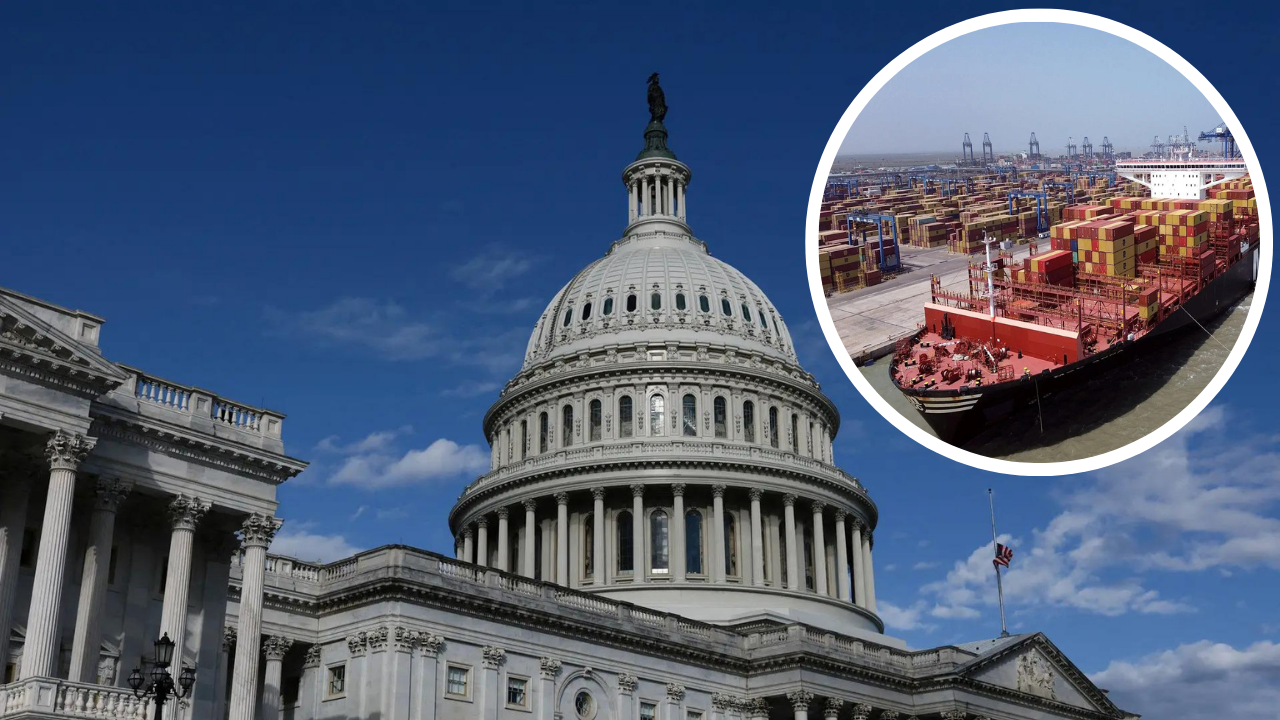
100% Tariffs on India Possible as US House Advances Russia and Iran Sanctions Bill Against Most Dangerous Countries
The US House of Representatives advanced the Lindsey O Graham Sanctioning Russia and Iran Act of 2026, which would allow President Donald Trump to impose 100% tariffs on major buyers of Russian oil including India while extending sanctions on Russia and Iran amid concerns over the most dangerous countries. [1] The bill cleared a key procedural vote 214-211 with two Democrats joining Republicans and faces a final House vote on Wednesday after already passing the Senate 86-11 on August 7. [1] It targets countries continuing to trade in Russian energy to cut revenue funding Moscow's war in Ukraine and also sanctions Russia's leadership, energy sector and shadow fleet. [1]
US House Advances Sanctions Bill on Most Dangerous Countries Targeting Russia and Iran
The US House of Representatives advanced the Lindsey O Graham Sanctioning Russia and Iran Act of 2026, which would allow President Donald Trump to impose 100% tariffs on major buyers of Russian oil including India while extending sanctions on Russia and Iran. [1] The bill is aimed at putting further economic pressure on Moscow by targeting countries that continue to trade in Russian oil and gas, with the US arguing that revenue from Russia's crude oil trade helps fund its war against Ukraine. [1] The measure would also target Russia's leadership and energy sector, along with the shadow fleet of vessels used to transport Russian oil and evade sanctions. [1]
Bill's Path Through Congress and Implications for India
The Lindsey O Graham Sanctioning Russia and Iran Act of 2026 cleared a key procedural vote by 214-211, with two Democrats joining Republicans in backing the measure. [1] The House is expected to hold a final vote on the bill on Wednesday. [1] The Senate had already passed the bill on August 7 by an overwhelming 86-11 vote. [1] For India, the bill is significant because it could give Trump the authority to impose punitive tariffs on countries that continue buying Russian energy, and India is among Russia's major oil buyers that has sharply increased its purchases of discounted Russian crude since the Ukraine war began. [1] The Senate version does not specifically name India or China but instead refers to the five largest importers of Russian oil and gas by volume. [1] The proposed measure could expose Indian exports to the US to tariffs of up to 100 per cent if Trump uses the authority against countries buying Russian energy. [1] If the House passes the bill, it will have to be sent to Trump for his signature before it can become law. [1]
CENTCOM Hosts Regional Military Summit on Iran Threats
Military commanders from the US, Israel, and several Arab countries convened in Germany last week for a discussion organized by US Central Command Chief Admiral Brad Cooper that centered on the conflict with Iran. [2] The eight militaries that attended the meeting were the United States, Israel, Saudi Arabia, Bahrain, Kuwait, Qatar, the UAE, Jordan, and Egypt. [2] CENTCOM hosted senior military leaders from eight nations during a scheduled conference in Germany, where discussions focused on strengthening security cooperation in the Middle East. [2] In the meeting, Cooper reassured the chiefs of staff that the US would not withdraw its forces from the region in the face of Iranian attacks on US bases throughout the Middle East. [2] He also briefed the military leaders on US plans to secure the Strait of Hormuz and increase maritime traffic. [2] The IDF Chief of Staff, Lt.-Gen. Eyal Zamir, briefed the Arab nations on Israel's operations on its various fronts. [2]
Iran's Coordinated Efforts to Capture US Drones in Strait of Hormuz
Iran is deliberately targeting US naval drones in the Strait of Hormuz to gather intelligence on American surveillance capabilities and learn how to evade US defenses. [3] The warning came as tensions escalated in the Gulf region after the US military destroyed two Iranian small boats amid an attempted seizure by the Islamic Revolutionary Guard Corps of an American unmanned surface vessel patrolling the area. [3] Iranian small boats recently attempted to take possession of a US unmanned surface vessel, but they were unsuccessful after CENTCOM forcefully responded, and the surface drone remains under US operational control. [3] The Sept. 8 incident involved Iran's capture of a Dive-LD autonomous underwater drone manufactured by defense contractor Anduril. [3] Even a brief examination of a captured drone provides Tehran with a quick win by revealing how the US conducts surveillance and how to counter those systems. [3] Any access to captured hardware over the last six months would allow Iranian forces to evaluate sensitive onboard sensors. [3]
Vance Signals New Phase in Iran Conflict
Vice President JD Vance said the conflict with Iran will enter a much different phase in the next several months as the Trump administration shifts its focus toward preventing Tehran from rebuilding its military capabilities. [4]
Broader Regional Context Including Houthi Attacks
The meeting comes as the Houthis have stepped up attacks on Saudi cities and energy infrastructure while advancing along Yemen's Red Sea coast towards the Bab al-Mandab Strait, a key shipping route. [2] The escalation has opened a second theater in the wider regional conflict and raised concerns over Saudi oil exports and global shipping. [2] Washington told Riyadh it would provide intelligence-sharing and targeting assistance. [2] Jerusalem also committed to assisting Riyadh in its defense against the Houthi threat by providing military intelligence in a recent meeting between Israel and Saudi Arabia mediated by CENTCOM. [2] On Monday, thirteen civilians were wounded in strikes by the Iran-backed Houthis on the Saudi cities of Khamis Mushait, Abha, and Taif. [2]
What to watch next: The House is due to break for an early recess on Thursday and is expected to reconvene on November 9 after the US midterm elections, with the immediate focus on Wednesday's vote. [1]