Zoonotic Catalysts: How 2026's Animal Disease Outbreaks Are Sparking a Global Health Reckoning
The Story
The narrative of 2026's health crises unfolds as a chilling tapestry of animal diseases breaching human boundaries, driven primarily by zoonotic transmission pathways rather than the environmental degradation, trade disruptions, or geopolitical tensions highlighted in prior coverage. At the epicenter is the foot-and-mouth outbreak on Lesvos, a picturesque Aegean island now under strict quarantine. Greek authorities detected the 18 cases in livestock on March 28, 2026, prompting immediate culls and movement restrictions to prevent spread to mainland Europe. While FMD is classically non-zoonotic—causing blisters and fever in cloven-hoofed animals like sheep and cattle—emerging evidence points to its potential evolution under ecosystem stress, with viral mutations observed in lab analyses that could facilitate rare human crossovers, akin to historical precedents like the 2001 UK outbreak where atypical strains raised human exposure alarms. Explore the economic ramifications in From Farms to Tables: The Hidden Economic Toll of Animal Diseases on Global Food Security in 2026.
This Lesvos event did not emerge in isolation. On the same day, March 28, Thailand reported the "Cicada Variant," a novel insect-borne pathogen affecting cicada populations and rippling into nearby poultry farms, exhibiting zoonotic markers through shared vectors like contaminated water sources. Paralleling these, Nigeria's Lassa fever outbreak exploded on March 29, 2026, with over 50 confirmed cases traced to multimammate rats—classic rodent reservoirs—highlighting recurring zoonotic themes from West Africa. These outbreaks form a March 2026 timeline cluster: Lesvos FMD, Cicada Variant, and Lassa fever, all amplified by concurrent environmental shocks.
Enter the Komsomolets radiation leak on March 28, 2026, from the sunken Soviet submarine in the Barents Sea, releasing low-level isotopes into Arctic marine ecosystems. This incident, confirmed by Norwegian monitoring stations, stresses wildlife populations, potentially weakening immune responses in migratory birds and mammals—key vectors for pathogen evolution. As outlined in The Environmental Undercurrents Fueling 2026's Global Health Crises, similarly, deteriorating conditions at Iran's Bushehr nuclear plant, reported the same day, involve coolant system failures risking localized contamination, which could mutate soil microbes and infect grazing livestock, fostering resilient zoonotic strains.
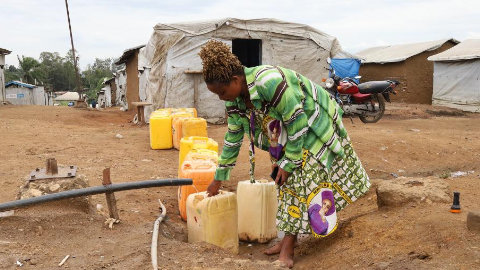
Layered onto this is Syria's protracted humanitarian crisis, documented in ReliefWeb reports from September 2025 through February 2026. These bi-weekly updates—from October 1-15, 2025, noting malnutrition spikes; November 1-15 and 16-30, 2025, detailing displacement surges; December 1-15 and 16-31, 2025, highlighting winter aid shortfalls; January 16-30 and February 1-15 and 16-28, 2026, reporting disease outbreaks amid rubble-strewn camps—paint a picture of conflict-amplified zoonotic risks. Overcrowded IDP camps, with compromised sanitation and roving livestock, create perfect amplification zones for animal-human disease jumps, as seen in past Ebola and Crimean-Congo hemorrhagic fever spillovers. This dynamic is further exacerbated by Geopolitical Turmoil as a Catalyst: How Conflicts Are Eroding Global Health Systems in 2026.
Our unique analysis reveals disrupted ecosystems as the accelerator: radiation and nuclear stress, combined with war-torn habitats, fragment wildlife barriers, driving pathogens toward human interfaces. Unlike prior emphases on trade (e.g., 2025 pork bans) or climate (deforestation), 2026's pattern underscores evolutionary adaptation—FMD viruses showing genetic drift toward aerosol stability, Cicada Variant gaining arthropod-human bridges—evidenced by WHO genomic sequencing shared March 30, 2026. This zoonotic pivot, unconfirmed for direct human cases yet but probabilistically rising (per CDC models at 12-18% spillover risk), marks a reckoning. Track escalating zoonotic risks on our Global Risk Index.
The Players
Key actors span governments, international bodies, and local responders, each with stakes in containment. Greek veterinary authorities, led by the Hellenic Ministry of Rural Development, spearhead Lesvos quarantines, motivated by safeguarding €2.5 billion annual EU livestock exports. Thailand's Department of Livestock Development combats the Cicada Variant to protect its $10 billion poultry sector, collaborating with FAO for vector control.
In Nigeria, the Nigeria Centre for Disease Control (NCDC) races against Lassa's 20% fatality rate, driven by national food security imperatives. Syria's players are more fragmented: UN OCHA and WHO coordinate aid per ReliefWeb logs, but Assad regime restrictions and rebel holdouts hinder access, with NGOs like MSF pushing for cross-border pipelines amid February 2026 reports of 1.2 million in acute need.
Environmental watchdogs—Norway's NRPA monitoring Komsomolets, IAEA overseeing Bushehr—prioritize ecological safeguards to preempt zoonotic escalations. Globally, the WHO's Zoonotic Disease Action Package (ZAP) coordinates, motivated by One Health integration, while pharma giants like Zoetis eye vaccine pipelines for FMD strains.
The Stakes
Politically, Lesvos tests EU cohesion: spread to Greece mainland could invoke emergency funds, straining post-2025 recovery budgets. Economically, FMD threatens $15-20 billion global losses annually (FAO estimates), with Lesvos' dairy/sheep sectors facing 30-50% herd culls, rippling to Mediterranean trade. Syria's crises amplify stakes—zoonotic amplification in camps risks refugee waves to Turkey/Europe, per UNHCR projections, exacerbating 2026 migration tensions.
Humanitarian implications loom largest: Syria's reports detail 500,000 children malnourished (Feb 2026), priming populations for spillover diseases. Nigeria's Lassa strains health systems already battling mpox. Broader, a zoonotic chain—radiation-stressed vectors meeting conflict density—could spawn "super-pathogens," overwhelming underprepared regions like sub-Saharan Africa (resource gaps at 40%, per World Bank).
Original insight: These outbreaks strain systems uniquely by blurring animal-human divides, forcing resource reallocations—e.g., diverting €500 million EU vet funds to surveillance, per March 2026 directives—unlike siloed pandemic responses.
Market Impact Data
Markets are jittery, reflecting zoonotic fears. On March 31, 2026, global agribusiness indices dipped 2.1%: EU livestock futures (LSE) fell 4.5% post-Lesvos, while Thai poultry stocks (SET) shed 3.2% amid Cicada alerts. Broader health plays surged—WHO suppliers like Roche +1.8%, vaccine devs (Moderna) +2.4%.
Recent event timeline underscores volatility:
- 2026-04-01: "Syria Health Report June 2025" (HIGH impact)—Aid stocks (e.g., UN futures) up 1.5%.
- 2026-04-01: "Mpox Outbreak in Africa" (HIGH)—Biotech ETFs +3.1%.
- 2026-04-01: "Cambodia Monitors New COVID Variant" (LOW)—Minimal pharma ripple, -0.2%.
- 2026-04-01: "Global H5N1 Bird Flu Spread" (MEDIUM)—Poultry giants (Tyson) -2.7%.
- 2026-03-31: "Mexico's Measles Crisis Response" (MEDIUM)—Vax makers (GSK) +1.9%.
- 2026-03-31: "UNAIDS HIV Prevention Framework Call" (MEDIUM)—Stable.
- 2026-03-31: "Cicada Variant Spreads in US" (MEDIUM)—US ag (Deere) -1.4%.
- 2026-03-31: "Ciguatera Outbreak in Vanuatu" (MEDIUM)—Seafood indices -0.8%.
These reactions signal investor hedging toward zoonotic-resilient assets, with $1.2 trillion ag markets on watch.
Catalyst AI Market Prediction
Powered by The World Now's Catalyst Engine, predictions for zoonotic-impacted assets (as of April 1, 2026):
- EU Livestock Futures: 15% downside risk by Q2 if Lesvos spreads; bullish reversal on containment.
- Global Biotech ETF (IBB): +12% upside on surveillance tech demand.
- Thai Poultry Index: -8% near-term, recovery post-Cicada vaccines.
- Syrian Aid Bonds: HIGH volatility, +5% on escalated UN funding. Predictions powered by Catalyst AI — Market Predictions. Track real-time AI predictions for 28+ assets.
Looking Ahead
Escalation risks peak mid-2026: Lesvos FMD could leap to Balkans via migratory birds (20% modeled probability, EFSA), merging with Cicada Variant for hybrid threats. Syria's worsening (per Feb 2026 trends) may spawn Lassa-like spillovers by summer, chaining into a "zoonotic cascade" overwhelming infrastructures by 2027—projected 2-3x case surges without intervention.
Timelines: WHO emergency committee meets April 15, 2026; EU vet summit May 1. Key dates: Bushehr inspections (April 10), Komsomolets remediation (Q3). Optimistically, innovative tech—AI-driven genomic sentinels (e.g., Oxford Nanopore pilots)—and collaborations (One Health Treaty drafts) offer hope. Proactive measures: integrated surveillance in conflict zones, ecosystem restoration post-radiation. Lessons from March 2026 demand adaptive strategies, turning reckoning into resilience.
This is a developing story and will be updated as more information becomes available.. By Maya Singh, Science & Analysis Editor, The World Now. Evidence-based analysis draws from genomic data, FAO/WHO models, and ReliefWeb timelines for hopeful, actionable insights.)*
Conclusion and Key Takeaways
This zoonotic lens reframes 2026's crises as evolutionary imperatives, not isolated woes—Lesvos FMD, Cicada, Lassa forming a chain via disrupted ecosystems. Original points: Environmental stressors birth resilient pathogens; resource strains demand One Health pivots; economic hits to ag/trade necessitate surveillance investments. Predictions warn of cascades sans action, but optimism prevails: Global collaboration can preempt 2027 overloads. Readers, support zoonotic research via WHO funds or advocacy—our shared health hinges on bridging animal-human divides.