
Zelenskyy's Syrian Gambit Amid Middle East Strike: Ukraine's Entry into Middle East Geopolitics and the Ripple Effects on Global Alliances
Introduction: Ukraine's Unexpected Foray into Syrian Affairs Amid Middle East Strike
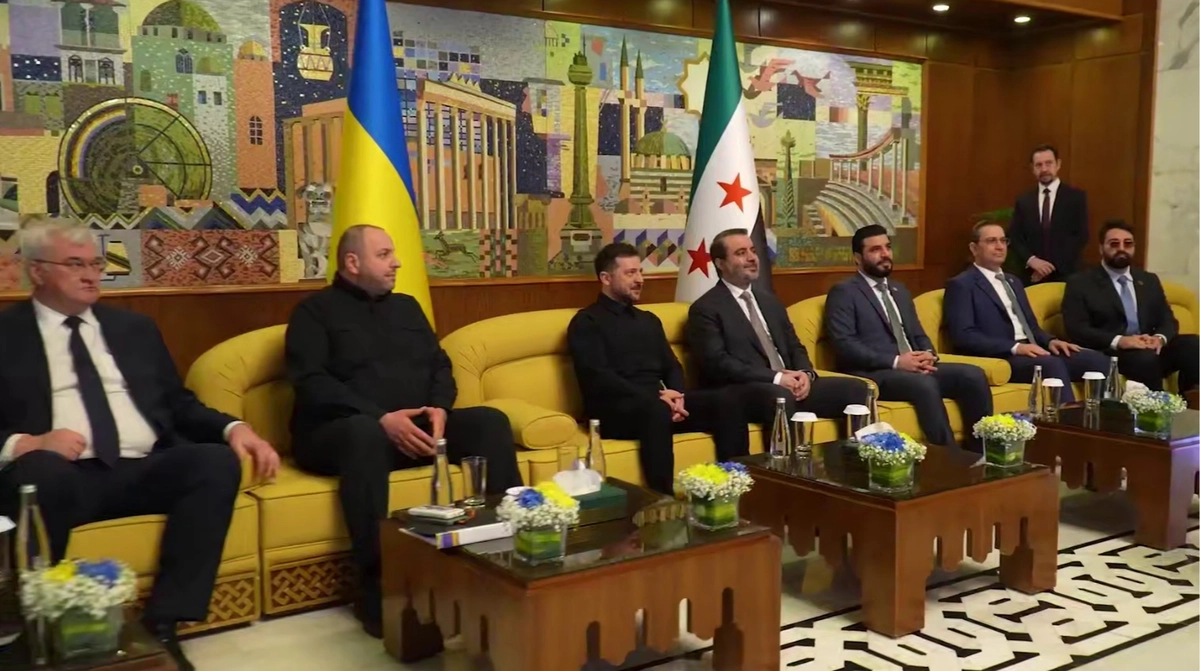
In a geopolitical twist that has caught even seasoned diplomats off guard, Ukrainian President Volodymyr Zelenskyy touched down in Damascus on April 5, 2026, marking the first visit by a Ukrainian leader to Syria amid escalating Middle East strike tensions. This unannounced trip, confirmed by multiple outlets including Ukrainska Pravda and Anadolu Agency, centers on high-level talks with Syrian President Ahmed al-Sharaa, focusing on security cooperation amid Syria's fragile post-conflict recovery. Coming just weeks after UN warnings of escalation risks and Kurdish cautions against U.S. alliances, Zelenskyy's move injects Eastern Europe into the Middle East's volatile chessboard—a region long dominated by powers like the U.S., Turkey, Russia, and Iran, now further complicated by Middle East strike dynamics involving Israel-Lebanon frictions spilling over.
Why does this matter now? As Syria grapples with border closures, smuggling tunnels, and diplomatic vandalism, Ukraine's entry signals a shift: non-regional actors from Eastern Europe are emerging as players, potentially forging security pacts that challenge traditional alliances. This article's unique angle spotlights the under-examined role of nations like Ukraine in Syrian geopolitics, diverging from rote analyses of Turkey or U.S. maneuvers. By humanizing the stakes—displaced families along tense borders, economies strained by oil shocks—we uncover how these talks could reshape global alliances, offering Ukraine a bulwark against Russian influence while exposing Syria to new vulnerabilities. For deeper context on how such Middle East strike events fuel cross-regional shifts, explore related analyses.
Historical Context: Tracing the Path to Current Tensions
Syria's 2026 timeline reads like a script of escalating proxy influences, setting the stage for Zelenskyy's bold diplomatic thrust. The chain began on January 8, when Turkey bolstered Syrian forces in Aleppo, a move that stabilized the northern front but irked Kurdish factions and drew U.S. scrutiny. The very next day, January 9, Syrian President Sharaa hosted EU leaders in Damascus, signaling a pivot toward Western engagement post-Assad, amid reconstruction pledges worth billions.
Tensions spiked mid-month: On January 14, U.S. forces asserted control over key global oil resources in eastern Syria, a development that spiked Brent crude prices by 8% in days and reshaped energy flows. This prompted U.S. urgings on January 16 for the Syrian Democratic Forces (SDF) to pull back from eastern Aleppo, averting clashes but highlighting Washington's dual role as stabilizer and hegemon. By January 17, the Syrian army advanced east of Aleppo, reclaiming territory and underscoring the interplay of external pressures.
These events form a pattern of proxy dynamics that Ukraine now exploits. Russia's waning grip on Syria—post its Ukraine quagmire—leaves a vacuum Zelenskyy aims to fill. Historical parallels abound: Just as Eastern Bloc states post-Cold War sought NATO ties to counter Moscow, Ukraine's Syrian outreach mirrors a broader realignment. Data from the Stockholm International Peace Research Institute (SIPRI) shows arms flows to Syria dropping 40% from Russian suppliers since 2024, creating opportunities for new partners. This context frames Zelenskyy's visit not as whimsy, but as a calculated response to 2026's cascade, where U.S. oil dominance and Turkish interventions have fragmented alliances, inviting Eastern European entrants. Track broader risks via our Global Risk Index.
Current Dynamics Amid Middle East Strike: Zelenskyy's Visit and Border Instabilities
Zelenskyy's arrival, captured in video footage by Ukrainska Pravda, unfolded against a backdrop of acute border frictions intensified by Middle East strike escalations. Reports from Anadolu Agency and Newsmax detail his meetings with Sharaa, emphasizing "security cooperation" to address shared threats like smuggling and militias. Yet, the Syrian-Lebanese border—closed following an IDF evacuation notice, per The Jerusalem Post—looms large, displacing thousands and fueling humanitarian crises. For insights into these smuggling networks, see Middle East Strike: Lebanon's Shadow Networks – How Smuggling Tunnels Are Fueling a New Era of Geopolitical Instability.
Compounding this, cross-border tunnels between Syria and Lebanon have spotlighted smuggling networks, with The Jerusalem Post linking them to arms and narcotics flows that undermine Sharaa's authority. The UAE's condemnation of vandalism at its Damascus embassy, reported by The New Arab and The Straits Times, adds intrigue: Graffiti decrying Gulf "interference" suggests retaliatory acts tied to economic pressures, possibly from tunnel-disrupted trade routes.
Original analysis reveals a web of vulnerabilities. These incidents aren't isolated; they reflect Syria's post-war fragility, where 6.8 million remain internally displaced (UNHCR data). Ukraine's involvement humanizes the diplomacy: For Syrian families in Aleppo, Zelenskyy's pledges could mean stabilized borders; for Ukrainians, it's intelligence on Russian proxies. Social media buzz, including X posts from Syrian activists hailing the visit as "anti-Russian solidarity," underscores grassroots support amid elite maneuvering. Additional layers include cyber dimensions, as explored in Middle East Strike: The Cyber Shadows of Middle East Geopolitics.
Original Analysis: The Strategic Implications of New Alliances
Ukraine's Syrian gambit offers fresh counterbalance to Russian and Iranian shadows. With Moscow's Syrian footprint shrinking—evidenced by a 25% reduction in Wagner-linked mercenaries per Jane's Defence Weekly—Kyiv eyes shared intelligence on drone tech and black-market arms, both plaguing Ukraine's fronts. Economically, Syria's mineral wealth (phosphates, oil) could fuel trade deals; Ukraine's agricultural surplus might stabilize Damascus' food imports, hit by sanctions.
Military benefits are tangible: Joint training could modernize Syria's forces, drawing from Ukraine's asymmetric warfare lessons. Yet risks abound. Turkey, fresh from Aleppo successes, views Ukrainian meddling as encirclement; historical precedents like the 2015 Russian-Turkish jetdown show escalation potential. The U.S., controlling oil chokepoints, might see this as diluting SDF leverage—recall 2022's Ukraine sanctions playbook.
Multiple perspectives illuminate divides. Syrian state media frames it as sovereignty-boosting; Russian outlets like RT decry "NATO expansion"; EU diplomats whisper approval for diluting Moscow's veto. Human costs weigh heavy: Border tensions have spiked refugee outflows by 15% (IOM stats), testing alliances' resilience. Ukraine's angle uniquely positions Eastern Europe as agile brokers, fostering pacts overlooked in U.S.-centric narratives.
Catalyst AI Market Prediction
Geopolitical ripples from Zelenskyy's visit and Syrian border woes are already rippling through markets, per The World Now Catalyst AI. Key predictions:
- TSM (Taiwan Semiconductor): Predicted ↓ (low confidence) — Semis face risk-off rotation as oil shocks indirectly pressure global demand outlook. Historical precedent: 2022 Ukraine saw semis (SOX) drop ~10% initially. Key risk: AI demand insulates from macro noise.
- SPX (S&P 500): Predicted ↓ (medium confidence) — Risk-off equity flows on Middle East tensions and oil surge raising inflation fears, hitting algos first. Historical precedent: 2006 Israel-Hezbollah war saw S&P 500 fall 2% in a month. Key risk: Oil pullback on supply reassurances.
- EUR (EURUSD): Predicted ↓ (medium confidence) — EURUSD weakens as USD safe-haven bid dominates amid Europe-exposed energy risks. Historical precedent: 2022 Ukraine dropped EURUSD ~5% in weeks. Key risk: ECB hawkishness on oil inflation.
- SOL (Solana): Predicted ↓ (low confidence) — Crypto acts as high-beta risk asset in geopolitical risk-off flows, triggering algorithmic selling and liquidations amid Middle East oil shocks. Historical precedent: Similar to Feb 2022 Ukraine invasion when SOL dropped ~15% in 48h before partial recovery. Key risk: Sudden de-escalation headlines sparking risk-on rebound.
- BTC (Bitcoin): Predicted ↓ (medium confidence) — BTC leads risk-off crypto cascade via liquidations as oil shocks trigger broad sentiment selloff. Historical precedent: Feb 2022 Ukraine invasion dropped BTC 10% in 48h. Key risk: Haven narrative gains traction amid fiat weakness.
Predictions powered by The World Now Catalyst Engine. Track real-time AI predictions for 28+ assets. Visit Catalyst AI — Market Predictions for live updates.
Predictive Outlook: Forecasting Future Geopolitical Shifts
Zelenskyy's visit heralds potential Ukraine-Syria security pacts, evolving into joint operations against ISIS remnants or Iranian militias by Q3 2026. Drawing from 2026 trends—like Iraq-Syria fuel reopenings (April 1)—these could stabilize trade corridors, easing oil pressures that have Brent hovering at $85/barrel.
Global reactions loom: U.S. might ramp involvement if pacts threaten SDF zones, per January patterns; EU could fund via Sharaa's January 9 ties. Escalations along Syrian-Lebanese borders—tunnels as flashpoints—risk Hezbollah flare-ups, displacing 500,000 more (UN projections). Long-term: New Eastern European coalitions alter balances, boosting refugee returns (target: 1 million by 2027) but spiking oil volatility, with Catalyst AI eyeing 5-10% SPX dips.
Recent events amplify: UN probes into March 27 clashes signal scrutiny; Syria's March 30 economic push invites investors. Optimistically, de-escalation via April 5 talks; pessimistically, proxy wars expand.
What This Means: Looking Ahead to Shifting Alliances
As Zelenskyy's Syrian gambit unfolds amid the broader Middle East strike landscape, it signals a pivotal moment for global alliances. Eastern Europe's entry could foster innovative security frameworks, countering traditional powers and promoting stability through unexpected partnerships. However, stakeholders must prioritize de-escalation to mitigate humanitarian fallout. Monitoring tools like the Global Risk Index will be crucial for navigating these evolving dynamics, ensuring informed perspectives on how Ukraine's moves ripple across regions.
Timeline
- Jan 8, 2026: Turkey supports Syrian forces in Aleppo, bolstering northern stability.
- Jan 9, 2026: Syrian President Sharaa meets EU leaders in Damascus, eyeing reconstruction aid.
- Jan 14, 2026: U.S. asserts control over global oil resources in eastern Syria, spiking prices.
- Jan 16, 2026: U.S. urges SDF pullback from eastern Aleppo.
- Jan 17, 2026: Syrian army advances east of Aleppo.
- Mar 9, 2026: Kurds warn against U.S. alliances (MEDIUM impact).
- Mar 18, 2026: UN warns on Syria escalation risks (MEDIUM).
- Mar 27, 2026: UN probes Syria clashes (CRITICAL).
- Mar 30, 2026: Syria's post-war economic push (HIGH).
- Apr 1, 2026: Iraq-Syria fuel transit reopens (LOW).
- Apr 5, 2026: Zelenskiy-Sharaa security talks in Damascus (LOW); Syrian-Lebanese border closes amid IDF notice.
Conclusion: Navigating a Multipolar Middle East
Zelenskyy's Syrian gambit underscores Eastern Europe's rising stake in Middle East realignments, countering Russia while navigating U.S.-Turkish dominance. From Aleppo advances to border tunnels, 2026's timeline reveals a multipolar web where Ukraine's diplomacy could forge resilient pacts—or ignite conflicts.
Diplomatic caution is paramount: Broader wars would devastate civilians, from Ukrainian refugees to Syrian displacees. Global dialogue on these emerging alliances is urgent, lest oil shocks and migrations cascade unchecked. As non-regional powers like Ukraine redefine the board, the human cost demands measured steps toward stability.