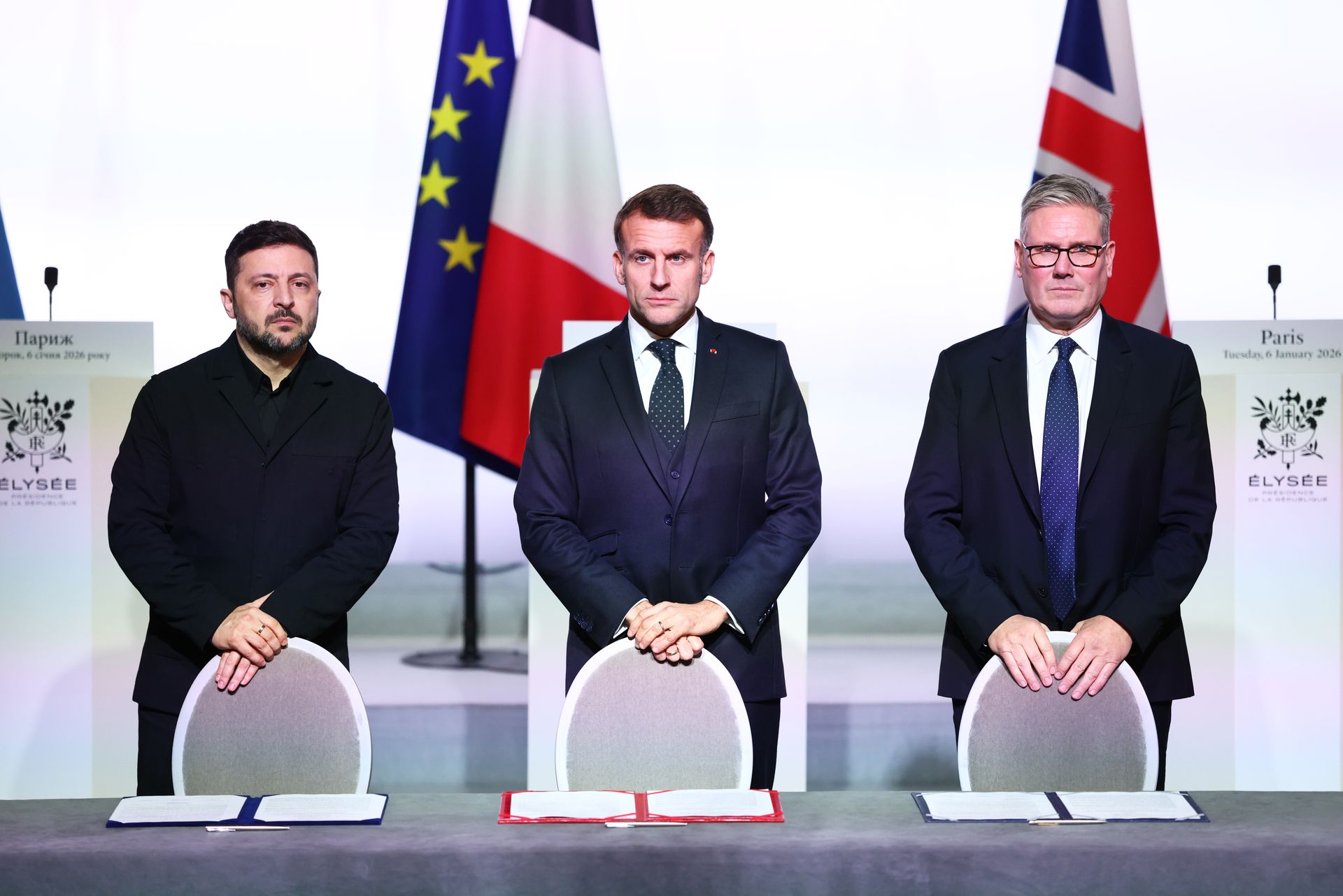

Zelensky Pushes for British and French Troops in Ukraine as Condition for Peace Deal
Kyiv, Ukraine – Ukrainian President Volodymyr Zelensky has called for the deployment of British and French military forces in Ukraine as a key component of any prospective peace agreement with Russia, emphasizing the need for robust security guarantees amid the protracted conflict.
On January 4, 2026, Zelensky stated that a peace deal must include a British and French military presence to ensure Ukraine's security, marking a bold escalation in Kyiv's demands during ongoing geopolitical negotiations. This proposal comes as the war, now entering its fourth year since Russia's full-scale invasion in February 2022, shows few signs of abating, with both sides entrenched in eastern Ukraine and the Black Sea region.
Zelensky's remarks reflect Kyiv's longstanding insistence on ironclad assurances against future Russian aggression, similar to NATO's collective defense commitments under Article 5. "A peace deal must include British and French military presence in Ukraine to ensure security," Zelensky declared, according to reports from the event. This stance aligns with previous Ukrainian positions at international forums, where leaders have rejected ceasefires lacking enforceable mechanisms.
The proposal has quickly drawn scrutiny, with the Kyiv Independent publishing an analysis on January 7, 2026, titled "3 glaring issues with the UK-France peacekeeper troops plan for Ukraine." The article outlines significant challenges, though specifics underscore broader concerns including feasibility, international buy-in, and escalation risks. While details from the piece highlight potential logistical, political, and strategic hurdles, it captures the skepticism surrounding direct Western troop involvement.
Geopolitical Context and Reactions
Ukraine's call arrives against a backdrop of shifting global dynamics. Russia's invasion has resulted in hundreds of thousands of military casualties on both sides, widespread destruction in Ukrainian cities, and a humanitarian crisis displacing millions. Western allies, led by the United States, United Kingdom, and European Union members, have provided over $200 billion in military, financial, and humanitarian aid since 2022, including advanced weaponry like HIMARS systems, Leopard tanks, and F-16 jets.
Britain and France have been among Kyiv's staunters supporters. The UK has committed long-range Storm Shadow missiles and trained over 40,000 Ukrainian troops, while France has supplied SCALP missiles and Caesar howitzers. However, both nations have consistently ruled out direct combat deployments to avoid provoking a broader NATO-Russia confrontation. French President Emmanuel Macron stated in 2024 that while "strategic ambiguity" was necessary, no European troops would be sent without allied consensus—a position echoed by UK Prime Minister Keir Starmer.
Russia has vehemently opposed any non-UN-mandated peacekeeping force involving NATO members. Moscow views UK and French troops as provocative, potentially violating red lines set by President Vladimir Putin. Kremlin spokesperson Dmitry Peskov has previously dismissed similar ideas as "fantasies," warning of escalated conflict. This proposal could complicate indirect talks, such as those reportedly mediated by Turkey or involving U.S. President-elect Donald Trump's incoming administration, which has signaled a desire for swift negotiations.
Background on Peacekeeping Proposals
The idea of international peacekeepers in Ukraine echoes historical precedents like the UN missions in Cyprus or the Balkans. In 2022-2023, European leaders floated concepts for a "reassurance force" post-ceasefire, with Poland, France, and the UK discussing contributions. However, these remained hypothetical amid Russia's battlefield advances in Donetsk and Kherson oblasts.
Zelensky's January 4 statement builds on his December 2024 "Victory Plan," which sought NATO membership or equivalent guarantees. With Ukraine's counteroffensive stalling and Russian forces gaining ground near Pokrovsk, Kyiv faces mounting pressure to secure durable peace terms. Economically, Ukraine's GDP has contracted by over 30% since the invasion, reliant on $100 billion+ in international loans.
Critics, including the Kyiv Independent's analysis, point to practical barriers. Deploying thousands of troops would require massive logistics across a war-torn country, vulnerable to drone and missile strikes. Politically, it risks fracturing NATO unity—Germany and Hungary have opposed escalation—while legally bypassing UN Security Council approval due to Russia's veto power.
Potential Implications and Outlook
If pursued, the UK-France troop presence could deter Russian revanchism, bolstering Ukraine's eastern borders and facilitating reconstruction. Proponents argue it mirrors successful models like the Multinational Force in Lebanon (1982-1984). Yet, opposition from Moscow could lead to intensified attacks, as seen in recent escalations around Kharkiv.
Western capitals have yet to respond formally to Zelensky's call. The U.S., under outgoing President Joe Biden, has prioritized arms deliveries, while Trump's team has advocated pressuring both sides toward concessions, potentially including territorial compromises. European leaders face domestic fatigue; French polls show declining support for Ukraine aid, and UK defense spending strains amid its own commitments.
As negotiations loom, Zelensky's demand underscores Ukraine's precarious position: peace without guarantees risks repeating the 2014-2022 ceasefire failures in Donbas. Whether Britain and France pivot toward endorsement remains uncertain, but the proposal has reignited debates on ending Europe's largest conflict since World War II.
The international community watches closely, with the UN General Assembly and upcoming Munich Security Conference likely to address the viability of such forces. For now, Zelensky's statement injects urgency into stalled diplomacy, highlighting the chasm between Kyiv's security aspirations and geopolitical realities.
(Word count: 712)






