
West Bengal Sees Heightened Protests as Mamata Banerjee Accuses Centre of ED Misuse; Maoist Surrenders Mark Progress in Chhattisgarh
Kolkata/New Delhi, January 9, 2026 – West Bengal Chief Minister Mamata Banerjee led a large-scale protest against the Enforcement Directorate (ED) on Friday, intensifying political tensions in the state ahead of upcoming elections and sparking significant public unrest. In a contrasting development in India's internal security landscape, 63 Maoists surrendered in Chhattisgarh's Dantewada district, signaling potential de-escalation in the country's long-standing left-wing extremism challenge.
The protest in West Bengal, which began around 1:39 PM GMT, saw Banerjee and supporters rallying against what she described as the central government's misuse of federal agencies to target opposition leaders. Banerjee, head of the Trinamool Congress (TMC), has repeatedly accused the BJP-led Union government of weaponizing bodies like the ED and CBI to undermine state governments run by opposition parties. This latest demonstration underscores deepening rifts between the state and Centre, particularly as West Bengal approaches its assembly elections in 2026, where Banerjee seeks a fourth term.
Public unrest escalated during the event, with large crowds gathering in Kolkata and other parts of the state. Reports indicate clashes between protesters and security forces, road blockades, and disruptions to normal life, though no official casualty figures have been released. The TMC has framed the protests as a defense of federalism and democratic norms, with Banerjee stating in past similar instances that such agency actions are "vendetta politics" aimed at crippling her administration.
Political Context in West Bengal
West Bengal has been a hotspot for central-state friction since the TMC's decisive victory over the BJP in the 2021 assembly elections. The ED has conducted multiple probes into alleged financial irregularities involving TMC leaders, including high-profile cases linked to coal smuggling and cattle trade scams. Banerjee's protests echo a broader narrative among opposition chief ministers, such as those in Maharashtra and Jharkhand, who claim selective enforcement against non-BJP regimes.
The timing of the demonstration, just months before potential electoral battles, amplifies its significance. India's federal structure often sees agencies like the ED operating under central oversight, leading to accusations of political bias. The Supreme Court has occasionally intervened in such matters, directing agencies to follow due process, but tensions persist. This protest adds to a series of TMC-led agitations, including those against the National Register of Citizens (NRC) and farm laws in recent years, which have mobilized Banerjee's core voter base in rural and urban Bengal.
Maoist Surrenders Offer Glimmer of Hope Amid Broader Unrest
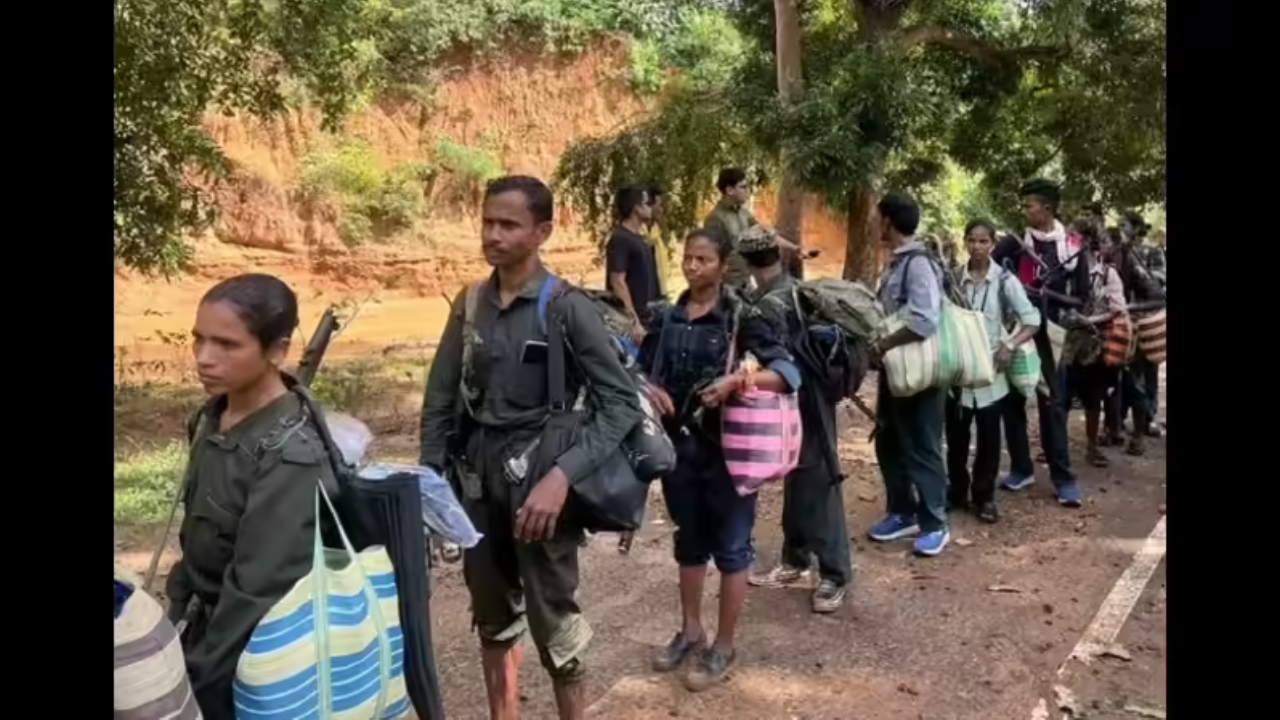
In parallel, Chhattisgarh witnessed a major breakthrough in counter-insurgency efforts. On the same day, 63 Maoists, including mid-level commanders, laid down arms in Dantewada, a district long plagued by left-wing extremism. This mass surrender represents one of the largest in recent years for the region, attributed to sustained government rehabilitation programs and security operations.
Dantewada, part of the "Red Corridor" spanning central and eastern India, has been a Maoist stronghold since the 2000s Naxalite insurgency peaked. The surrendered cadres cited disillusionment with Maoist ideology, improved living conditions under state schemes, and pressure from intensified anti-Naxal campaigns as reasons for their decision. Chhattisgarh Chief Minister Vishnu Deo Sai's administration has emphasized the Surrender-cum-Rehabilitation Policy, offering stipends, housing, and skill training to reintegrate former insurgents.
According to the Times of India report, the event was overseen by local police and district officials, marking a "significant development" in reducing violence in the Bastar division. India has seen a steady decline in Maoist-related incidents, with over 1,000 surrenders nationwide in 2024 alone, per Ministry of Home Affairs data. However, sporadic attacks continue, highlighting the persistent challenge of ideological and socio-economic unrest in tribal areas.
Background on India's Civil Unrest Dynamics
Civil unrest in India often intersects politics, security, and regional grievances. In West Bengal, protests like Banerjee's reflect urban-rural mobilization against perceived authoritarianism, while Maoist activities stem from land rights, poverty, and exploitation in forested regions. The Union Home Ministry reports a 70% drop in left-wing extremist violence since 2010, thanks to operations like those by the Central Reserve Police Force (CRPF).
Yet, political protests remain a staple, with over 10,000 such incidents annually across states, per National Crime Records Bureau figures. Agencies like the ED have attached assets worth over ₹1 lakh crore in money-laundering cases since 2014, though conviction rates hover around 5%, fueling debates on efficacy and intent.
Outlook for Stability
Friday's events highlight India's dual challenges: electoral politicking fueling protests in opposition strongholds like West Bengal, and incremental gains against armed insurgencies in states like Chhattisgarh. As elections near, further ED actions could intensify unrest, while sustained surrenders may bolster national security. Authorities in both states have urged calm, with West Bengal police on high alert and Chhattisgarh focusing on rehabilitation.
(Word count: 712)






