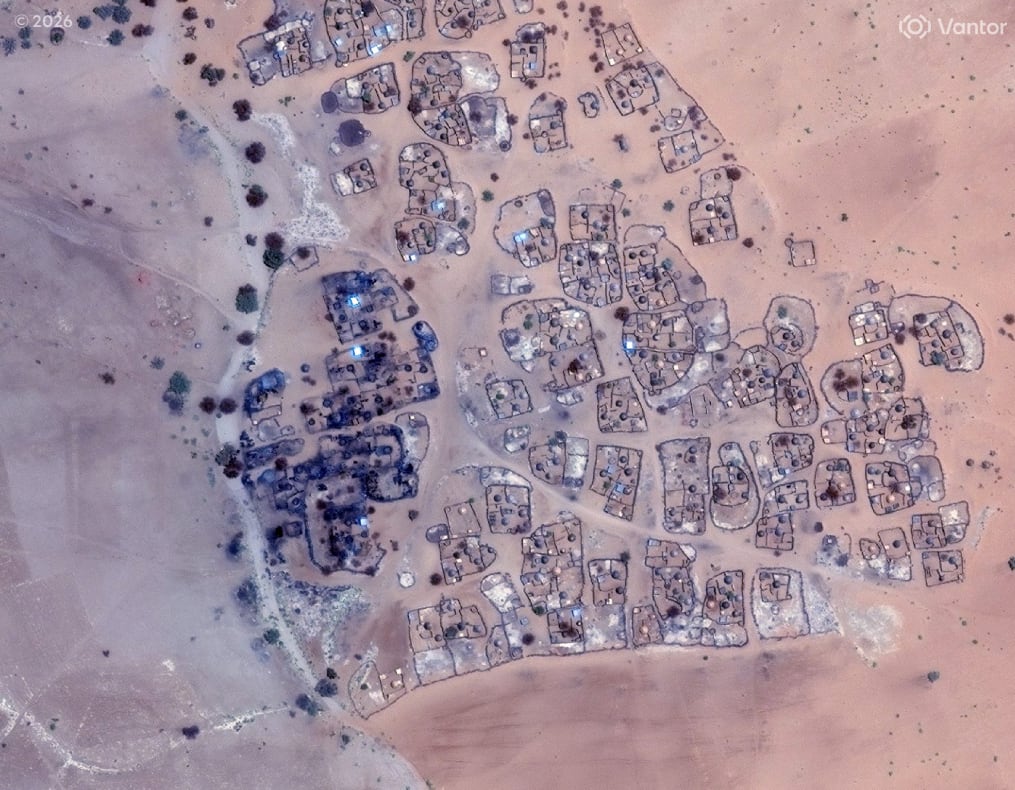

War in Sudan Results in Largest Mass Displacement Globally
Three years of conflict in Sudan have caused the largest mass displacement of people in the world.[3] The war in Sudan, now entering its fourth year, has seen paramilitary groups employ scorched-earth tactics that burn villages and accelerate depopulation, leading to famine, ethnic cleansing, and demographic shifts.[1] Millions have fled their homes, with individuals like Tahani Abbas walking for days with their children, and vast numbers remaining displaced.[2] Despite the scale of the crisis, it receives little international attention and support, even as aid organizations and local people work tirelessly to assist affected communities.[3]
Overview of the Sudan Conflict
The war in Sudan has persisted for three years, marking a prolonged period of instability that has reshaped the region.[2][3] This conflict, which began with the civil war, has led to a rapid collapse of normal life, as described by those who experienced its onset: "Alt kollapset på veldig kort tid," or "Everything collapsed in a very short time."[2] The duration of three years underscores the entrenched nature of the fighting, with no swift resolution in sight. Source materials highlight how the war has engulfed areas like Darfur, where paramilitary actions have intensified the chaos.[1]
From the outset, the civil war pitted major factions against each other, including the Rapid Support Forces (RSF) and allied militias.[1] This overview reveals the scale: the largest mass displacement globally, affecting millions who have been uprooted from their lives.[3] The perseverance of the Sudanese people amid this backdrop is notable, as they continue daily efforts despite the overwhelming odds.[3] The conflict's timeline—three full years as of recent reports—indicates a steady escalation rather than isolated incidents, with early collapses giving way to sustained violence.[2]
In assessing the war's scope, the involvement of organized paramilitary groups points to deliberate strategies rather than sporadic clashes.[1] Reports from podcasts and on-the-ground accounts emphasize how the war has permeated all aspects of society, from urban centers to rural villages.[3] The International Federation of Red Cross and Red Crescent Societies has documented this through personal stories, illustrating the human element behind the statistics.[3] Three years in, the conflict remains a defining feature of Sudan's landscape, with displacement figures rivaling any other global crisis.[3] This background sets the stage for understanding the tactics and consequences that have followed.
The rapid onset described in Norwegian coverage captures the shock: within a short period, infrastructure, security, and communities disintegrated.[2] This aligns with international observations of the war's acceleration since its civil war origins.[1] Overall, the Sudan conflict's three-year mark represents not just longevity but a deepening entrenchment, where initial breakdowns have evolved into systemic challenges.[2][3]
Military Tactics Employed
Paramilitary groups in Darfur have implemented a scorched-earth policy, systematically burning villages to reshape the region.[1] The Rapid Support Forces (RSF) and allied Arab militias have set fire to hundreds of villages since the civil war's start, with the explicit aim of accelerating depopulation.[1] This tactic involves deliberate destruction of homes and livelihoods, leaving behind charred remains that prevent return and habitation.
The scorched-earth approach is characterized by its comprehensiveness: entire communities are targeted, ensuring that agricultural lands, shelters, and infrastructure are rendered unusable.[1] By burning villages en masse, these groups achieve rapid clearance of populations, facilitating control over territory.[1] The policy's name derives from historical military strategies of denying resources to enemies, but here it serves to depopulate areas held by opposing ethnic or tribal groups.[1]
Details from reporting indicate that these fires are not accidental but part of a coordinated effort.[1] Hundreds of villages affected translate to widespread devastation across Darfur, a region already vulnerable from prior conflicts.[1] The RSF's role, as a paramilitary force with roots in earlier militias, underscores the continuity of such tactics in Sudan's wars.[1] Allied Arab militias amplify the scale, combining forces to execute burns that alter the physical and human geography.
This employment of fire as a weapon accelerates demographic shifts by forcing mass exodus before rebuilding can occur.[1] The tactic's efficiency lies in its irreversibility: once burned, villages become uninhabitable, pushing residents into flight or famine.[1] Coverage from El Pais details how this reshapes Darfur, turning fertile or strategic areas into wastelands under paramilitary dominance.[1]

Displaced families flee Sudan's war-torn villages after three years of conflict. — Source: vg
Humanitarian Impacts
The scorched-earth policy has directly resulted in famine, ethnic cleansing, and demographic change in Darfur.[1] By burning hundreds of villages, paramilitary groups have destroyed food sources, homes, and communities, creating conditions ripe for starvation.[1] Famine emerges as crops and livestock are lost to fires, leaving populations without sustenance in a region dependent on local agriculture.[1]
Ethnic cleansing is evident in the targeted depopulation, where RSF and Arab militias focus on non-Arab villages, displacing specific groups to consolidate ethnic majorities.[1] This leads to a homogenization of demographics, as burned areas are repopulated or controlled by the perpetrators' allies.[1] The policy "burns and reshapes Darfur," fundamentally altering its ethnic composition through violence and flight.[1]
Demographic changes are profound: hundreds of villages emptied mean shifts from diverse populations to militia-dominated zones.[1] This reshaping is not incidental but intentional, as depopulation accelerates control.[1] Famine compounds the crisis, with destroyed farmlands leading to acute hunger, particularly among those unable to flee far.[1]
The interplay of these impacts creates a vicious cycle: burning leads to flight, which enables further burns, perpetuating cleansing and change.[1] Darfur's transformation under this policy highlights how military tactics translate into humanitarian disasters.[1] Reports confirm that since the civil war began, these effects have intensified, with no mitigation in sight.[1]
Displacement and Flight of Populations
Millions of people have fled their homes in Sudan, with many still displaced three years into the war.[2] Personal accounts, such as that of Tahani Abbas, illustrate the harrowing journeys: she fled for several days on foot with her children, enduring extreme hardship to escape the violence.[2] This mode of flight—walking long distances—reflects the collapse of transportation and the immediacy of danger.[2]
The scale is immense: three years later, millions remain on the run, unable to return due to ongoing conflict.[2] The war's quick collapse forced abrupt departures, leaving behind possessions and stability.[2] Relief efforts note this as the world's largest mass displacement, with people scattered across borders and within Sudan.[3]
Flight experiences vary but share desperation: families like Abbas's prioritize children amid chaos, walking days without aid.[2] Three years on, the persistence of displacement indicates destroyed homes and persistent threats.[2][3] The Red Cross highlights how Sudanese endure this limbo, with little resolution.[3]
This mass movement reshapes societies, straining host areas and perpetuating vulnerability.[2][3] The duration—three years—means chronic displacement, not temporary refuge.[2]
{IMAGE_3}
Limited International Attention
The Sudan crisis receives little outside attention and support despite its severity as the largest mass displacement globally.[3] While millions suffer, international focus remains minimal, leaving local efforts to fill the void.[3] The Red Vest podcast from the International Federation of Red Cross and Red Crescent Societies underscores this gap, noting how the war garners scant global notice.[3]
This lack of attention hampers aid delivery and advocacy, as stories of perseverance struggle for visibility.[3] Despite the scale—three years of conflict displacing more than any other crisis—media and donor responses lag.[3] Sudanese people persevere without proportional help, highlighting disparities in global humanitarian priorities.[3]
The podcast features voices trying to "get the word out," yet the crisis persists in relative obscurity.[3] This dynamic challenges effective response, as underfunding limits scale.[3]
Aid and Community Responses
Aid organizations and local individuals are actively working to support affected communities amid the war in Sudan.[3] The International Federation of Red Cross and Red Crescent Societies exemplifies this through initiatives like the Red Vest podcast, which amplifies Sudanese voices.[3] Remarkable people labor daily to improve life for millions, facing personal costs but persisting.[3]
Efforts include getting the word out about the displacement and providing direct assistance despite challenges.[3] Mahmoud's account of returning to affected areas reveals the risks volunteers undertake.[3] Local perseverance complements organizational aid, as Sudanese communities support one another.[3]
These responses occur against little international support, relying on quiet strength.[3] The podcast episode details how such work sustains hope amid three years of crisis.[3]
What to watch next
Continued monitoring of displacement trends and local aid perseverance will be crucial, as millions remain on the run three years into the war, with efforts to amplify their stories ongoing despite limited global support.[2][3]