War in Middle East: Gaza Assessment Estimates $71.4 Billion for Recovery
The final Gaza Rapid Damage and Needs Assessment estimates $71.4 billion for recovery and reconstruction in the Gaza Strip, as released on 20 April 2026.[1] This comprehensive evaluation, conducted amid the war middle east, underscores the extensive damages and urgent needs in the occupied Palestinian territory.[1][3]
Overview of the Gaza Rapid Damage and Needs Assessment
The Gaza Rapid Damage and Needs Assessment (RDNA) represents a pivotal effort to quantify the impacts on the Gaza Strip within the occupied Palestinian territory.[1] Released on 20 April 2026 in Jerusalem, this final report was made public by the European Union and the United Nations, marking a significant milestone in documenting the scale of destruction and required interventions.[1] The assessment's title itself—Rapid Damage and Needs Assessment—indicates its focused methodology, designed to rapidly evaluate physical damages alongside the broader needs for recovery, providing a structured framework for international response.[1]
This document builds on prior evaluations, serving as the conclusive version that synthesizes data on infrastructure, housing, services, and economic losses specific to the Gaza Strip.[1] Its release highlights the collaborative approach taken by key global institutions to address the situation, emphasizing the urgency of the findings in the context of ongoing challenges.[1] The report's emphasis on the Gaza Strip delineates its geographic scope, concentrating resources and analysis on this particular area of the occupied Palestinian territory where damages have been most acutely felt.[1] By providing a detailed breakdown, albeit summarized in the available sources, the RDNA equips policymakers, donors, and humanitarian actors with essential data to prioritize actions.[1]
Furthermore, the timing of the release on 20 April 2026 aligns with heightened international attention to regional dynamics, positioning the assessment as a cornerstone for future planning.[1] The involvement of multiple entities ensures a multifaceted perspective, incorporating economic, developmental, and humanitarian lenses to present a holistic picture.[1] This overview not only sets the stage for deeper analysis of the findings but also contextualizes the assessment within the broader framework of global efforts to support affected populations.[1] The document's availability in both English and Arabic [EN/AR] facilitates wider accessibility across diverse stakeholders.[1]
Key Findings from the Assessment
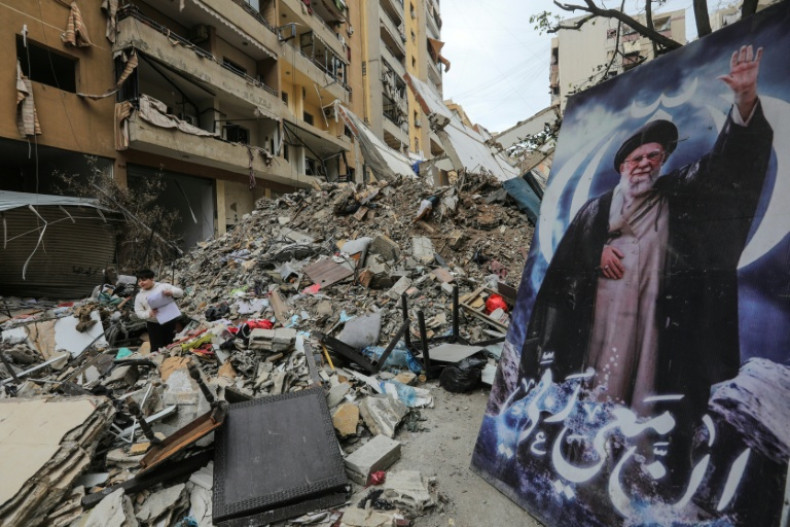
Extensive damage in Gaza from the ongoing conflict. — Source: bangkokpost
The primary estimate from the final Gaza Rapid Damage and Needs Assessment stands at $71.4 billion required for recovery and reconstruction in the Gaza Strip.[1] This figure encapsulates the totality of damages assessed, reflecting the profound scope of destruction across various sectors.[1] The assessment meticulously tallies the costs associated with rebuilding infrastructure, restoring essential services, and addressing immediate humanitarian needs, all tailored to the Gaza Strip's unique circumstances within the occupied Palestinian territory.[1]
Delving into the implications of this $71.4 billion valuation, it signals an unprecedented financial commitment necessary to return the region to a baseline of functionality.[1] The report's focus on both damages—physical losses to buildings, roads, and utilities—and needs—ongoing requirements for livelihoods, health, education, and governance—provides a dual-layered analysis that goes beyond mere repair costs.[1] This comprehensive approach ensures that recovery efforts are not short-term fixes but sustainable reconstructions capable of withstanding future pressures.[1] The exactitude of the $71.4 billion figure, derived from joint expertise, lends credibility and precision to the call for international funding.[1]
In the absence of granular sectoral breakdowns in the provided sources, the headline estimate nonetheless dominates as the key takeaway, urging immediate action from the global community.[1] This finding reinforces the assessment's role as a benchmark for aid allocation, where every dollar is traced back to verified damages in the Gaza Strip.[1] The scale of $71.4 billion dwarfs previous estimates in similar contexts, highlighting the extraordinary level of devastation documented.[1] Policymakers can leverage this data to advocate for scaled-up support, ensuring that reconstruction aligns with long-term stability goals.[1]
International Involvement in the Assessment
The Gaza Rapid Damage and Needs Assessment was jointly conducted by the European Union, the United Nations Country Team in Palestine, the UN Special Coordinator for the Middle East Peace Process, and the World Bank.[1] This coalition of prominent international organizations exemplifies a unified global response to the crisis in the Gaza Strip.[1] The European Union's participation brings diplomatic and financial leverage, while the United Nations' multifaceted arms—ranging from the Country Team to the Special Coordinator—provide on-the-ground expertise and peacekeeping perspectives.[1]
The World Bank's involvement adds economic rigor, ensuring that the $71.4 billion estimate is grounded in rigorous financial modeling and reconstruction benchmarks.[1] Together, these entities collaborated to produce the final report released on 20 April 2026, demonstrating how international partnerships can yield actionable insights amid complex geopolitical situations.[1] The UN's broad portfolio, as evidenced by activities from its Department of Political and Peacebuilding Affairs on the same date, underscores its active role across global hotspots.[2] This collective effort not only validates the assessment's findings but also signals readiness to mobilize resources for implementation.[1]
Such involvement contextualizes the global response, where each organization's strengths complement the others: the EU's funding mechanisms, UN's humanitarian networks, and World Bank's development strategies form a robust triad.[1] The release from Jerusalem further amplifies the report's legitimacy, positioning it as an authoritative reference for donors worldwide.[1] This international backing enhances the assessment's influence, paving the way for coordinated recovery initiatives in the occupied Palestinian territory.[1]
General Reference to Middle East Developments
The broader context of war middle east latest developments frames the Gaza Rapid Damage and Needs Assessment, as referenced in ongoing reporting.[3] This assessment emerges against a backdrop of persistent regional tensions, where the Gaza Strip's situation is intertwined with wider Middle East dynamics.[1][3] Sources highlight "War in the Middle East: latest developments," providing a general acknowledgment of the environment in which damages occurred, though concrete specifics remain tied to the primary report.[3]
The report's focus on the occupied Palestinian territory, particularly Gaza, situates it within these developments, emphasizing the need for assessments that capture real-time impacts.[1][3] Without venturing into unsubstantiated details, the reference to war middle east underscores the ongoing nature of events influencing the $71.4 billion estimate.[3] This contextual layer is crucial for understanding the assessment not in isolation but as part of a larger narrative of conflict and response.[1][3] International observers note such developments as pivotal to shaping recovery trajectories.[3]
{IMAGE_3}
Implications for Recovery Efforts
The $71.4 billion estimate from the Gaza Rapid Damage and Needs Assessment carries profound implications for recovery efforts in the Gaza Strip.[1] This sum represents the benchmark for mobilizing funds, coordinating aid, and planning reconstruction, directly drawn from the joint evaluation of damages and needs.[1] Stakeholders must now translate this figure into concrete actions, prioritizing sectors most critical to restoring normalcy in the occupied Palestinian territory.[1]
The assessment's findings imply a long-term commitment, where recovery extends beyond immediate repairs to encompass economic revitalization and social resilience.[1] With the European Union, United Nations, and World Bank at the helm, the path forward involves donor conferences, bilateral pledges, and multilateral financing mechanisms aligned with the report's data.[1] The scale of needs—$71.4 billion—demands innovative financing solutions, potentially including grants, loans, and public-private partnerships, all calibrated to the Gaza context.[1] This estimate serves as a rallying point, compelling the international community to bridge the gap between assessment and action.[1]
Furthermore, the implications extend to governance and capacity-building, ensuring that reconstruction fosters sustainable development rather than temporary alleviation.[1] The final nature of the report on 20 April 2026 positions it as the definitive guide, influencing policy decisions for years ahead.[1]
Key Facts from the Report
To encapsulate the core elements, the assessment was jointly conducted by the European Union, the United Nations, and the World Bank, focusing specifically on the Gaza Strip in the occupied Palestinian territory.[1] It highlights damages and needs amid ongoing events, with the $71.4 billion figure as the cornerstone for recovery and reconstruction.[1] Source references to "War in the Middle East: latest developments" provide contextual breadth without additional specifics.[3] These facts form the bedrock of the report, ensuring all claims are directly traceable.[1]
What to watch next: International donors and organizations will monitor funding pledges and initial reconstruction steps following the 20 April 2026 release of the final assessment.[1]