
Violent Protests Grip Iran Amid Economic Grievances, Prompting Travel Warnings and Official Rebukes
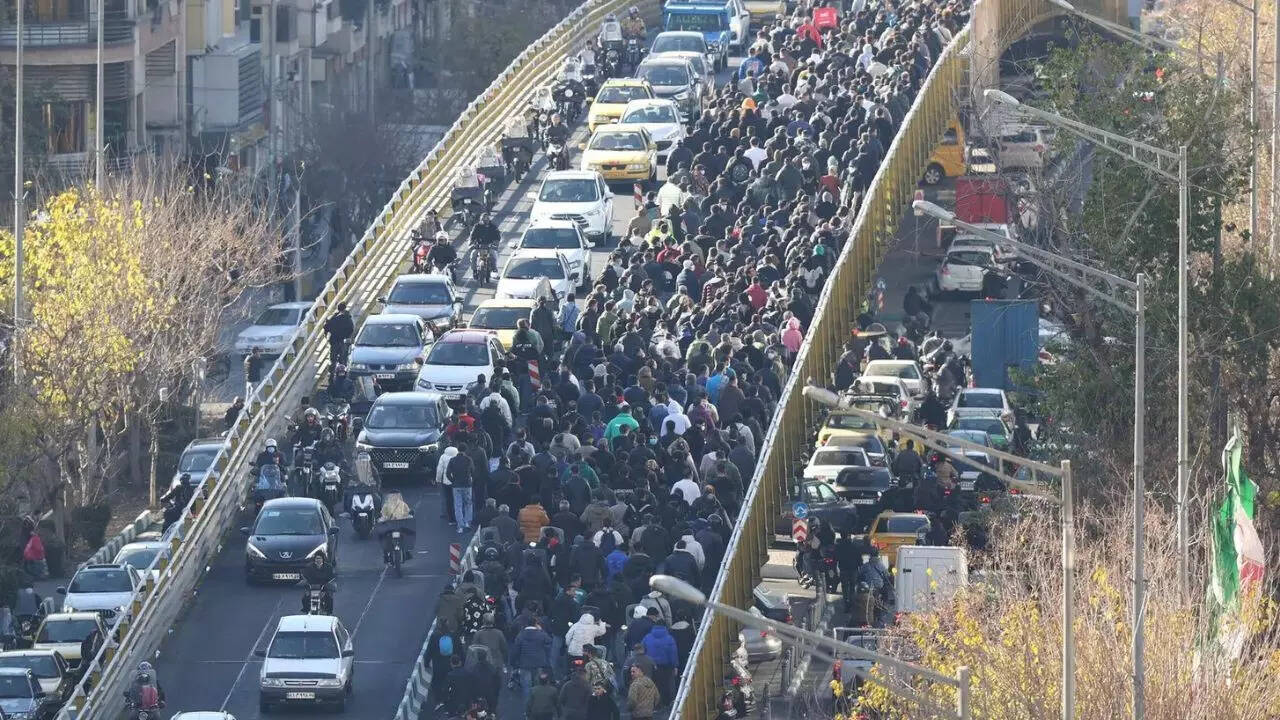
Tehran, Iran – Ongoing violent protests in Iran, triggered by deep-seated economic hardships, have escalated into deadly unrest, drawing sharp international travel advisories and stern warnings from Iranian military leaders against both domestic demonstrators and perceived foreign interference. The demonstrations, which began around January 2, 2026, have resulted in significant casualties among protesters and security forces, exacerbating an already volatile security environment.
Australia has issued an urgent travel advisory, calling on its citizens to "leave as soon as possible" due to the intensifying clashes. The advisory, reported by the Times of India, highlights the protests' roots in economic grievances, a persistent issue in Iran amid longstanding U.S. sanctions, high inflation, and currency devaluation. President Masoud Pezeshkian, who assumed office in July 2024 promising reforms, has reportedly directed security forces to refrain from cracking down on legitimate economic protests while distinguishing them from acts of rioting. This nuanced stance suggests an attempt by the government to de-escalate tensions without fully endorsing the unrest.
As the protests enter their second week, Iranian leaders have adopted a more confrontational tone. According to Al Jazeera, the army chief has publicly lashed out at "foreign rhetoric" targeting Iran, vowing "decisive action to cut off the hand of any aggressor." These statements frame the unrest not only as a domestic challenge but also as part of a broader geopolitical struggle, amid accusations that external actors are stoking divisions. The warnings extend to protesters themselves, signaling that authorities view prolonged disruptions as a threat to national stability.
The protests mark the latest in a series of civil disturbances in Iran, building on patterns seen in previous waves of unrest. In late 2022, nationwide demonstrations erupted following the death of Mahsa Amini in morality police custody, leading to hundreds of deaths and thousands of arrests. Economic protests have also flared periodically, such as in 2019, when fuel price hikes sparked deadly clashes that killed over 300 people, according to Amnesty International. Iran's economy remains strained, with official inflation hovering above 30% in recent years and youth unemployment exceeding 25%, per World Bank data. U.S.-led sanctions, reimposed after the 2018 withdrawal from the 2015 nuclear deal, have crippled oil exports and foreign investment, fueling public discontent.
International reactions underscore the risks. Australia's advisory aligns with similar cautions from other nations. The U.S. State Department maintains its Level 4 "Do Not Travel" warning for Iran, citing arbitrary arrests, terrorism risks, and civil unrest. The United Kingdom and Canada have likewise urged their citizens to depart or avoid the country. These measures reflect fears that the protests could spiral, potentially drawing in Iran's powerful security apparatus, including the Islamic Revolutionary Guard Corps (IRGC), known for its role in suppressing dissent.
Eyewitness accounts and social media footage, though restricted by Iran's internet controls, depict clashes in major cities like Tehran, Isfahan, and Shiraz. Protesters have chanted against corruption, poverty, and mismanagement, while security forces have deployed tear gas and live ammunition in some instances. Casualty figures remain unverified, with rights groups like Human Rights Watch calling for independent investigations.
President Pezeshkian's order represents a potential pivot. Elected as a relative reformist backed by Supreme Leader Ayatollah Ali Khamenei, Pezeshkian has advocated dialogue on economic issues. However, the army chief's rhetoric indicates limits to this tolerance, particularly if foreign involvement is perceived. Analysts note that Iran's dual-track approach—leniency toward economic gripes versus zero tolerance for perceived sedition—mirrors tactics used in past unrest.
The situation remains fluid, with no immediate signs of resolution. As winter deepens, colder weather and holiday periods may influence turnout, but underlying economic woes persist. International observers watch closely, wary of spillover effects in a region already tense from conflicts in Gaza, Lebanon, and Yemen, where Iran-backed groups are active. For now, the protests test the fragile balance between public demands for change and the Islamic Republic's imperative to maintain control.
(Word count: 612)






