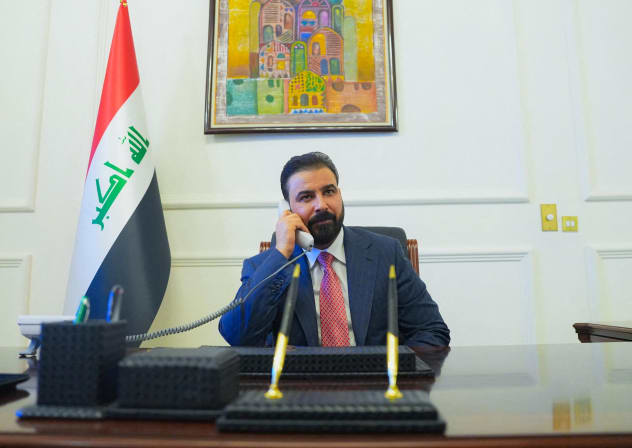
Venezuela's Political Earthquake: Maduro Seized by US Forces, Interim Leader Sworn In Amid Oil Flows and Regional Ripples
Caracas, Venezuela – In a dramatic escalation of long-simmering tensions, U.S. forces have seized Venezuelan President Nicolás Maduro, transporting him to New York to face trial, prompting the country's parliament to swear in Delcy Rodríguez as interim president on Monday. The move comes amid ongoing U.S. efforts to curb Venezuela's oil exports through a blockade, recent signals of dialogue on drug trafficking, and unconfirmed reports of a Venezuela-based attack linked to broader geopolitical flashpoints involving Iran.
The arrest of Maduro, announced just days ago, marks a stunning intervention by Washington in Venezuela's protracted political crisis. According to reports from Newsmax, Rodríguez – Maduro's former vice president and a key figure in the ruling socialist party – took the oath of office in parliament two days after the seizure. She has indicated a willingness to cooperate with the United States, signaling a potential shift in the standoff that has defined U.S.-Venezuela relations for years.
This development follows a flurry of high-stakes events in late December and early January. On December 30, oil tankers continued to arrive at Venezuelan ports despite a U.S.-imposed blockade designed to choke off crude sales by the state-run Petróleos de Venezuela S.A. (PDVSA). The persistence of these shipments underscores Maduro's government's determination to sustain oil revenues, which fund much of the economy amid crippling sanctions. Just days later, on January 2, Maduro expressed openness to discussions with the U.S. on drug trafficking – a perennial point of contention, given U.S. indictments against Venezuelan officials for narco-terrorism ties – while sidestepping questions about a recent attack in Venezuela that sources claim was linked to U.S. interests.
The interim swearing-in ceremony unfolded against this backdrop of economic maneuvering and diplomatic overtures. Rodríguez's ascension, as detailed in Newsmax coverage, positions her as a bridge to Washington, potentially easing sanctions and unlocking frozen assets. However, the transition remains fragile, with Maduro loyalists likely to challenge her authority.
Geopolitical tensions have intensified with reports of a Venezuela attack drawing in international actors. Middle East Eye cited Israeli media outlet The Jerusalem Post, which on January 5 reported that the U.S. is considering "some intervention" in Iran. U.S. Senator Lindsey Graham (R-S.C.), a vocal hawk, has amplified calls for regime change in Tehran. These signals appear tied to the Venezuela incident, which Maduro had reportedly avoided addressing amid his drug talks overture. The connections remain opaque, but they evoke Venezuela's alliances with Iran, including oil swaps and technical aid that have helped Caracas evade sanctions.
U.S. lawmakers have framed Maduro's arrest as a democratic triumph with regional implications. Senator Rick Scott (R-Fla.) stated on January 5 that "democracy is likely to return to Venezuela" post-arrest, though he cautioned the process "will take time." Scott further warned that attention could soon shift to communist rule in Cuba, Venezuela's longtime ally, suggesting a broader U.S. strategy against leftist governments in the Americas.
Background: A Decade of Crisis
Venezuela's turmoil traces back to 2013, when Maduro succeeded Hugo Chávez amid plunging oil prices and hyperinflation. Contested elections, mass protests, and U.S. sanctions – intensified under both Trump and Biden administrations – have isolated the regime. PDVSA's oil production has plummeted from over 3 million barrels per day in the early 2000s to under 800,000 recently, per OPEC data, fueling humanitarian crises with millions fleeing as refugees.
The U.S. has long accused Maduro's inner circle of facilitating cocaine trafficking through Venezuela, indicting top officials like Diosdado Cabello. Maduro's pre-arrest openness to talks represented a rare thaw, possibly in response to mounting pressure. The blockade, part of "maximum pressure" tactics, aims to starve regime finances, yet tanker arrivals – often using shadowy "ghost fleets" – highlight enforcement challenges.
Iran's role adds a layer of complexity. Tehran has supplied gasoline and parts to Venezuela since 2020, bartering for heavy crude, strengthening anti-U.S. ties. Any Venezuela attack attributed to U.S. claims could inflame this axis, explaining hawkish responses from Graham and Israeli outlets.
Outlook: Uncertain Transition and Wider Fallout
Rodríguez's cooperation pledge offers hope for stabilization, potentially paving the way for elections or opposition involvement. Yet, factional splits within chavismo, military loyalty questions, and street protests could spark violence. U.S. officials have not detailed Maduro's charges, but narcotrafficking trials in New York – home to prior extraditions like that of "El Chapo" – loom large.
Regionally, Scott's Cuba comments signal no respite for Havana, which relies on Venezuelan oil. Broader Iran links risk drawing in Israel and Gulf states, complicating global energy markets already strained by Red Sea disruptions.
As tankers dock and talks echoes fade, Venezuela stands at a crossroads. The world watches whether Rodríguez's interim tenure ushers reform or deeper chaos.
(Word count: 712)