Venezuela Earthquake Leaves 3,811 Dead and 16,740 Injured After 7.5 and 7.2 Quakes
The Venezuela earthquake of 24 June 2026 produced a rare double event that devastated La Guaira state and parts of Caracas.
Overview of the 24 June Earthquakes
The double quake occurred 39 seconds apart at shallow depths of 10-20 km along the San Sebastián fault. [3] Both events were extremely superficial and released energy along the boundary where the Caribbean Plate and the South American Plate meet. [3] The first shock measured 7.2 and the second reached 7.5, weakening structures before the stronger follow-up produced immediate collapses. [3] The combined sequence reached intensity IX on the Mercalli scale in the hardest-hit coastal zone. [3] Soft soils in the region amplified the seismic waves, while many buildings lacked modern seismic-resistant standards. [3] Official reports recorded more than 1,100 aftershocks in the days that followed. [2]
Casualties and Immediate Human Impact
Authorities reported 3,811 people killed and 16,740 injured across seven affected states. [2] La Guaira remained the most severely impacted area. [2] One apartment complex alone recorded 16 confirmed deaths, with many residents still listed as missing. [1] Survivor Luis, aged 13, was trapped for more than an hour under rubble after running from his building. [1] An aluminum railing created a protective space that prevented further collapse onto him. [1] He kept himself alert by thinking of his mother, sister, and friends while calling for help. [1] His mother Lis had rushed from her workplace at the Caracas airport and arrived to find the 10-story complex reduced to rubble. [1] She described the scene as one of total chaos, with residents searching for family members amid widespread shock. [1]

Situation report map details damage from the 7.5 and 7.2 magnitude earthquakes in Venezuela on 24 June 2026. — Source: reliefweb
Damage to Infrastructure and Heritage Sites
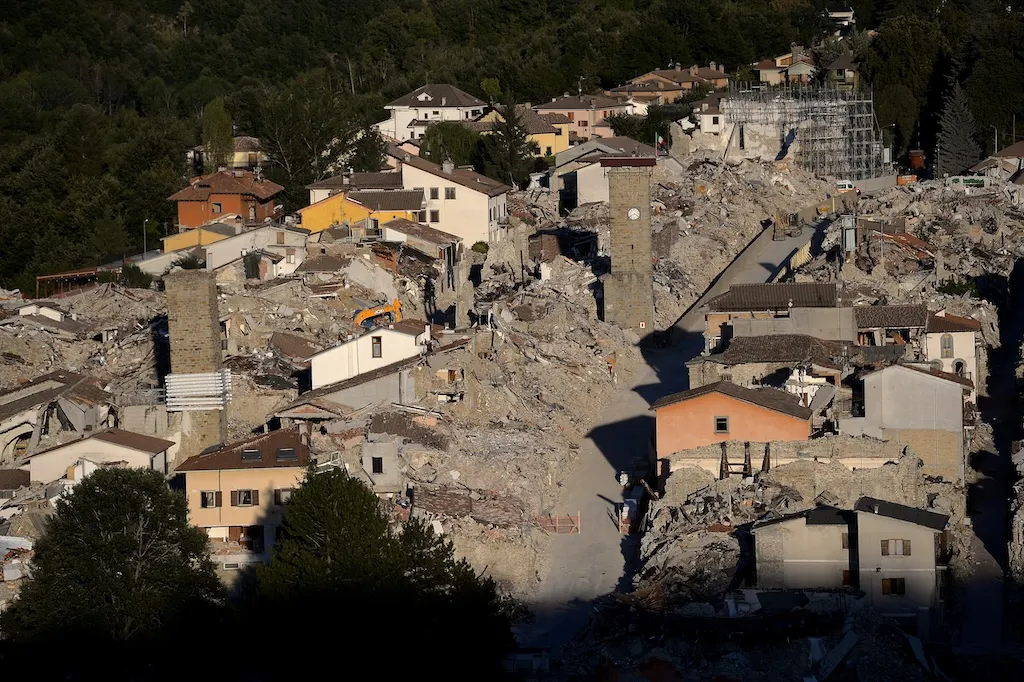
Nearly 200 buildings collapsed completely and more than 850 others sustained severe damage. [3] The Simón Bolívar International Airport in Maiquetía suffered fractures to its runway and terminals, which slowed rescue operations and the arrival of supplies. [3] UNESCO-listed Ciudad Universitaria in Caracas developed cracks and experienced partial collapses. [3] The combination of the double shock, shallow focus, and local soil conditions turned structural weaknesses into widespread destruction. [3]
Aftershocks, Displacement and Camp Response
More than 1,100 aftershocks continued to rattle the region after the main events. [2] La Guaira state recorded some of the highest levels of population displacement. [5] The International Organization for Migration is coordinating the management of three transitory camps to support national, state, and municipal authorities. [5] These camps provide transitional shelter for residents who lost their homes. [4] Ongoing seismic activity has kept many families from returning to damaged structures. [2]

Double earthquake devastation strikes La Guaira and Caracas along the San Sebastián fault. — Source: gdelt
International and National Humanitarian Efforts
More than 30 countries and international organizations dispatched rescue teams and humanitarian supplies. [3] The International Organization for Migration is assisting with camp management and broader response coordination. [4] Initial distribution of aid drew criticism for delays, prompting public discussion about reconstruction planning. [3] Rescue and medical teams focused on hard-hit zones in La Guaira while supplying water, food, and basic medicines. [3]
Survivor Recovery and Future Outlook
Luis and his mother Lis lost all their possessions and now face separation, with plans for Luis to relocate to Chile with his father while Lis rebuilds in Venezuela. [1] Psychological support from his school has helped him process the trauma step by step. [1] He continues to experience physical reactions such as trembling legs when reminded of the shaking. [1] Experts have called for updated building codes across the region that incorporate rigorous soil studies and seismic-resistant design. [3] The disaster has reinforced the need for improved early-warning systems and community evacuation protocols. [3]
What to watch next: continued aftershock monitoring, expansion of transitional camps managed with IOM support, and regional reviews of seismic building standards.