
Venezuela Declares State of Emergency as Fears of Famine and Civil War Mount Amid U.S. Tensions
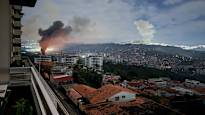
Caracas, Venezuela – The Venezuelan government declared a state of emergency on January 3, 2026, calling on supporters to mobilize in protests against what it described as U.S. military strikes and an "imperialist attack." The move, rated as medium severity civil unrest by global monitoring platforms, has heightened anxieties among Venezuelans at home and abroad, with expatriates voicing fears of impending famine and civil war.
The declaration came at 09:05 GMT on Saturday, amid escalating geopolitical tensions. Official statements urged citizens to take to the streets in defense of national sovereignty, framing the U.S. actions as a direct threat to Venezuela's stability. This development occurs against a backdrop of longstanding friction between Caracas and Washington, including U.S. sanctions imposed since 2017 in response to President Nicolás Maduro's disputed governance.
Escalating Crisis and Public Response
The state of emergency empowers the government to enact extraordinary measures, potentially including restrictions on movement, media, and assembly, though specific implementations have not been detailed in initial announcements. Government rallies have already begun in Caracas and other major cities, with state media broadcasting calls for unity. Opposition leaders, however, have remained cautious, with some labeling the emergency as a pretext for further crackdowns on dissent.
Expatriate voices underscore the human toll. Elisa Farias, a Venezuelan student residing in Helsinki, Finland, expressed profound concern in an interview with Yle News on January 5. "I hope the situation in Venezuela turns for the better, but I am aware that difficult times may lie ahead," Farias said, highlighting her fears of famine and civil war as immediate next risks. Her comments reflect the sentiments of millions of Venezuelans who have fled the country since 2014, when economic collapse triggered mass migration. Over 7.7 million Venezuelans now live abroad, according to United Nations estimates, many escaping hyperinflation, food shortages, and political repression.
Farias' perspective aligns with reports from monitoring services tracking the unrest, which classify the event as civil unrest triggered by external military pressures. The government's protest mobilization risks amplifying divisions in a nation already polarized by years of protests, electoral disputes, and economic hardship.
Historical Context and U.S.-Venezuela Relations
Venezuela's turmoil traces back to the early 2010s, when oil price crashes exacerbated mismanagement under the late President Hugo Chávez's socialist policies, continued by Maduro. The 2018 presidential election, widely condemned as fraudulent by the U.S., European Union, and much of Latin America, led to Juan Guaidó's brief recognition as interim president by over 50 countries. U.S. sanctions targeted Maduro's inner circle and state oil firm PDVSA, aiming to pressure democratic transitions but criticized for worsening humanitarian conditions.
Military tensions have simmered for years. In 2020, a failed alleged coup attempt involving U.S.-based mercenaries heightened rhetoric. More recently, disputed July 2024 elections—where Maduro claimed victory despite opposition tallies favoring Edmundo González—sparked deadly protests, killing dozens and prompting international condemnation. The January 2026 U.S. strikes, as described by Venezuelan authorities, represent a sharp escalation, though independent verification remains limited amid restricted access for foreign journalists.
Humanitarian indicators paint a dire picture. The United Nations reports that 16 million Venezuelans—over half the population—face acute food insecurity, with child malnutrition rates soaring. The World Food Programme has scaled up operations, but funding gaps persist. Farias' mention of famine echoes warnings from aid agencies, which predict further deterioration if unrest disrupts remaining supply chains.
Regional and International Reactions
Neighboring countries have expressed alarm. Colombia, hosting over 2.8 million Venezuelan refugees, urged dialogue to avert spillover violence. Brazil's President Lula da Silva, a past Maduro ally, called for de-escalation, while the Organization of American States scheduled an emergency session. The U.S. State Department has not commented directly on the strikes alleged by Caracas, but historical patterns suggest denials or classifications as targeted actions against illicit activities, such as drug trafficking networks linked to Maduro officials.
Analysts note the emergency declaration could stifle opposition amid ongoing investigations into 2024 election fraud by international bodies. Human Rights Watch has documented over 25 deaths in post-election clashes, with thousands detained.
Outlook Amid Uncertainty
As protests gain momentum, the risk of broader civil unrest looms. Farias' hope for improvement contrasts with the government's defiant stance, leaving Venezuela at a precarious juncture. International mediators, including Norway's past facilitation of U.S.-Maduro talks, may reemerge, but success hinges on verifiable de-escalation.
The coming days will test Maduro's grip on power, now in its 12th year. With economic reserves depleted and alliances strained—Russia and Iran providing limited support—the path forward remains fraught. For Venezuelans like Farias, the declaration evokes not just immediate peril but a cascade of long-feared catastrophes.
(Word count: 612)






