
Venezuela Declares State of Emergency Amid U.S. Military Strikes and Maduro's Capture; Government Releases Political Prisoners
Caracas, Venezuela – In a dramatic escalation of tensions with the United States, the Venezuelan government declared a state of emergency on January 3, 2026, calling on supporters to mobilize in protests against what it described as "imperialist attacks" following recent U.S. military strikes. This move comes just days after reports emerged that U.S. forces captured President Nicolás Maduro, prompting the government to begin releasing political prisoners long demanded by Washington.
The declaration, issued early Saturday at 09:05 GMT, marks a high-severity response to the unfolding crisis. Venezuelan authorities framed the U.S. actions as an invasion, urging widespread demonstrations to defend national sovereignty. Concurrently, the government has initiated the release of political detainees, a concession that aligns with longstanding U.S. demands amid the power vacuum left by Maduro's detention.
Escalating U.S.-Venezuela Confrontation
The state of emergency empowers the government to impose restrictions on movement, gatherings, and media, though specifics on implementation remain unclear. Official statements emphasized rallying "all patriots" against foreign aggression, positioning the protests as a counter to perceived imperialism. This call to action risks further inflaming civil unrest in a nation already strained by economic collapse, hyperinflation, and political division.
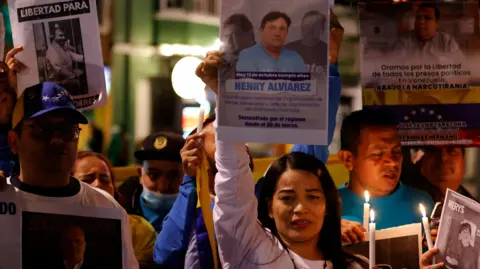
Reports confirm that the U.S. has taken custody of Maduro, whose leadership has been marked by international controversy since 2013. The capture follows a period of heightened U.S. pressure, including sanctions and recognition of opposition figures as legitimate leaders. The BBC reports that the Venezuelan government is now complying with demands to free political prisoners, many of whom were arrested during waves of anti-Maduro protests in recent years. These detainees include opposition activists, journalists, and human rights defenders, held on charges of conspiracy and sedition.
No official U.S. confirmation of Maduro's capture has been detailed in available reports, but the prisoner releases suggest a direct linkage to American stipulations. This development could signal a potential de-escalation tactic by Venezuelan officials, even as they decry the military intervention.
Waves of Civil Unrest and Government Response
Venezuela has experienced intermittent civil unrest since the mid-2010s, driven by food shortages, blackouts, and disputed elections. Protests peaked after the 2018 presidential vote, boycotted by much of the opposition, and again following the July 2024 legislative elections, where Maduro claimed victory amid fraud allegations. International observers, including the UN and EU, criticized the process, leading to renewed sanctions.
The current emergency declaration inverts the typical protest dynamic: rather than suppressing dissent, the government is mobilizing its base. This could lead to clashes between pro-government demonstrators and opposition groups, who may view Maduro's ouster as an opportunity for change. Human rights organizations have documented over 15,000 arbitrary detentions since 2014, making the prisoner releases a pivotal humanitarian step.
Historical Context: A Decade of Crisis
Venezuela's turmoil traces back to the death of Hugo Chávez in 2013, when Maduro assumed power amid falling oil prices that crippled the petrostate economy. GDP has contracted by over 75% since 2013, per International Monetary Fund data, fueling mass migration—over 7.7 million Venezuelans have fled by UN estimates as of 2024.
U.S.-Venezuela relations have deteriorated progressively. The Trump administration's 2019 "maximum pressure" campaign included bounties on Maduro and designations of allies as narco-terrorists. The Biden administration maintained sanctions while pursuing diplomacy, recognizing interim President Juan Guaidó until 2023. Recent events represent a sharp militarization, diverging from prior non-interventionist stances.
The 2024 elections exacerbated divisions: Opposition leader Edmundo González claimed a landslide victory based on tally sheets, but Maduro's control of the military and courts ensured his continuity. Post-election protests led to hundreds of arrests, swelling the political prisoner population.
Prisoner Releases Signal Shifting Dynamics
The BBC's coverage highlights the releases as a direct response to U.S. capture of Maduro, noting Washington's long advocacy for detainee freedom. Activists like Javier Tarazona, founder of the human rights group Funcar, and others from the 2024 protest crackdowns are among those reportedly freed. This move may aim to garner international sympathy or appease potential transitional authorities.
However, the state of emergency complicates the picture. While releases proceed, new mobilizations could result in fresh arrests if protests turn violent. Regional neighbors, including Brazil and Colombia, have expressed concern over spillover effects, with borders already strained by refugees.
Outlook Amid Uncertainty
As Venezuela navigates this unprecedented juncture, the interplay of emergency powers, protests, and prisoner amnesties underscores a nation at a crossroads. The U.S. intervention raises questions about hemispheric stability, invoking memories of past interventions like Panama in 1989. International bodies such as the Organization of American States are likely to convene urgently.
The government's call for mobilization against "imperialism" echoes Chávez-era rhetoric, but Maduro's absence introduces unpredictability. Opposition factions, fragmented yet energized, may push for elections or negotiations. Economic recovery remains distant, hinging on sanction relief and governance reforms.
This fluid situation demands close monitoring, with potential for both de-escalation through releases and escalation via unrest. Global markets watch closely, given Venezuela's vast oil reserves—once the world's largest.
(Word count: 728)






