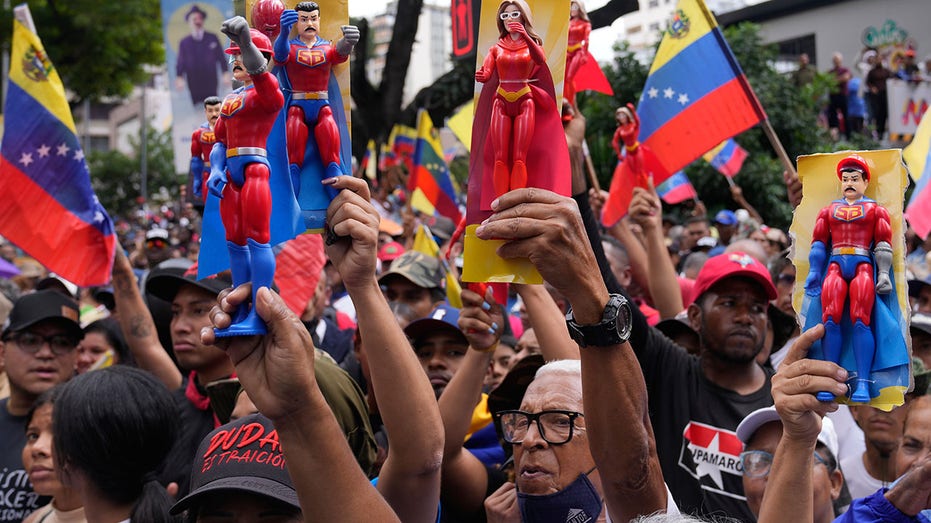

Venezuela Declares State of Emergency After U.S. Forces Arrest Maduro on Drug Charges, Sparking Manhunt and Calls for Protests
Caracas, Venezuela – Venezuela's government declared a state of emergency on January 3, 2026, following the dramatic arrest of President Nicolás Maduro by U.S. forces on drug trafficking charges. The move has triggered a nationwide manhunt for Maduro's supporters, the swearing-in of a new interim leader, and urgent calls for mass mobilization against what the government describes as a U.S. imperialist attack, heightening fears of widespread civil unrest in the crisis-hit nation.
The emergency declaration, announced at 09:05 GMT on Saturday, came amid escalating tensions after U.S. military personnel reportedly captured Maduro. According to reports, the long-time socialist leader was detained on longstanding U.S. indictments related to narcotrafficking. Venezuelan authorities responded swiftly by ordering the arrests of Maduro loyalists, framing the operation as a necessary purge to stabilize the country. Delcy Rodríguez, Maduro's vice president and a key figure in his administration, was sworn in as interim leader, vowing to defend national sovereignty.
"Venezuela faces an imperialist aggression," a government statement cited in reports urged, calling on supporters to take to the streets in protest against U.S. military strikes. This mobilization effort coincides with the manhunt, which Fox News described as targeting "supporters" of the ousted president, potentially exacerbating divisions in a country already fractured by years of political polarization.
Escalating Crisis and Immediate Fallout
The arrest and subsequent emergency measures mark a stunning escalation in U.S.-Venezuela relations. Maduro, who has ruled since 2013 following the death of Hugo Chávez, faced U.S. sanctions and indictments for years. In March 2020, the U.S. Department of Justice formally charged Maduro and several top officials, including Rodríguez, with narcoterrorism, alleging they facilitated cocaine shipments to the U.S. as part of the "Cartel of the Suns" – a supposed network involving Venezuelan military and intelligence officials. A $15 million bounty was placed on Maduro's head, underscoring Washington's long-standing accusations of corruption, human rights abuses, and drug-related crimes propping up his regime.
Details of the operation remain sparse, but the Fox News report indicates U.S. forces executed the arrest directly, prompting Venezuela's retaliation. The nationwide manhunt has reportedly led to dozens of detentions, with security forces raiding homes and offices linked to Maduro's United Socialist Party of Venezuela (PSUV). Rodríguez, in her inaugural address, emphasized unity against external threats, stating the emergency powers would be used to "root out traitors" and counter any destabilizing elements.
Protests have already erupted in Caracas and other major cities, with pro-government rallies clashing against opposition groups celebrating Maduro's fall. Videos circulating on social media show security forces deploying tear gas and barricades, while reports of looting and vandalism in pro-Maduro strongholds like the 23 de Enero neighborhood raise alarms of spiraling violence. The severity of the unrest has been rated as "HIGH" by monitoring platforms, with the potential for broader civil disorder if the manhunt intensifies.
Historical Context of Venezuela's Turmoil
Venezuela's descent into chaos provides critical backdrop to these events. Once Latin America's richest nation due to vast oil reserves, it has grappled with hyperinflation, food shortages, and mass emigration under Maduro's tenure. Disputed elections in 2018 and 2024 deepened the crisis, leading to U.S.-backed recognition of opposition leader Juan Guaidó as interim president in 2019 – a claim later abandoned amid diplomatic shifts.
The U.S. has imposed over 500 sanctions since 2017, targeting Maduro's inner circle for undermining democracy and engaging in illicit activities. Maduro consistently dismissed these as "economic warfare," bolstering alliances with Russia, China, Iran, and Cuba for support. His arrest aligns with renewed U.S. pressure under the Biden administration's later years and a potential incoming hardline stance, though specifics remain unconfirmed.
Humanitarian conditions remain dire: over 7.7 million Venezuelans have fled since 2014, per United Nations data, while GDP has contracted by more than 75% since peak oil prices. The oil sector, nationalized under Chávez, has deteriorated, with production hovering around 700,000 barrels per day – far below OPEC quotas.
International Reactions and Outlook
Global powers have reacted cautiously. Russia condemned the U.S. action as a "violation of sovereignty," while China called for restraint. The European Union urged dialogue, and regional bloc CELAC scheduled an emergency summit. Opposition figures in Venezuela, including exiled leaders, hailed the arrest as a "new dawn," but warned against reprisals.
Analysts point to risks of proxy conflicts, with Iranian drones and Russian Wagner mercenaries previously bolstering Maduro's defenses. The state of emergency grants Rodríguez sweeping powers, including media censorship and military deployments, which could suppress dissent but also fuel underground resistance.
As protests swell and arrests mount, Venezuela teeters on the brink of full-scale civil unrest. Whether Rodríguez can consolidate power or if Maduro's loyalist militias – the "colectivos" – ignite broader conflict remains uncertain. International mediators are watching closely, but with U.S. forces involved, de-escalation appears remote. The coming days will test the fragile threads holding Venezuela together.
(Word count: 728)






