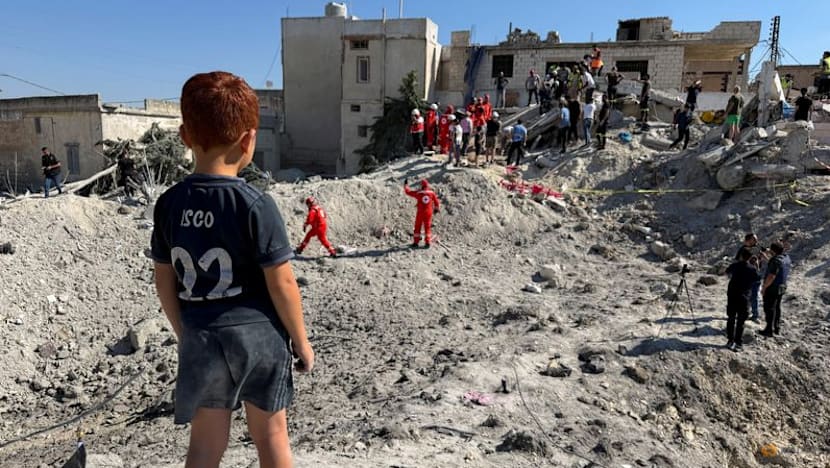
US Strikes Iranian Sites in Self-Defense Following Ship Attacks
US and Iranian forces have exchanged military strikes, with the US launching self-defense attacks on Iranian sites while insisting that a ceasefire remains in effect.[1][5] Iran accused the US of violating the ceasefire by targeting Iranian vessels and coastal areas,[1] amid reports of three US ships coming under fire in the Strait of Hormuz with no damage reported and the attackers destroyed.[4] These exchanges occurred on the 69th day of the conflict,[2] as former President Trump warned Iran of stronger military action if a deal is not signed quickly.[4] The incidents underscore ongoing tensions despite US claims that the ceasefire holds.[1][5]
Overview of the Exchanges
The recent military interactions between US and Iranian forces mark a significant escalation in their protracted conflict, now entering its 69th day.[2] US military strikes on sites in Iran occurred as the two countries exchanged fire,[3] with American officials framing the actions as self-defense responses to Iranian provocations.[5] Iranian and US forces traded attacks, prompting Trump to assert that the ceasefire remains "in effect."[1] This sequence of events highlights a fragile standoff, where defensive measures by one side are perceived as violations by the other.[1][5]
Contextually, these exchanges build on prior hostilities, with the US responding to threats against its naval assets.[5] Reports indicate that Iran initiated actions targeting US Navy destroyers, leading to retaliatory US strikes.[5] The back-and-forth nature of the engagements—US strikes followed by Iranian responses—illustrates the challenges in maintaining de-escalation amid mutual accusations.[3] On this 69th day, the intensity of the exchanges, including attacks on coastal areas and vessels, suggests that while a ceasefire is claimed, operational realities on the ground or sea continue to test its viability.[1][2] US insistence on the ceasefire's status provides a diplomatic anchor, even as military actions proceed under the banner of necessity.[1][5] This overview reveals a pattern where self-defense justifications coexist with claims of infringement, complicating international perceptions of the conflict's trajectory.[3]
US Military Actions
US forces launched self-defense strikes on Iranian targets, including ports and coastal areas, in direct response to Iranian aggression.[2][5] These actions followed incidents where Iran targeted US Navy destroyers, prompting the military to strike sites in Iran as the countries exchanged fire.[3][5] The US official response emphasized that these were protective measures, not initiations of broader hostilities, while maintaining that the ceasefire still stands.[5]
Detailing the operations, American forces initiated new attacks on Iranian ports, as noted in conflict updates on the 69th day.[2] This aligns with reports of strikes on unspecified sites within Iran, framed explicitly as self-defense after Iranian forces targeted naval assets.[3][5] The context of these strikes reveals a reactive posture: US ships and destroyers faced direct threats, necessitating immediate countermeasures to neutralize dangers.[5] No broader strategic objectives beyond protection were indicated in available accounts, underscoring the defensive rationale.[3] The precision and timing of these strikes—coinciding with exchanges of fire—demonstrate the US military's operational readiness in high-risk maritime zones.[2][5] By targeting Iranian ports and related coastal infrastructure, the actions aimed to deter further attacks without upending the claimed ceasefire framework.[1][2] This measured approach, grounded in self-defense, reflects ongoing efforts to safeguard American interests amid escalating provocations.[5]
Iran's Response and Accusations
Iran retaliated with fire after US strikes on its ports and coastal areas, accusing the US of ceasefire violations through targeted attacks on Iranian vessels.[1][2] Teheran returned fire in response to American-initiated new attacks on Iranian ports, as documented on the 69th day of the war.[2] These accusations center on US strikes hitting coastal regions and ships, which Iran views as breaches of the agreed truce.[1]
Iran's countermeasures involved direct engagements, including firing on US assets in contested waters, escalating the tit-for-tat dynamic.[2] The claims of violation stem from the perceived aggression in striking Iranian vessels and infrastructure, prompting a defensive Iranian response.[1] This perspective contrasts sharply with US self-defense narratives, creating a narrative divide where each side justifies its actions as proportionate.[1][2] Iran's retaliation, described as "uzvratio paljbu" or returning fire, indicates swift operational responses to US port strikes.[2] The focus on vessels underscores vulnerabilities in Iran's maritime posture, where coastal defenses were compelled to activate amid the exchanges.[1] These developments on day 69 highlight Iran's readiness to counter what it deems infractions, potentially prolonging the cycle of engagements unless diplomatic breakthroughs occur.[2]
Statements from US Leadership
US leadership, including former President Trump, has firmly asserted that the ceasefire remains "in effect" despite the exchanges of strikes between Iranian and US forces.[1] Trump warned Iran of stronger military action—"We’ll knock them out harder"—if a deal is not signed quickly, following incidents involving US ships.[4][5] US officials insist the ceasefire stands even as self-defense strikes were launched after Iran targeted Navy destroyers.[5]
Trump's rhetoric labeled Iran as "lunatics," emphasizing the need for a rapid deal to avert escalation, in comments tied to the Strait of Hormuz events.[4] This warning came amid claims that the ceasefire holds, providing a public stance of restraint coupled with threats of intensified response.[1][5] The statements reflect a dual messaging strategy: upholding the truce diplomatically while signaling resolve militarily.[1] By day 69, such declarations aim to pressure Iran toward negotiations, framing US actions as necessary protections rather than aggressions.[4][5] Trump's direct involvement amplifies the urgency, positioning the conflict at a potential tipping point where unresolved tensions could lead to heavier blows.[4]
Incident in the Strait of Hormuz
Three US ships, specifically destroyers, came under fire in the Strait of Hormuz, but suffered no damage as Iranian attackers were destroyed.[4] Former President Trump highlighted this event, warning of escalated action in its aftermath.[4]
The Strait of Hormuz, a critical chokepoint for global oil shipments, served as the flashpoint where Iranian forces targeted the vessels.[4] US destroyers faced incoming fire, prompting a decisive counteraction that neutralized the threats without compromising the ships' integrity.[4] This incident, occurring amid broader exchanges, exemplifies the high-stakes naval confrontations defining the conflict's 69th day.[4] Trump's response tied the event to broader demands for a deal, underscoring the vulnerability of US naval operations in the region.[4] The lack of damage to US assets demonstrates effective defensive capabilities, while the destruction of attackers reinforces a message of deterrence.[4]
What to watch next: US officials continue to insist the ceasefire stands amid potential for stronger action if no deal is reached quickly,[1][4][5] with further exchanges possible as Iran contests the violations.[1][2]