
US Strikes Hit Bridges and Port Tower in Iran for Seventh Night
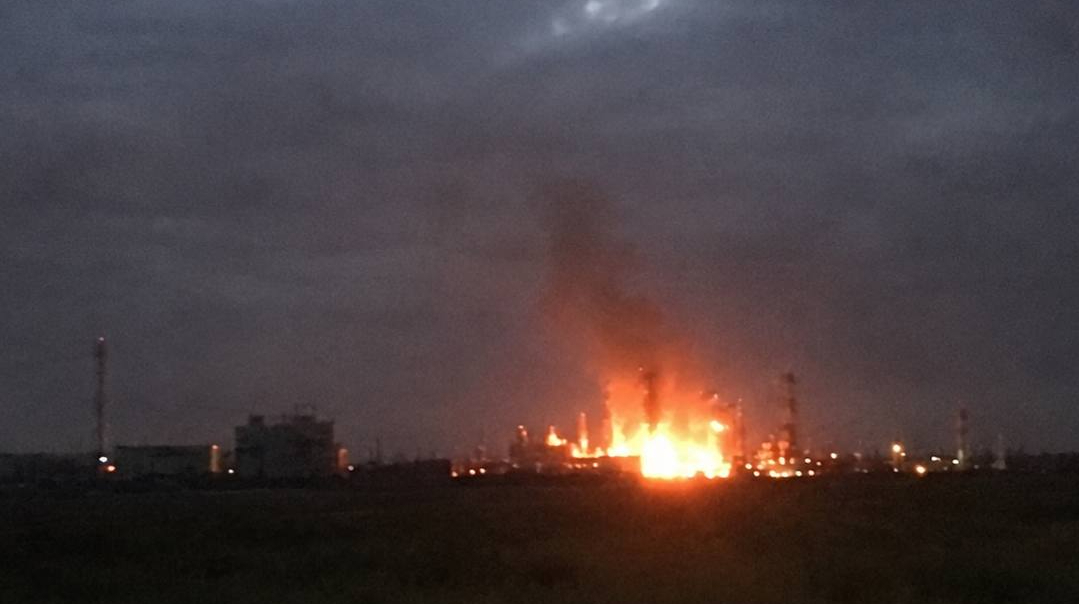
The United States conducted its seventh consecutive night of strikes on Iranian military and infrastructure targets, including bridges in Hormozgan province and a tower at Chabahar port, as Iran retaliated with missile and drone attacks on U.S.-allied nations in the Gulf amid the latest round of Iran strikes. The U.S. Central Command stated the strikes targeted surveillance sites, military logistics infrastructure, underground weapons storage, and maritime capabilities using fighter jets, drones, and warships. [3] Iranian officials reported at least 46 killed and more than 400 wounded in recent U.S. strikes, with eight killed in a bridge strike on Friday; the U.S. acknowledged 13 additional service members injured since Monday. [1] Iran launched missiles at Qatar, Kuwait, Bahrain, Jordan, and Iraq, damaging a power and water desalination plant in Kuwait that supplies 90% of the country's drinking water and injuring personnel and a child from debris. [2] Iran claimed two oil tankers exploded in a mined route in the Strait of Hormuz, a statement dismissed as false by U.S. Central Command. [4] The conflict, which began Feb. 28, centers on control of the Strait of Hormuz, with shipping traffic falling to a three-week low and oil prices rising above $86 per barrel. [1]
U.S. Launches Seventh Night of Strikes on Iran
The U.S. expanded its attacks against Iran by hitting more bridges and energy sites and collapsing a tower at a key Iranian port. [1] The U.S. airstrikes hit bridges overnight into Friday in Iran’s southern Hormozgan province, Iranian state television reported. [1] The attacks hit Bandar Khamir, a city on Iran’s coast on the Strait of Hormuz. [1] The highway and railway bridge strikes appeared aimed at cutting off Bandar Abbas, Iran’s main port, from roads leading into the Islamic Republic’s central region onward to Tehran, the capital. [1] Iran acknowledged “attacks on power infrastructure” during the U.S. airstrike campaign for the first time Friday when its Energy Ministry issued a call for people to use less power in southern provinces “experiencing extreme heat.” [1] Central Command said it hit dozens of military and military infrastructure targets in Friday’s airstrikes. [1] The strikes collapsed a tower at Iran’s Chabahar port on the Gulf of Oman, a key trade route for landlocked, neighbouring Afghanistan, the state-run IRNA news agency reported and the U.S. military later confirmed. [1] Chabahar port, which Iran had been running with support from India, has been a repeated target of American airstrikes. [1] Iran said the tower oversees commercial traffic into the port. [1] But Central Command said it was part of a maritime surveillance network used by Iran’s paramilitary Revolutionary Guard to “track and target” commercial vessels in the strait. [1] On Friday evening Iranian state media reported explosions around Iran, including in the central and south of the country. [1] Local authorities said the U.S attacked around Ahvaz city without elaborating. [1] IRNA also reported the sound of explosions in Lar, Yazd and Sirik. [1] U.S. forces employed fighter aircraft, aerial drones, and warships in addition to other assets. [4] Provincial authorities in the affected region, Hormozgan province, said seven people were killed in the attacks. [4] BBC Verify and BBC Persian have verified footage of damage to Gariveh Bridge, after night videos showed a ball of flames on top of it. [4] Daylight images showed a crumbled stretch of road with rubble around the broken bridge. [4]
Iranian Casualties and U.S. Injuries Reported
Iranian officials say recent U.S. strikes have killed dozens of people and wounded hundreds, with new casualties reported Friday. [1] Iranian authorities said at least 46 people have been killed and more than 400 wounded in recent U.S. strikes, including eight killed in a strike on a bridge Friday. [1] Iran's health ministry said at least 38 people had been killed and more than 400 injured in the country since fighting resumed. [2] U.S. officials acknowledged 13 additional U.S. service members -- 10 army soldiers and three navy sailors -- had been injured since Monday, but offered no further details. [1] Since the war began, 14 U.S. service members have been killed and 427 wounded. [1] Sources have told the BBC's US partner CBS news that several American service members were injured during Iranian attacks on two Jordanian bases over the past week. [4] A White House spokesperson told the BBC the US had "carried out strikes exclusively on military targets, including military logistics infrastructure". [4]
Iran Retaliates Against Gulf States
On Friday, Qatar twice warned the public to take shelter as a barrage of Iranian missiles targeted the nation. [1] People heard explosions overhead as air defences fired to intercept the missiles. [1] Qatar’s Interior Ministry said falling debris wounded a child. [1] Iran also targeted Bahrain and Kuwait early Friday. [1] In Kuwait, authorities said Iran attacked a power and water desalination plant, causing widespread damage to the station. [1] Kuwait said it extinguished the blaze and was working to assess the damage and get the station working again. [1] About 90 per cent of the country’s drinking water comes from desalination. [1] A spokesman for Kuwait’s defence ministry said Iranian drone attacks on its army’s “facilities and camps” injured an unspecified number of personnel. [1] Jordan’s military said it intercepted three incoming missiles Friday morning launched by Iran. [1] Jordan's armed forces said it had intercepted 10 Iranian missiles fired into its airspace overnight, though there were no casualties or damage. [4] Explosions also could be heard Friday morning in Irbil and Sulaymaniyah in northern Iraq’s semiautonomous Kurdish region as air defences targeted incoming fire. [1] The attack apparently targeted the Iranian Kurdish dissident group Komala, killing at least nine people and wounding others, said an official who spoke on condition of anonymity for security reasons. [1] Iran's Guards said they had targeted US radar systems and military aircraft in Qatar to "punish the aggressor", with Doha saying it had intercepted a missile attack. [2] Iran's Guards also said they had attacked two US radar sites in Oman and the Al-Tanf military base in Syria. [2] A Syrian military source denied there had been such an attack and US forces said they had withdrawn from the base earlier this year. [2] In Bahrain, Tehran targeted US helicopters and planes at an airbase, Iranian state media reported, with the island nation urging citizens to take shelter. [2] In Kuwait, where Tehran said it had targeted US military sites on Friday, the electricity ministry said an Iranian attack damaged a power and water plant and urged users to ration electricity consumption. [2] The Kuwaiti military said several troops had been wounded when Iranian drones targeted a number of its bases and camps. [2]
Dispute Over Tanker Explosions in Strait of Hormuz
In a statement early on Saturday, the Iranian military claimed that two oil tankers exploded and caught fire as they attempted to transit a mined route in the Strait of Hormuz. [1] Iran's Revolutionary Guards said two oil tankers had exploded in the Strait of Hormuz while passing through a mined part of the shipping channel. [4] Iran's state-run Fars agency had said two oil tankers "exploded and caught fire while passing through a mined route south of the Strait of Hormuz". [4] Later, Centcom posted on X: "Like most IRGC claims, this is false." [4] US denies Iranian claim that oil tankers exploded in Hormuz. [3] Also on Friday, a tanker came under attack travelling through the Strait of Hormuz taking the route closest to Oman, the British military said. [1] The report from the United Kingdom Maritime Trade Operations center said the ship sustained minor damage without any of its crew being injured. [1] Iran did not immediately acknowledge any attack. [1] In recent days, it has openly targeted ships using the route, which is overseen by the U.S. military and intended to be outside of Tehran’s control. [1]
Context of the Four-Month Conflict
The region has endured days of back-and-forth attacks in a conflict increasingly focused on control of the strait, and the collapse of an interim ceasefire leaves no clear end in sight for the war that began more than four months ago. [1] The war began on February 28 with deadly US-Israeli strikes on Iran, which retaliated by effectively closing the Strait of Hormuz and launching attacks on Israel and American interests across the Gulf. [2] Iran has said the strait must be under its sole control and that vessels should pay fees to Tehran -- even though the world for decades has considered it an international waterway. [1] The U.S. also reimposed a naval blockade on Iranian ports to halt its shipments of crude oil. [1] Crossings through the strait fell to a three-week low of just eight vessels on Thursday, according to MarineTraffic.com. [1] Shipping traffic in the vital Strait of Hormuz has largely stopped amid the continuing tit-for-tat strikes by US and Iranian forces. [4] The strait normally accounts for about one-fifth of the world's oil and liquefied natural gas supplies. [4] The price of oil rose Friday above US$86 a barrel, close to its highest level in a month, as crossings through the strait fell to a three-week low, according to an international shipping tracker. [1] Mediators have attempted to bring both sides back to the negotiating table and China and Pakistan called for the US and Iran to stop fighting and resume talks. [2]
Statements from Trump and Iranian Officials
In an address to the American public on Thursday evening, Trump insisted the war was going well. [1] “We are likewise winning big in Iran, and you will see the fruits of that labor very, very shortly,” he said. [1] Donald Trump said he is going to ‘knock out’ their supplies until Iran negotiates with the U.S. [1] Before the war began, the U.S. had been in talks with Iran over its nuclear program. [1] Trump now faces political pressure to bring the war to a close and avoid the kind of prolonged Middle East conflict he had campaigned against. [1] Major General Mohsen Rezaei, a senior military advisor to Iran's supreme leader, said Tehran will resume "full-scale offensive operations" if US strikes against it continue for another two or three days. [5] "Iran will no longer limit itself to retaliatory, like-for-like responses...and no political border will be safe," Rezaei said, according to the Iranian news agency IRIB. [5] Iranian Revolutionary Guards aerospace force commander Majid Mousavi said "effective and targeted strikes from across Iran against the enemy will continue" until the US ends its operation against Iran's coastal facilities in the south and around the strait. [2]
What to watch next: Mediators have attempted to bring both sides back to the negotiating table and China and Pakistan called for the US and Iran to stop fighting and resume talks. [2]