
U.S. Senate Proposal Recognizes Crimea in Ukraine War Intelligence Measure
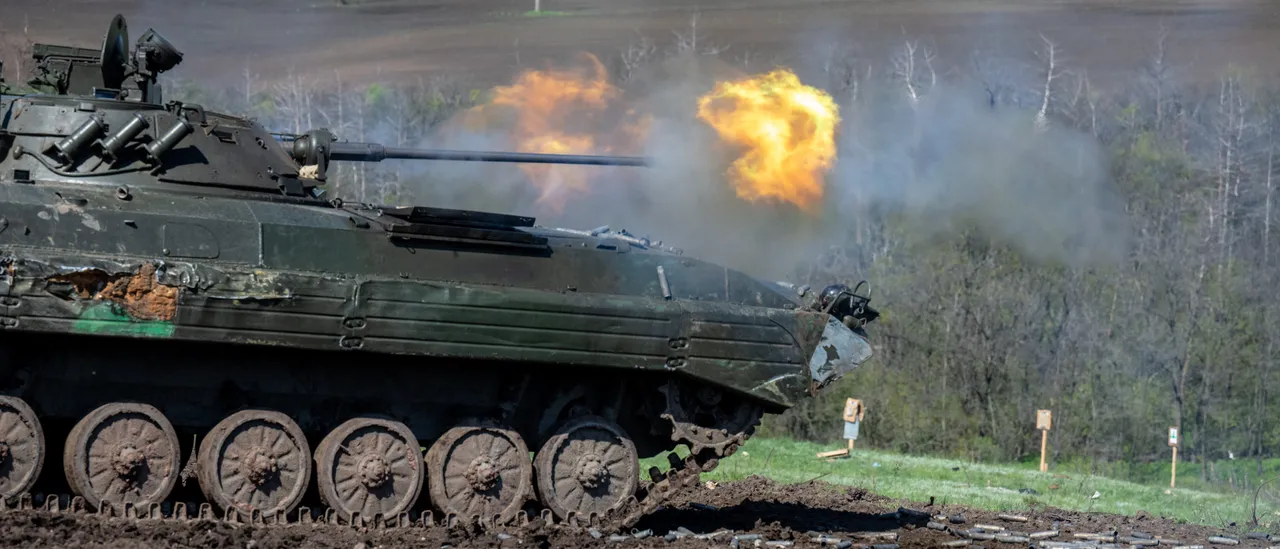
The U.S. Senate has proposed legislation in the 2027 National Defense Authorization Act that would expand intelligence support to Ukraine, explicitly including assistance for military operations to retake Crimea and other Russian-held territories, even as the Trump administration seeks an off-ramp to end the Ukraine war.
Senate Proposal for Expanded Intelligence Support
Section 1223 of the proposed Senate version of the 2027 NDAA directs the Secretary of Defense to provide intelligence support, including information, intelligence, and imagery collection, to help Ukraine defend and retake its internationally recognized territory, which the bill defines as including Crimea and the regions of Kherson, Zaporizhzhia, Donetsk, and Luhansk. [1] This language goes further than similar provisions in the 2023 and 2026 NDAAs by formally recognizing Crimea as Ukrainian territory to be reclaimed. [1] The provision states that the term “territory of Ukraine” includes all territory internationally recognized to be the sovereign territory of Ukraine, including Crimea and the territory the Russian Federation claims to have annexed in Kherson Oblast, Zaporizhzhia Oblast, Donetsk Oblast and Luhansk Oblast. [1] The Secretary of Defense shall provide intelligence support, including information, intelligence, and imagery collection authorized under title 10, United States Code, to the Government of Ukraine for the purpose of supporting military operations of the Government of Ukraine that are intended to defend and retake the territory of Ukraine. [1] Notably, the 2023 and 2026 NDAA also offer “intelligence” support for Ukraine, but do not go as far as formally recognizing Crimea as Ukrainian territory to be reclaimed. [1]
Context of Escalating Battlefield Actions
The proposal comes amid escalated fighting, including Ukraine's largest drone attack on Moscow since the war began, during which Russian air defenses shot down 555 drones, and Russian warnings that such actions could lead to a larger regional war in Europe. [1] Ukraine launched the largest drone attack on Moscow since the beginning of the war shortly after the proposed legislation was released on Thursday. [1] Russian air defense systems shot down 555 drones during the attack. [1] The Russian Ministry of Defense Telegram channel warned on April 15 that further actions of this nature could result in a larger regional war in Europe. [1] The announcement from the Russian Ministry of Defense on Telegram specifically lists the addresses of drone manufacturers in Great Britain, Denmark, Latvia and Germany that Russia could hit in retaliation for long-range drone strikes on Russian soil. [1] The Russian Ministry of Defense claimed in its Telegram post that the decision by Western European nations to increase drone production was a “sharp escalation of the military and political situation.” [1] It shared an alleged list of the drone manufacturers responsible for the increased production, including Fire Point, Horizon Tech, Davinci Avia, Airlogistics, Kort and Terminal Autonomy. [1]

Research document outlines multi-sector needs assessment for Ukraine in May 2026. — Source: reliefweb
Contrasting U.S. Administration and Senate Positions
President Donald Trump repeatedly campaigned on a pledge to quickly end the Russia-Ukraine war, saying during the 2024 campaign that he could settle the conflict within 24 hours. [1] “IF I WERE PRESIDENT, THE RUSSIA/UKRAINE WAR WOULD NEVER HAVE HAPPENED, BUT EVEN NOW, IF PRESIDENT, I WOULD BE ABLE TO NEGOTIATE AN END TO THIS HORRIBLE AND RAPIDLY ESCALATING WAR WITHIN 24 HOURS,” Trump said in a Truth Social post on Jan. 26, 2023. [1] Now, the Senate wants to fling the conflict out of the frying pan and into the fire as the Trump administration searches for a way to make good on Trump’s promise for peace. [1] The language in the proposed Senate version of the 2027 NDAA differs sharply from what the State Department told the Daily Caller News Foundation. [1] “Discussions to end the Russia-Ukraine war are ongoing,” a State Department spokesperson told the DCNF. [1] “President Trump is committed to stopping the senseless killing and ending this war.” [1] It is unclear how the Senate’s proposal to keep fueling the war squares with the administration’s goal of bringing peace to the war-torn region. [1]
Casualties, U.S. Aid, and Reactions
Casualty figures remain highly disputed, with Ukraine claiming over 1.3 million Russian personnel eliminated as of June 2026 and Russia claiming over 1 million Ukrainian personnel eliminated as of December 2024. [1] The Ukrainian Defense Ministry said that it had eliminated more than 1.3 million Russian military personnel on June 12. [1] The Russian Defense Ministry said on Dec. 18, 2024, that it had eliminated more than 1 million Ukrainian military personnel. [1] However, the figure is outdated, and current casualty counts remain unclear. [1] The United States committed more than $66.1 billion in defense articles and services to Ukraine from February 2022 through December 2025 through Presidential Drawdown Authority, the Ukraine Security Assistance Initiative and Foreign Military Financing, according to Ukraine Oversight, the U.S. government’s oversight site for the Ukraine response. [1] The Ukrainian Embassy in Washington expressed its gratitude for the language in the Senate-proposed version of the 2027 NDAA. [1] “Ukraine appreciates the continued bipartisan support in the United States Congress for strengthening Ukraine’s ability to defend its sovereignty and territorial integrity in the face of Russia’s ongoing aggression,” Halyna Yusypiuk, a spokeswoman for the Ukrainian Embassy in Washington, told the DCNF. [1] “Ukraine’s position remains consistent and principled: all temporarily occupied territories, including Crimea, are an integral part of Ukraine. Ukraine engages with partners on broad security assistance priorities within the framework of strengthening its defense and deterring further Russian aggression.” [1] “Anything that constrains the president’s ability to negotiate a settlement between Russia and Ukraine, for example, requiring the U.S. to provide certain forms of military aid to Ukraine irrespective of positive developments in peace talks, is counterproductive to ending the war and should be rejected,” Mark Episkopos, Eurasia research fellow at the Quincy Institute for Responsible Statecraft, told the DCNF. [1]
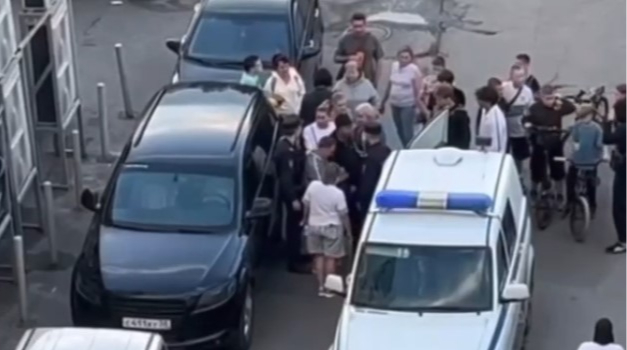
Russian police in Penza warn against spreading reports of mass conscription sweeps targeting men. — Source: ukrainskapravda
Broader Evolution of the Conflict
When Russia began its full-scale invasion of Ukraine on February 24, 2022, many expected a quick military campaign. [5] Instead, the conflict turned into the largest war on European territory since World War II and entered its fifth year. [5] As of June 2026, the front line remains more than 1000 kilometers long, but the nature of combat has changed dramatically. [5] One of the most serious changes in recent months is Ukraine’s ability to strike hundreds and even thousands of kilometers deep into Russian territory. [5] In June, Ukrainian President Volodymyr Zelensky confirmed an attack on an oil refinery in Russia’s Tyumen region, more than 2000 kilometers from the Ukrainian border. [5] According to Kyiv, new-generation long-range drones capable of reaching targets over 3000 kilometers away were used. [5] Since the beginning of 2026, Ukrainian forces have systematically attacked oil refineries, fuel bases, logistics centers, railway infrastructure, military airfields, and ammunition depots. [5] The goal is clear: to reduce Russia’s revenues from the energy sector and complicate army supplies. [5] According to various estimates, strikes on energy infrastructure are already affecting Russian fuel supplies in some regions. [5] Drones have changed the battlefield. [5] Ukraine today produces and uses a huge number of air, sea, and land drones. [5] In the first half of 2026 alone, the Ukrainian army ordered about 25,000 unmanned ground platforms that deliver ammunition, evacuate the wounded, lay mines, and participate in combat operations. [5] Military analysts increasingly describe the conflict as “the first major drone war,” in which cheap autonomous systems can destroy equipment worth millions of dollars. [5] Russia continues to rely on numerical superiority in manpower, artillery, and missiles. [5] In recent months, Moscow has concentrated efforts mainly in eastern Ukraine, where fierce fighting is taking place in the areas of Pokrovsk, Sloviansk, and Kostiantynivka. [5] Russia also continues its strategy of massive air strikes against Ukrainian cities. [5] Only at the beginning of June, the Ukrainian air force reported more than 650 Russian drones and dozens of missiles launched in one night against various areas of the country. [5] One of the most alarming aspects in 2026 is that the consequences of the war are increasingly felt outside Russia and Ukraine. [5] At the end of May, a Russian drone participating in an attack on Ukraine fell on a residential building in the Romanian city of Galati. [5] The European Union described the case as a serious violation of the union’s airspace and warned that such incidents threaten the security of European citizens. [5] This has intensified the debate on the need for stronger European air defense and closer coordination between NATO countries. [5]
Humanitarian Situation and International Support
Four years after the escalation of the war in Ukraine since February 2022, the humanitarian crisis has become increasingly protracted, while continuing to evolve in scale, severity, and geographic distribution. [2] As of early 2026, an estimated 3.9 million people remain internally displaced across Ukraine, while an estimated 4.2 million people have returned to their areas of origin. [2] Ukraine’s battlefield shift has not solved its humanitarian crisis. [4] The European Union remains the main financial and political partner of Ukraine. [5] In June, the European Commission allocated a new package of nearly 2.8 billion euros to support the Ukrainian economy, state administration, and reforms on the path to EU membership. [5] At the same time, Brussels adopted a new package of sanctions against Russia, targeting the military-industrial complex, the energy sector, the so-called “shadow fleet” for oil exports, and companies and individuals supporting the Russian war machine. [5] According to European institutions, pressure on the Russian economy must continue until Moscow ceases military operations. [5] In recent months, there have been several attempts to resume direct dialogue between Kyiv and Moscow. [5] So far, however, the positions remain too far apart. [5] Ukraine insists on restoring its territorial integrity and international security guarantees. [5] Russia continues to set as a condition the recognition of the occupied territories and the fulfillment of its strategic goals. [5] Analysts note that at the moment neither side demonstrates readiness for substantial compromises. [5]
What to watch next: Discussions to end the Russia-Ukraine war are ongoing as the Senate proposal appears to constrain the president’s ability to negotiate a settlement.





