
US Military Operation Captures Venezuelan President Maduro, Elicits Divided Reactions and Global Warnings
Washington, DC – In a dramatic escalation of tensions, the United States conducted a military operation in Venezuela that resulted in the capture of President Nicolás Maduro, prompting sharp divisions on Capitol Hill, bold assertions from Trump administration officials, and warnings to adversaries like China and Russia.
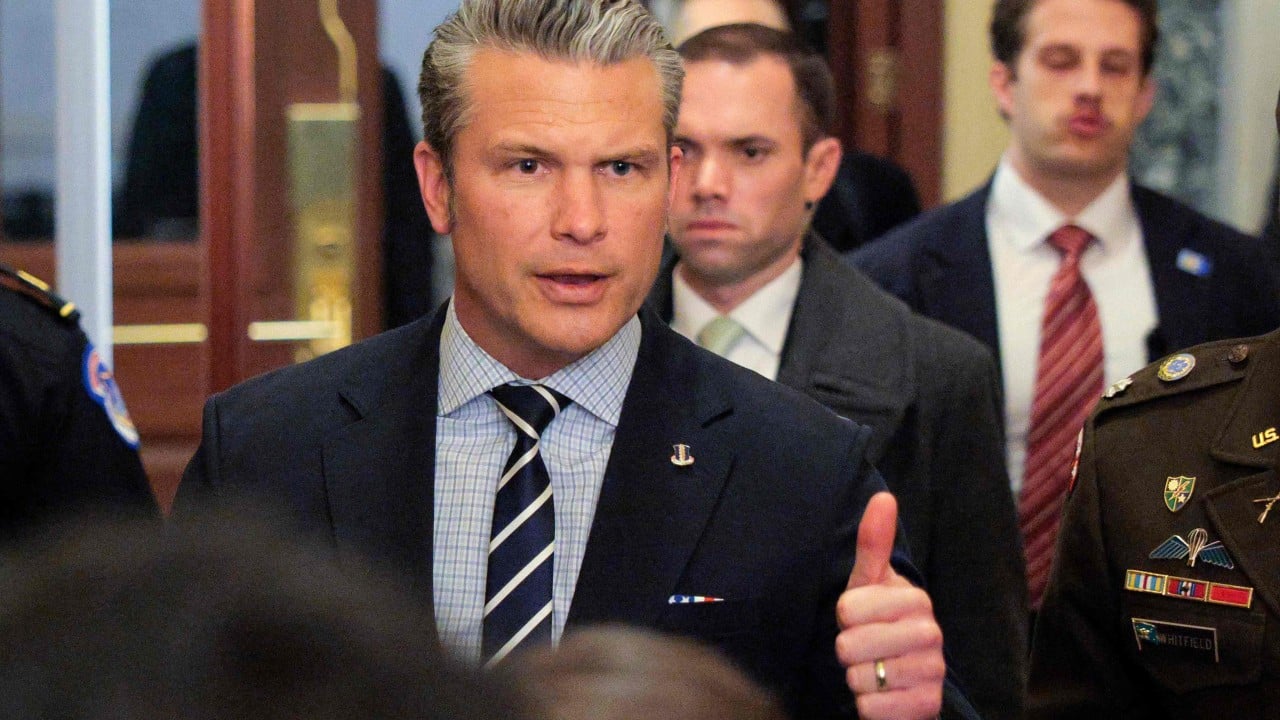
The operation, described by US Secretary of Defense Pete Hegseth as a "show of military might," was hailed by Republican lawmakers as a success in confronting Venezuelan instability, while Democrats decried it as a potential constitutional violation. This comes days after Maduro, on January 2, 2026, expressed openness to discussions with the US on drug trafficking issues but sidestepped questions about a recent attack in Venezuela that he attributed to US involvement.
Details of the US Action and Immediate Fallout
According to reports, US forces extracted Maduro from Venezuela in a targeted mission, with a White House official stating that the US is now "in charge of Venezuela because ‘military stationed outside the country.’" The comment, captured in a 1:33 video clip, underscored the administration's assertive posture amid Venezuela's long-standing political and economic crisis, exacerbated by disputes over oil resources and narcotics trafficking.
Hegseth, speaking on January 5 at Newport News Shipbuilding—the nation's largest military shipyard—framed the Venezuela operation as proof of America's rebuilt military dominance. "China, Russia won’t ‘dare test’ US," he declared, addressing shipyard workers and naval personnel. He emphasized that the mission demonstrated the limits of non-American defense capabilities and signaled renewed US readiness under President Donald Trump's second term.
Capitol Hill responses were polarized. Fox News reported that congressional Democrats alleged "constitutional violations" in the military mission to capture Maduro, questioning its legality and adherence to international norms. In contrast, Republican colleagues "praise a job well done," viewing it as a decisive blow against a regime accused of authoritarianism, election fraud, and facilitating drug flows to the US.
Maduro's Pre-Capture overture on Drug Talks
Just days prior, on January 2, Maduro had signaled a potential thaw in relations, stating he was open to talks with the US specifically on drug trafficking—a persistent point of contention. Venezuela has faced US accusations of serving as a narco-state, with Maduro's government designated by the US Treasury as a significant transnational criminal organization in prior years. However, Maduro avoided addressing a recent attack in his country, which he claimed was US-orchestrated, highlighting the fragile state of bilateral ties leading into the operation.
Broader Geopolitical Ripples
The Venezuela incursion has reverberated beyond the Americas, with analysts drawing parallels to other hotspots. A Guardian analysis on January 6 explored its implications for Taiwan, suggesting the action "ought to provide a deterrent" against potential Chinese aggression. By demonstrating US willingness to project power decisively—even in a resource-rich nation like Venezuela, which holds the world's largest proven oil reserves—the operation may signal resolve to allies amid rising tensions in the Indo-Pacific.
This fits into a pattern of heightened US-Venezuela friction under Trump 2.0. Following Trump's 2024 election victory, the administration has intensified sanctions and rhetoric against Maduro, who clung to power after disputed July 2024 elections widely rejected internationally. Opposition figures and millions of Venezuelans fled amid hyperinflation and repression, with the US recognizing Edmundo González Urrutia as the legitimate winner before pivoting to direct action.
Background on Venezuela's Turmoil
Venezuela's crisis traces back to 2013, when Maduro succeeded Hugo Chávez amid falling oil prices. The economy contracted over 75% by 2021, per IMF data, fueling mass migration of over 7.7 million people—the largest displacement in Latin American history. Drug trafficking allegations intensified in 2020 when the US indicted Maduro and allies on narcoterrorism charges. Russia and China have provided Maduro diplomatic and economic lifelines, including loans and military support, complicating US efforts.
The January operation marks the most kinetic US intervention since the 1989 Panama invasion, raising questions about hemispheric stability. Neighboring Colombia and Brazil have bolstered border security, while the UN and OAS called for restraint.
Outlook Amid Uncertainty
With Maduro in US custody, Venezuela's opposition and interim authorities face the task of stabilizing governance and oil production, which accounts for 95% of exports. The White House has linked control to securing energy flows and curbing drugs, but risks of retaliation from Maduro loyalists or allied states persist.
International observers warn of prolonged instability, with Hegseth's rhetoric positioning the event as a template for deterring peer competitors. As Congress debates the mission's legality, the world watches whether this bold stroke restores US credibility or ignites new conflicts.
(Word count: 682)






