US Issues Stark Warnings to Cuba Amid Venezuela Crisis Fallout

Latest from X
US Issues Stark Warnings to Cuba Amid Venezuela Crisis Fallout
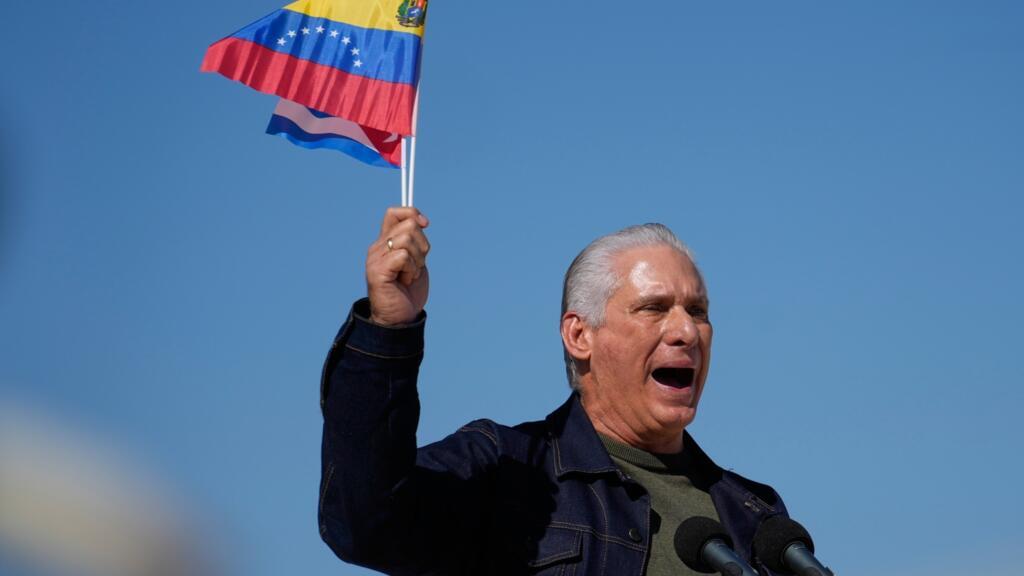
In a rapidly escalating geopolitical standoff, the United States has issued pointed warnings to Cuba, linking Havana’s government to the ongoing crisis in Venezuela following the dramatic capture of Venezuelan President Nicolás Maduro. On Saturday, January 3, 2026, President Donald Trump and Secretary of State Marco Rubio signaled that Cuba could face increased pressure from Washington, while Cuban President Miguel Díaz-Canel condemned the US actions as “state terrorism.” This exchange marks a significant intensification of tensions in the Western Hemisphere, with potential ripple effects for regional stability.
The US operation to apprehend Maduro, described by Washington as a decisive move to address Venezuela’s political and economic collapse, has sent shockwaves through Latin America. Trump and Rubio have publicly tied Cuba’s government to the Maduro regime, accusing Havana of providing critical intelligence and security support that has propped up Venezuela’s leadership for years. In statements reported on Saturday, Rubio implied that Havana could be the next target of the Trump administration’s assertive foreign policy in the region, raising fears of further US intervention.
Cuban President Díaz-Canel responded with sharp criticism, denouncing the US capture of Maduro as an act of “state terrorism.” Speaking on January 3, as reported by France 24, Díaz-Canel warned that the loss of Venezuelan oil—long a lifeline for Cuba’s struggling economy—could exacerbate the island nation’s already dire economic situation. Cuba has relied heavily on subsidized oil shipments from Venezuela under agreements dating back to the early 2000s, and any disruption could deepen energy shortages and economic hardship for the Cuban people.
Background: Cuba-Venezuela Alliance and US Policy
The alliance between Cuba and Venezuela has been a cornerstone of anti-US sentiment in Latin America for decades. Since the late 1990s, under the leadership of Hugo Chávez and later Nicolás Maduro, Venezuela has provided Cuba with oil in exchange for medical personnel, military advisors, and intelligence support. This relationship has been a frequent target of US criticism, particularly from figures like Rubio, who has long advocated for regime change in both nations as a means to curb socialist influence in the hemisphere.
Under the Trump administration, US policy toward Cuba has reverted to a hardline stance, echoing Cold War-era tensions. The recent operation in Venezuela, described by Reuters as Washington’s most direct intervention in Latin America in decades, appears to signal a broader strategy to reshape the region’s political landscape. According to reports from POLITICO, Trump has stated that the “whole hemisphere is in play,” suggesting that actions against Venezuela may be just the beginning of a more aggressive regional approach.
Regional and Economic Implications for Cuba
For Cuba, the stakes could not be higher. The island nation, already grappling with a severe economic crisis marked by food shortages, power outages, and inflation, faces the prospect of losing its primary source of oil. Analysts note that Venezuelan oil shipments have dwindled in recent years due to Venezuela’s own economic collapse, but they remain critical to Cuba’s energy infrastructure. Díaz-Canel’s warnings about the impact of Maduro’s capture underscore Havana’s vulnerability at this juncture.
Moreover, the US rhetoric has heightened fears in Havana of direct intervention or tightened sanctions. Rubio, a longtime critic of the Cuban regime with deep ties to the Cuban-American community in Florida, has previously linked the fall of Maduro to a potential collapse of Cuba’s government, arguing that removing Venezuelan support would cut off a vital lifeline for Havana. This perspective, echoed in recent posts on X from verified accounts like NEWSMAX, suggests that the Trump administration may be preparing to ramp up pressure on Cuba in the wake of its Venezuela operation.
Outlook: A Region on Edge
As the situation unfolds, the Western Hemisphere braces for the consequences of this latest chapter in US-Latin America relations. While some world leaders have expressed concern over the US capture of Maduro, as reported by POLITICO, others see it as a potential turning point for addressing authoritarian regimes in the region. For Cuba, however, the immediate future appears fraught with uncertainty. Will Washington follow through on its warnings with concrete actions against Havana, such as new sanctions or diplomatic measures? Or will the focus remain on stabilizing Venezuela in the aftermath of Maduro’s removal?
What is clear is that the Trump administration’s actions have reignited a geopolitical firestorm, with Cuba now squarely in the crosshairs. As Díaz-Canel rallies domestic and international support against what he calls US aggression, the coming weeks will likely reveal whether this confrontation escalates further or if diplomatic channels can avert a deeper crisis. For now, the eyes of the world remain fixed on Havana and Washington, as the balance of power in the region hangs in a delicate balance.
Track this story live
Live World Map
Monitor global events in real time with a live activity map and hotspot summaries.
Markets
Connect live events to Catalyst market signals across crypto, commodities, indices, and forex.
Geopolitical Risk
Live geopolitical risk index tracking conflict zones, sanctions, and global threat levels.
Original Sources
- •
Editorial process: This article was synthesized from the original sources cited above using The World Now's AI editorial system, with byline accountability from our editorial team. We grade every story for source grounding, factual coherence, and on-topic match before publication. Read more about our editorial standards and contributors. Spot something inaccurate? Let us know.
Last updated: January 19, 2026