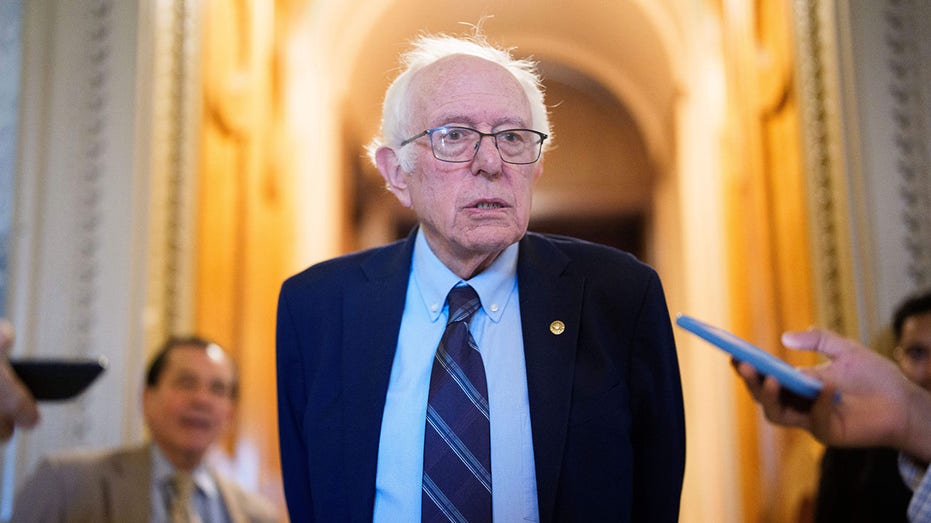

US Drone Strike Targets Alleged Venezuelan Drug Facility, Draws Criticism from Sen. Bernie Sanders
Washington, D.C. – President Donald Trump announced a U.S. drone strike on December 31, 2025, targeting a facility in Venezuela linked to drug trafficking activities, escalating long-standing tensions between the United States and the Nicolás Maduro regime. The operation, reportedly involving a CIA-operated drone, has sparked immediate political backlash, including sharp criticism from Sen. Bernie Sanders (I-Vt.), who condemned the action while acknowledging Maduro as a dictator—a notable departure from his past rhetoric.
The strike occurred at 9:45 a.m. GMT on New Year's Eve, marking a high-severity military action aimed at disrupting what U.S. officials described as a key node in Venezuela's alleged narco-trafficking networks. According to the presidential announcement, the facility was tied to illicit operations that have long implicated high-level Venezuelan officials, including members of the military and Maduro's inner circle. No immediate casualties or damage assessments were released by the White House, but the move underscores the Trump administration's aggressive posture toward Venezuela following his return to office in January 2025.
Sen. Sanders, a prominent progressive voice, quickly voiced opposition to the strike. In a statement highlighted by Fox News, Sanders criticized the military action as escalatory, while simultaneously labeling Maduro a "dictator." This stance represents a shift for the Vermont independent, who has faced accusations over the years of downplaying the severity of Maduro's authoritarian rule and socialist policies. During the 2020 Democratic primaries and earlier, Sanders had defended aspects of Venezuela's Bolivarian Revolution under Hugo Chávez and Maduro, attributing the country's economic collapse primarily to U.S. sanctions rather than internal mismanagement.
The Fox News report detailed this evolution, noting Sanders' history of "soft rhetoric on socialist strongmen." For instance, in past interviews, Sanders argued that claims of dictatorship in Venezuela were overstated and pushed back against characterizations of Maduro's government as fully authoritarian. His recent comments, however, align more closely with bipartisan consensus in Congress, where Maduro's regime has been widely condemned for human rights abuses, electoral fraud, and complicity in transnational crime.
Context of U.S.-Venezuela Tensions
U.S.-Venezuela relations have deteriorated sharply since Maduro's contested 2018 reelection, which the U.S. and much of the international community rejected as fraudulent. The Trump administration's first term saw unprecedented pressure on Caracas, including crippling sanctions on state oil company PDVSA, the recognition of opposition leader Juan Guaidó as interim president in 2019, and indictments against Maduro and top aides for narco-terrorism. In March 2020, the U.S. offered a $15 million bounty for Maduro's arrest, citing evidence from the "Cartel of the Suns"—an alleged network of Venezuelan military officers facilitating cocaine shipments to the U.S.
Venezuela's role in global drug trafficking has been a focal point. U.S. Drug Enforcement Administration (DEA) reports and Southern Command assessments have documented how the country serves as a major transit hub for cocaine produced in Colombia, with Venezuelan authorities providing protection for an estimated 90% of flights departing for the U.S. and Europe. The economic crisis, hyperinflation, and mass exodus of over 7.7 million Venezuelans since 2014 have created fertile ground for criminal enterprises, further entrenching Maduro's reliance on loyalist security forces.
The Biden administration maintained many Trump-era sanctions but pursued limited diplomatic engagement, including oil license negotiations in 2022-2023 to curb Russian influence. Trump's 2025 return signaled a reversion to "maximum pressure," with vows to intensify anti-drug operations. This drone strike fits into a broader pattern of unilateral U.S. actions against non-state and state-linked threats, reminiscent of operations against ISIS facilities or Iranian proxies.
Political Reactions and Implications
Sanders' critique has amplified partisan divides. Republican leaders have praised the strike as a necessary response to Venezuela's destabilizing influence in the Western Hemisphere, particularly amid concerns over alliances with Iran, Russia, and China. Democrats have been more measured, with some calling for congressional oversight to prevent broader entanglement.
Internationally, Maduro's government predictably denounced the strike as an "act of aggression," vowing retaliation through diplomatic channels at the United Nations. Allies like Cuba and Russia echoed the condemnation, while regional partners such as Colombia—under President Gustavo Petro—urged de-escalation.
As of January 6, 2026, no further U.S. strikes have been reported, but the incident raises questions about escalation risks. Analysts note that Venezuela's weakened air defenses and reliance on Russian-supplied equipment make such precision strikes feasible, but they could provoke asymmetric responses, including migrant surges at the U.S. southern border or heightened FARC dissident activity.
The operation highlights ongoing U.S. counter-narcotics priorities in Latin America, where fentanyl precursors from China via Mexico remain the top threat. With Venezuela's oil exports resuming under Treasury licenses, the strike serves as a reminder that economic levers alone may not suffice against entrenched criminal-state symbiosis.
In summary, the December 31 drone strike reinforces the U.S. commitment to combating Venezuelan-linked drug trafficking, even as it invites domestic and global scrutiny. Future developments will depend on Maduro's response and congressional debates over authorization for military actions.
(Word count: 712)






