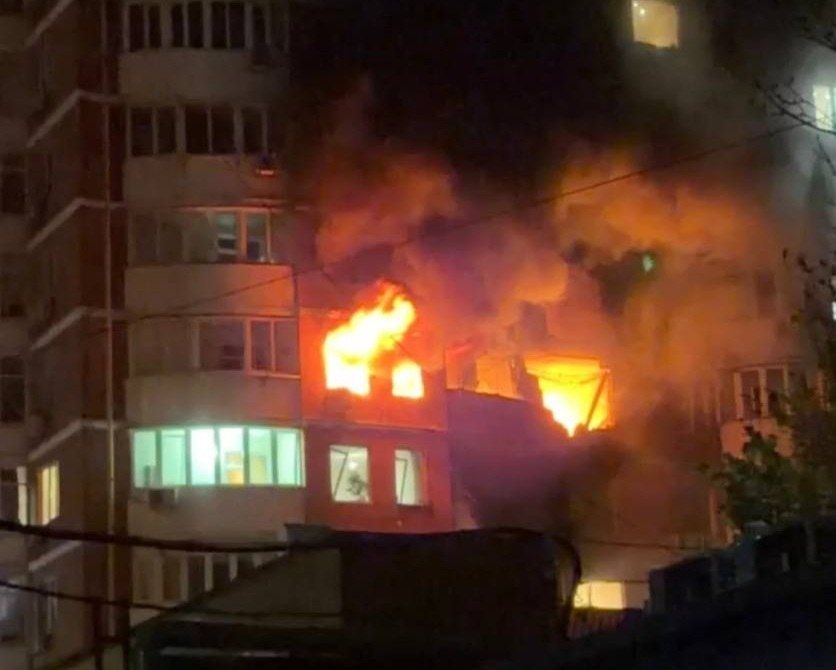

Strike in Russia: Explosions Reported in Dzerzhinsk and Perm After Drone Attacks
Drone attacks have caused explosions in Russia's Dzerzhinsk and Perm, with temporary flight restrictions introduced at several airports.[4] In a related strike Russia context, a Russian attack on Odesa has injured 18 people, including a child, with two in critical condition.[3] Initial reports from the Odesa incident indicated 16 injuries, alongside damage to a kindergarten and residential buildings.[1] Oil pollution from Russia's Ust-Luga region, stemming from a Ukrainian attack last month, has now washed up on Estonia's northern beaches.[2] These developments highlight ongoing tensions, with explosions confirmed in Perm following drone strikes, as observed locally.[4]
Overview of Recent Drone Attacks in Russia
Recent drone attacks targeting Russian territory have led to significant disruptions, particularly in the cities of Dzerzhinsk and Perm. Explosions were reported in these locations following the drone strikes, prompting immediate security measures.[4] Local observations confirmed blasts in Perm, with additional reports indicating drones likely struck near an explosives plant in Dzerzhinsk.[4] This incident underscores the precision and reach of such operations, as the strikes appear to have focused on industrial sites potentially linked to military production.
The response from Russian authorities included the introduction of temporary flight restrictions at several airports, a standard protocol to mitigate further risks from aerial threats.[4] These restrictions affect air traffic in the region, signaling heightened alert levels amid the ongoing conflict. The explosions in Dzerzhinsk, situated in the Nizhny Novgorod region, and Perm in the Urals, illustrate a pattern of targeting key industrial areas, where facilities like explosives plants play critical roles in Russia's defense infrastructure.[4]
Eyewitness accounts and visual evidence, including photos and videos, have captured the moments of detonation, providing tangible proof of the attacks' impact.[4] The proximity of the strikes to sensitive sites raises questions about the strategic intent, though official details on damage assessments remain limited in available reports. This strike Russia event fits into a broader sequence of aerial engagements, where drone technology enables long-range incursions with minimal warning.[4]
Authorities in the affected areas have likely initiated investigations and enhanced defenses, but the swift imposition of no-fly zones indicates the perceived immediacy of the threat.[4] For residents, the explosions marked a sudden escalation, with sounds of blasts reverberating across Perm once again, as noted in local reports.[4] These attacks not only disrupt operations at targeted facilities but also strain regional air travel and emergency response capabilities.
Russian Military Actions on Odesa
A Russian overnight attack on Odesa has inflicted considerable harm on civilian infrastructure, damaging a kindergarten and residential buildings while injuring multiple people.[1] Initial assessments reported 16 individuals hurt in the assault, highlighting the strike's toll on non-combat areas.[1] Subsequent updates revealed the injury count rising to 18, including a child, with two victims in critical condition requiring intensive care.[3]
The attack, described as a drone operation by Russian forces, targeted the Black Sea port city of Odesa, a vital hub for Ukraine.[3] Damage to the kindergarten points to the proximity of civilian facilities, exacerbating the human cost.[1] Residential structures also sustained hits, affecting everyday life in the community.[1] Photos accompanying reports illustrate the extent of destruction, from shattered windows to structural compromises in affected buildings.[3]
Medical teams have been responding to the casualties, with the two critical cases underscoring the severity of injuries sustained.[3] The inclusion of a child among the wounded adds a poignant dimension to the incident, as families grapple with the aftermath.[3] Emergency services worked through the night to secure sites and provide aid, reflecting the chaotic immediate response to such strikes.[1]
This event in Odesa represents a continuation of Russian military efforts against Ukrainian urban centers, where drone attacks allow for repeated harassment of populated zones.[3] The progression from 16 to 18 confirmed injuries suggests ongoing evaluations at hospitals, potentially revealing further complications.[1][3] Local authorities have likely condemned the targeting of civilian infrastructure, though specifics on rebuilding efforts are not detailed in current dispatches.
Consequences of Strikes on Russian Facilities
The environmental repercussions of a Ukrainian attack last month on oil processing facilities in Russia's Ust-Luga region have now extended beyond borders, with fuel oil pollution washing up on Estonia's northern beaches.[2] Estonia's Environmental Board has confirmed the origin of this pollution, linking it directly to the damaged sites in Ust-Luga, a major fuel terminal on the Gulf of Finland.[2]
This oil spill represents a lingering consequence of the strike on Russian facilities, as heavy fuel oil has traveled via sea currents to contaminate coastal areas in Estonia.[2] Northern beaches, popular for recreation and ecologically sensitive, now face cleanup challenges from the black, viscous pollutant.[2] The board's assessment attributes the incident to the disruption at Ust-Luga, where processing operations were hit, releasing contaminants into the water.[2]
Such transboundary pollution highlights the wider ecological footprint of military actions on energy infrastructure.[2] Estonian officials are monitoring the spread, with initial findings indicating fuel oil deposits that could harm marine life and shorelines.[2] The delay between the attack and beach contamination—spanning about a month—demonstrates how maritime dynamics propagate environmental damage.[2]
Response efforts in Estonia involve assessing contamination levels and planning remediation, though the scale from a major facility like Ust-Luga poses logistical hurdles.[2] This incident serves as a reminder of the interconnected Baltic Sea ecosystem, where strikes on Russian energy hubs can inadvertently affect neighboring states.[2] Long-term monitoring will be essential to mitigate biodiversity losses and restore affected beaches.[2]
Current Status and Updates
The latest developments from these incidents reveal evolving situations across fronts. In Odesa, the Russian drone attack's injury toll has stabilized at 18, including a child, with two remaining in critical condition in intensive care.[3] This update supersedes earlier figures of 16 injured, incorporating further medical confirmations.[1][3] Damage to the kindergarten and residential buildings persists as a key concern, with visual documentation underscoring the impact.[1][3]
In Russia, explosions in Dzerzhinsk and Perm following drone attacks continue to prompt security measures, including temporary flight restrictions at multiple airports.[4] Reports of blasts near an explosives plant in Dzerzhinsk and repeated sounds in Perm indicate sustained effects from the strikes.[4] No further escalations have been noted, but vigilance remains high.[4]
Environmental updates from the Ust-Luga strike confirm ongoing pollution on Estonian shores, with the Environmental Board actively tracing and addressing the fuel oil influx.[2] Collectively, these updates paint a picture of immediate human, infrastructural, and ecological challenges.[1][3][4]
Broader Incident Details
Connecting these events provides context on their interlinked nature. The drone strikes in Dzerzhinsk and Perm, with likely hits near explosives facilities, coincide with flight curbs, amplifying regional tensions.[4] Photos and videos from Perm explosions offer visual corroboration, linking local reports to wider strike Russia patterns.[4]
Meanwhile, the Ust-Luga oil pollution exemplifies delayed fallout from prior Ukrainian operations on Russian energy sites, now burdening Estonia's environment.[2] This cross-border effect intertwines military actions with ecological outcomes, as confirmed by expert analysis.[2]
Together, these details—from Odesa's civilian hits[1][3] to industrial targets in Russia[4] and pollution spread[2]—illustrate the multifaceted repercussions of the conflict.
What to watch next: Monitor updates on the critical conditions of Odesa's injured, including the child[3]; track flight restriction durations in Russia following Dzerzhinsk and Perm explosions[4]; and follow Estonia's Environmental Board efforts to contain Ust-Luga oil pollution on northern beaches[2].






