
U.S. Drone Strike on Venezuelan Drug Facility Ignites Crisis: Maduro Captured, Trump Vows U.S. Oversight
Washington, D.C. – January 7, 2026 – In a dramatic escalation of U.S.-Venezuela tensions, President Donald Trump announced a U.S. drone strike on a Venezuelan facility linked to drug trafficking on December 31, 2025, which has reportedly led to the capture of Venezuelan President Nicolás Maduro. The high-severity operation, involving a CIA drone, has sparked a fierce constitutional debate in the United States while prompting Trump to declare that the U.S. will oversee Venezuela's transition.
The strike targeted a site allegedly tied to international drug trafficking networks, a move Trump framed as a decisive blow against narco-terrorism. Occurring at 09:45 GMT on New Year's Eve, the operation marks a bold military intervention in Venezuela's ongoing political and humanitarian crisis. According to reports, Maduro was subsequently "hauled into" U.S. custody, prompting immediate backlash over the legality and implications of the action.
President Trump addressed the nation shortly after the announcement, stating unequivocally that the United States "will run Venezuela" following Maduro's capture. He tasked Secretary of State Marco Rubio and Pentagon officials with developing transition plans, signaling a potential shift toward direct U.S. involvement in Venezuelan governance. "We've taken out their drug kingpin headquarters and grabbed the dictator himself," Trump reportedly said, according to sources close to the administration. This rhetoric has fueled accusations of overreach from critics, who argue the strike bypasses congressional authorization.
The Fox News report highlights a burgeoning constitutional clash in Washington. Lawmakers from both parties have questioned the president's authority to conduct unilateral strikes and effect extraterritorial arrests without explicit congressional approval. "This isn't just a drone strike; it's an invasion by proxy," one Democratic senator was quoted as saying, raising concerns under the War Powers Resolution of 1973, which limits presidential military actions to 60 days without legislative consent. Republicans defending the move point to Maduro's long-standing U.S. sanctions for narco-terrorism, including a $15 million bounty offered during Trump's first term.
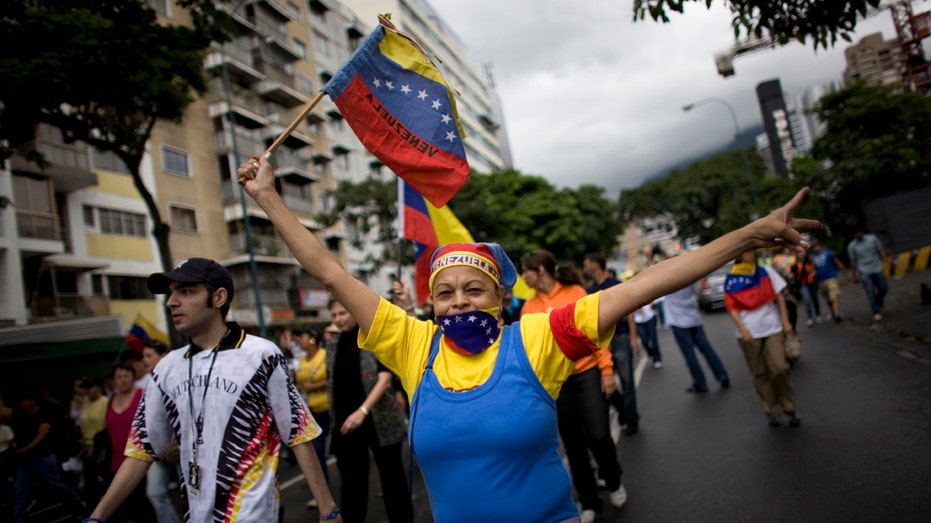
Details of the strike remain classified, but U.S. officials described the targeted facility as a hub for cocaine production and shipment to the U.S., linked to Venezuela's military and Maduro's inner circle. The CIA drone strike aligns with longstanding U.S. intelligence assessments portraying Maduro's regime as a "cartel state." Venezuelan state media has decried the attack as "imperialist aggression," with loyalists vowing retaliation amid reports of street protests and military mobilization in Caracas.
Background on U.S.-Venezuela Relations
Venezuela's crisis traces back to 2013 when Maduro succeeded Hugo Chávez amid economic collapse, hyperinflation, and mass emigration. The U.S. has imposed escalating sanctions since 2017, designating Maduro and allies as significant foreign narcotics traffickers in 2020. Trump's administration recognized opposition leader Juan Guaidó as interim president in 2019, leading to failed coup attempts and heightened rhetoric.
Recent intelligence reportedly pinpointed the struck facility as central to the Cartel of the Suns, a Venezuelan military drug network accused of shipping tons of cocaine northward. Maduro's regime has faced international isolation, with elections marred by fraud allegations and U.S.-backed opposition figures like Edmundo González fleeing into exile. The drone strike echoes U.S. operations in Colombia and elsewhere against drug lords, but its scale—culminating in a head-of-state capture—sets a precedent.
Pentagon sources indicate Rubio, a vocal Maduro critic and Florida senator during Trump's first term, is coordinating with regional allies like Brazil and Colombia for stabilization. "This is about restoring democracy and stopping the drugs," Rubio stated post-announcement, per the Fox report. However, logistical challenges loom: Venezuela's opposition is fragmented, and armed groups control swaths of territory.
Outlook and Global Reactions
The operation's fallout reverberates regionally. Colombia's President Gustavo Petro condemned the strike as destabilizing, while Brazil's government called for dialogue. Russia and China, Maduro backers, denounced it as a sovereignty violation, with Kremlin spokespeople warning of "consequences." The U.N. Security Council is slated for emergency sessions, amid fears of refugee surges straining borders.
Domestically, U.S. public opinion is divided: polls show strong support for anti-drug actions but wariness of entanglement in another Latin American quagmire. Legal challenges could reach the Supreme Court, testing executive war powers post-9/11 precedents like the AUMF.
As transition plans unfold, the strike's success hinges on quelling Venezuelan unrest and countering Iranian and Russian influence. Trump administration officials project a "rapid handover" to a unity government, but analysts caution that history—from Panama's Noriega capture to Iraq's post-Saddam chaos—suggests prolonged instability.
This event underscores a resurgent U.S. interventionism under Trump, blending counter-narcotics with regime change ambitions. With Maduro in U.S. custody, Venezuela's future—and America's role—hangs in precarious balance.
(Word count: 712)






