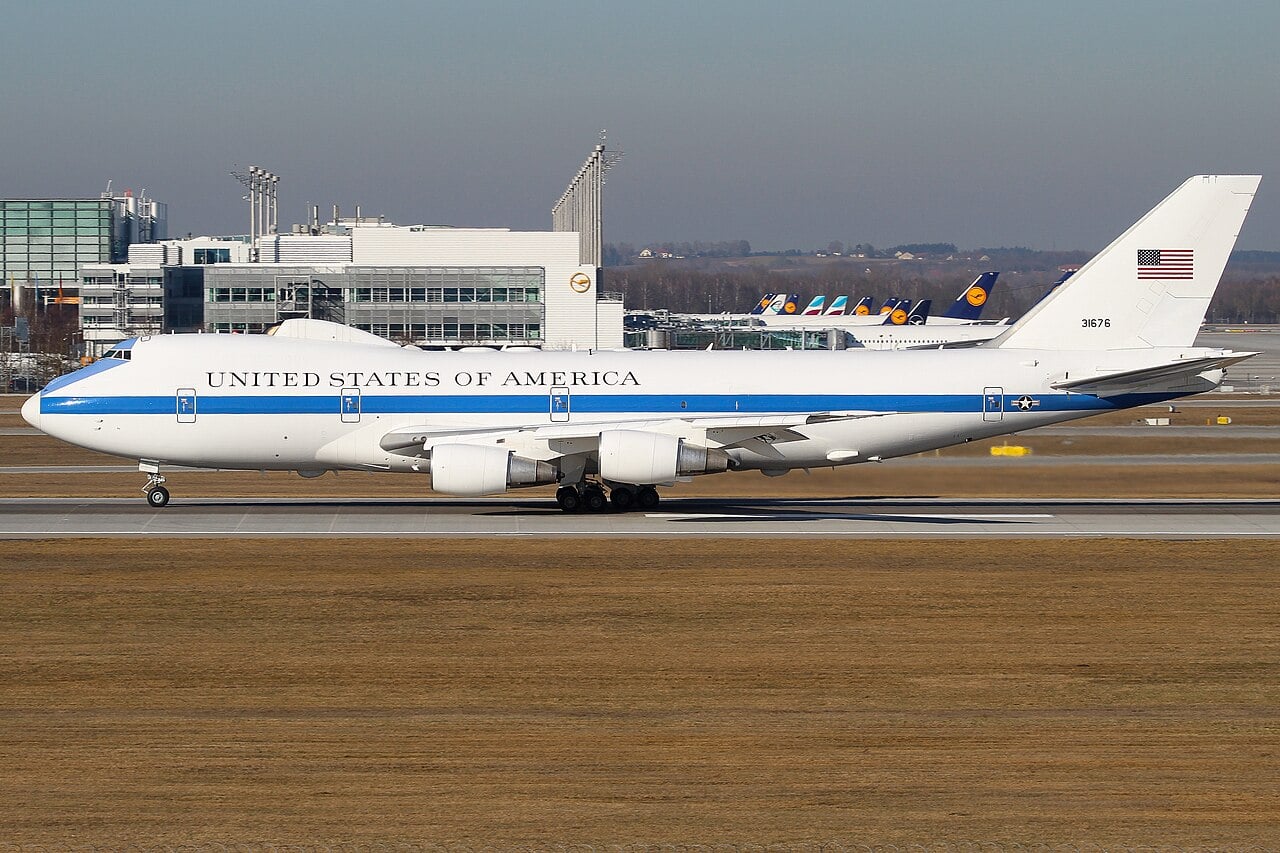

US Doomsday Plane's Rare Landing at LAX Sparks Concerns Amid Heightened Global Tensions
Los Angeles, CA – A U.S. Air Force E-4B "Nightwatch," commonly known as the Doomsday Plane, made an unusual landing at Los Angeles International Airport (LAX) on January 10, 2026, prompting widespread speculation and unease as global geopolitical strains intensify.
The aircraft, a highly modified Boeing 747-200 designed to serve as a survivable airborne command center, touched down at LAX around 10:33 GMT, according to reports. This rare public sighting of the plane—typically based at Offutt Air Force Base in Nebraska and reserved for high-stakes national emergencies—has fueled discussions online and in media circles about potential escalations in international affairs. Eyewitnesses at LAX captured images and videos of the distinctive four-engine jet, identifiable by its aerial refueling boom and reinforced fuselage, which quickly circulated on social media platforms.
The E-4B Nightwatch is one of four such aircraft in the U.S. military's fleet, operated by the 1st Airborne Command and Control Squadron under U.S. Strategic Command. Equipped with advanced communication systems, electromagnetic pulse (EMP) shielding, and the ability to remain aloft for extended periods with mid-air refueling, it is intended to provide continuity of government operations during catastrophic events, such as nuclear war or massive natural disasters. The plane has historically supported U.S. presidents during crises, including post-9/11 operations and nuclear deterrence missions.
While the U.S. military has not issued an official statement explaining the LAX stopover, aviation tracking data confirmed the flight's path from the Midwest, suggesting routine maintenance, crew rotation, or logistical needs rather than an active emergency. However, the timing coincides with a period of elevated global tensions, including ongoing conflicts in Ukraine and the Middle East, heightened U.S.-China rivalry over Taiwan, and persistent nuclear saber-rattling from North Korea and Russia. These dynamics have led observers to interpret the event through a lens of preparedness.
Historical Context and Precedents
The Doomsday Plane, first introduced in the 1970s during the Cold War era, has made infrequent public appearances. Notable instances include its deployment following the 9/11 attacks, when it shadowed Air Force One, and during heightened alerts in 2017 amid North Korean missile tests. A similar landing at LAX occurred in 2018 for what was described as scheduled maintenance, but such West Coast visits remain outliers compared to its primary operations from Andrews Air Force Base near Washington, D.C., or Offutt.
In recent years, the aging E-4B fleet has undergone upgrades to counter modern cyber and electronic warfare threats. The U.S. Air Force is transitioning to the Survivable Airborne Operations Center (SAOC), a next-generation replacement based on the Boeing 747-8 platform, with contracts awarded in 2024. This evolution underscores the Pentagon's focus on maintaining robust command-and-control capabilities amid evolving threats from peer adversaries like Russia and China.
Public reactions to the LAX landing have been mixed. Social media posts from aviation enthusiasts and geopolitics watchers expressed alarm, with hashtags like #DoomsdayPlane and #LAXAlert trending briefly. "Seeing this beast at LAX isn't everyday stuff—makes you wonder what's brewing," one Twitter user remarked, echoing sentiments in initial reports. Defense analysts, however, urged caution against overinterpretation. "These planes move for training, repairs, and deployments regularly," noted a spokesperson from the Air Force Global Strike Command in past similar incidents, emphasizing that visibility does not equate to imminent crisis.
Broader Geopolitical Landscape
The landing occurs against a backdrop of multifaceted U.S. foreign policy challenges. In Europe, Russia's invasion of Ukraine, now entering its fourth year as of 2026, continues to strain NATO resources, with recent escalations in drone strikes and cyber operations. In the Indo-Pacific, U.S. naval exercises near Taiwan have intensified following Beijing's military drills, while Iran's proxy activities in the Red Sea have disrupted global shipping lanes.
Domestically, the event aligns with routine U.S. military posture adjustments. The Department of Defense's 2026 budget request includes billions for strategic deterrence, reflecting assessments of a deteriorating global security environment as outlined in the 2022 National Defense Strategy. Intelligence community reports, such as the annual Worldwide Threat Assessment, have consistently highlighted risks from nuclear proliferation and great-power competition.
No evidence suggests the LAX landing signals an immediate threat. Aviation experts point to LAX's role as a major hub for military transient aircraft, with facilities capable of handling specialized wide-body jets. The plane reportedly departed shortly after, resuming its itinerary without further incident.
Outlook
As the U.S. navigates these tensions, incidents like the Doomsday Plane's LAX appearance serve as reminders of the nation's layered defense architecture. While sparking public curiosity and concern, such movements are part of standard operational tempo. Military transparency efforts, including periodic fact sheets on the E-4B, aim to demystify these assets, but their symbolic weight persists in an era of 24/7 news cycles.
The Pentagon has yet to comment specifically on this event, but ongoing global developments will likely keep such capabilities in the spotlight. For now, the landing stands as a procedural footnote amid broader strategic preparations.
(Word count: 712)