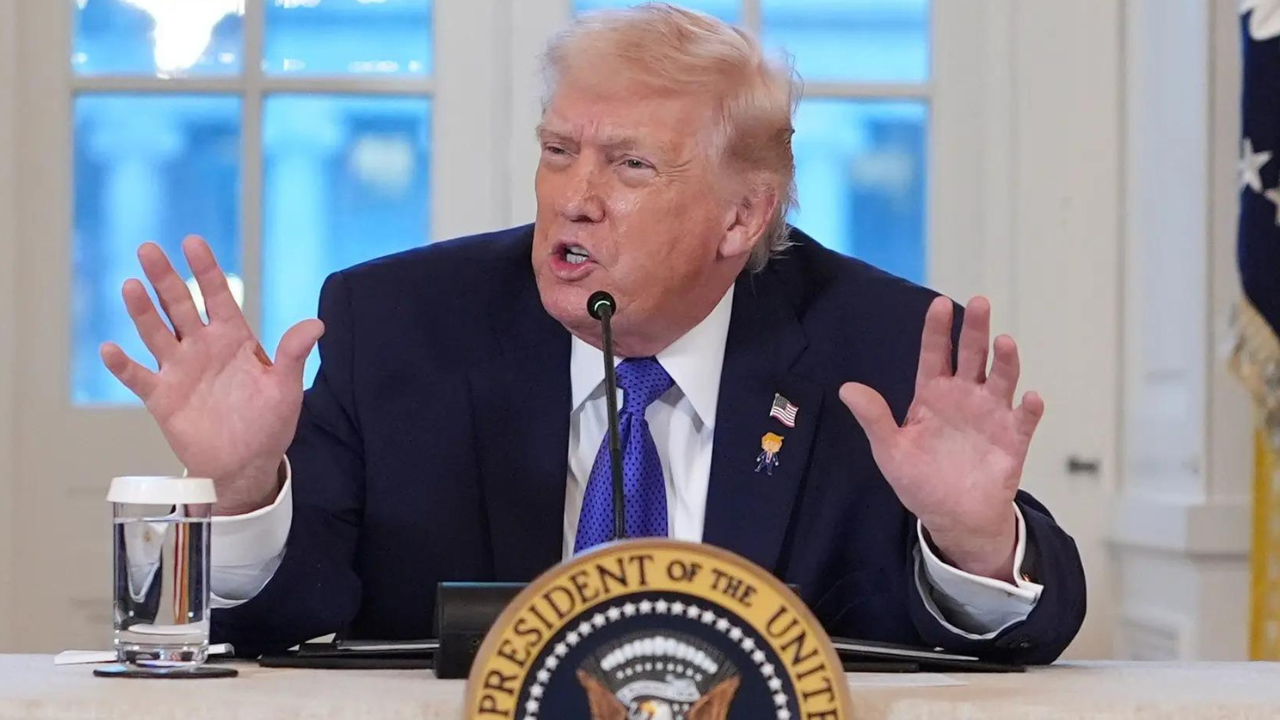

US-Denmark Tensions Flare Over Greenland as Trump Issues Stark Warning
Copenhagen/Denmark and Washington — Denmark has expressed sharp irritation toward a provocative social media post featuring a US flag over Greenland, amid renewed threats from US President Donald Trump to acquire the Arctic territory by force if necessary. The developments, unfolding in early January 2026, have reignited longstanding geopolitical frictions over the strategically vital island.
On January 4, Katie Miller, wife of senior Trump aide Stephen Miller, shared an image on social media depicting Greenland overlaid with the American flag and captioned "SOON." The post, which hinted at US territorial ambitions, quickly drew backlash from Danish officials, who viewed it as an inflammatory gesture challenging Denmark's sovereignty over its autonomous territory. This incident marked a high-severity escalation in rhetoric, amplifying concerns about US intentions in the Arctic.
Just days later, on January 10, President Trump escalated the matter further during public remarks, reiterating his administration's interest in Greenland and warning of decisive action. According to reports, Trump stated that if diplomatic efforts fail—"If we don't" secure the territory peacefully—the US would pursue it "the hard way." He justified the push by highlighting Greenland's critical role in US national defense, particularly in countering growing influence from Russia and China in the Arctic region. Trump questioned Denmark's historical claims to the territory, emphasizing its strategic value amid shifting global power dynamics.
Denmark responded forcefully, rejecting the assertions and warning of "severe consequences" should the US resort to military or coercive measures. Danish officials have long maintained that Greenland's status as an autonomous country within the Kingdom of Denmark is non-negotiable, with decisions on sovereignty resting with the Greenlandic people through democratic processes.
Details of the Provocation and Response
The social media post by Katie Miller, a prominent figure in conservative circles, appeared to playfully yet pointedly echo Trump's past overtures toward Greenland. While not an official statement, its timing and imagery fueled perceptions of coordinated signaling from Trump allies. Danish foreign ministry spokespeople described the post as "irritating" and disrespectful, prompting diplomatic notes to Washington urging restraint.
Trump's subsequent comments built directly on this momentum. In the Times of India report, he framed Greenland as indispensable for US security, citing potential Russian military expansions and Chinese economic inroads via mining investments and infrastructure projects. "Denmark doesn't really own it," Trump was quoted as saying, underscoring his skepticism of European claims in the face of Arctic militarization.
Denmark's rebuttal was immediate and categorical. Government statements affirmed Greenland's self-governing status under the 2009 Self-Government Act, which grants the island control over its resources while Denmark handles foreign affairs and defense. Any unilateral US action, officials implied, would violate international law, including the UN Charter's prohibitions on territorial acquisition by force.
Background: A Persistent US Interest
Greenland's geopolitical significance has long placed it at the intersection of great-power competition. Spanning 2.16 million square kilometers—mostly ice-covered—the island hosts the US-operated Thule Air Base, a key missile warning and space surveillance facility established during the Cold War under a 1951 defense agreement with Denmark. The base remains vital for tracking ballistic missiles and monitoring Arctic activities.
Trump first publicly floated the idea of purchasing Greenland in August 2019, calling it a "large real estate deal" essential for US security amid climate change opening new Arctic shipping routes, rare earth minerals, and military positioning. Denmark's then-Prime Minister Mette Frederiksen dismissed the proposal as "absurd," leading Trump to cancel a state visit. Greenlandic leaders, representing the Inuit-majority population of about 56,000, have consistently opposed foreign takeover, prioritizing self-determination and economic partnerships with Europe, Canada, and others.
The Arctic Council and NATO frameworks further contextualize the stakes. Russia has bolstered its northern fleet and bases, while China pursues "Polar Silk Road" initiatives. US strategy documents, such as the 2022 National Security Strategy, identify the Arctic as a domain of "intensifying strategic competition," with Greenland's position offering radar coverage over the North Pole.
Recent years have seen Denmark invest heavily in Greenland's defense, including a new patrol vessel commissioned in 2025 and joint exercises with NATO allies. Greenland itself grapples with balancing autonomy aspirations—evident in 2021 elections favoring pro-independence parties—with economic reliance on Danish subsidies, which total around $500 million annually.
Outlook Amid Rising Stakes
As of January 10, 2026, no formal US diplomatic moves have followed the rhetoric, but the episode underscores fragile transatlantic ties. NATO, where Denmark is a founding member and the US the dominant force, faces tests in maintaining unity over Arctic priorities. Greenlandic Premier Múte B. Egede has yet to issue a direct statement, but local media reports growing unease among residents wary of being pawns in superpower games.
Analysts note that while Trump's comments align with his "America First" doctrine, practical barriers—including Greenland's 85% ice coverage and international norms—make forcible seizure unlikely. Nonetheless, the incident risks straining US-Denmark relations, potentially complicating NATO's northern flank defenses at a time of heightened global tensions.
(Word count: 712)






