US Captures Venezuela’s Maduro in Dramatic Military Operation Amid Escalating Geopolitical Tensions

Latest from X
US Captures Venezuela’s Maduro in Dramatic Military Operation Amid Escalating Geopolitical Tensions
In a stunning turn of events, Venezuelan President Nicolás Maduro and his wife have been captured by US forces in a pre-dawn military raid on January 3, 2026, named "Operation Absolute Resolve." The operation, executed with precision by the US Army’s elite Delta Force, marks one of Washington’s most direct interventions in Latin America in decades. President Donald Trump announced the capture via social media and later confirmed in a brief call with a New York Times reporter that the US will "run" Venezuela temporarily to oversee a transition, raising significant questions about the future of the oil-rich nation and its geopolitical implications.
The operation comes on the heels of heightened tensions between the US and Venezuela, exacerbated by a US blockade aimed at curbing Venezuelan oil exports and recent military actions targeting alleged drug trafficking infrastructure. Maduro, now in New York to face federal charges related to drug trafficking and ties to terrorist-designated gangs, had expressed willingness to engage in talks with the US just days before his capture on January 2, 2026. Despite this overture, the US moved forward with the dramatic raid, which involved months of intelligence gathering, covert CIA operations in Caracas, and drone surveillance, as detailed by sources close to the planning.
Details of the Capture and International Reactions
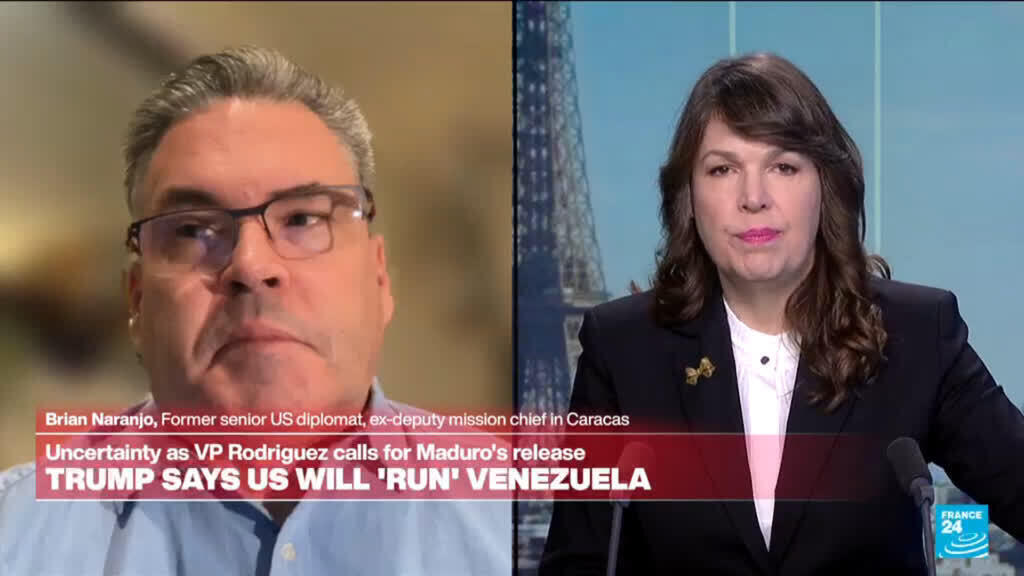
According to reports, "Operation Absolute Resolve" was a meticulously planned mission with minimal casualties, described by Chinese military analysts as a “textbook” strike. Maduro and his wife were extracted to the United States, where they are expected to be arraigned on Monday, January 5, 2026. President Trump’s assertion that the US will oversee Venezuela’s governance during a transitional period has sparked both domestic and international debate. Former US diplomat Brian Naranjo, speaking to France 24, highlighted the complexity of such a move, noting the historical sensitivities of US intervention in Latin America.
Internationally, reactions have been mixed. Ukrainian President Volodymyr Zelenskyy suggested the US "knows what to do next" with authoritarian leaders, while French President Emmanuel Macron stated that the Venezuelan people should "rejoice," though his comments drew sharp criticism from France’s left-wing parties who called the intervention a "disgrace." In Greece, former Prime Minister Alexis Tsipras condemned the operation as a “blatant violation of international law,” reflecting broader concerns among some global leaders about the precedent set by such unilateral action. Meanwhile, Chinese analysts are reportedly studying the operation for potential lessons applicable to Taiwan, indicating the broader geopolitical ripple effects of the event.
Background: Venezuela’s Struggles and US-Venezuela Tensions
Venezuela has been mired in political and economic crises for over a decade, with Maduro’s regime facing accusations of corruption, human rights abuses, and involvement in drug trafficking. The country holds the world’s largest proven oil reserves, estimated at over 300 billion barrels, making it a focal point of geopolitical interest. Despite a US blockade aimed at crippling its oil exports, state-run PDVSA has continued to facilitate crude sales, with oil tankers arriving as recently as December 30, 2025. The US has long sought to pressure Maduro’s government through sanctions and diplomatic isolation, but the direct military intervention represents a significant escalation.
Prior to his capture, Maduro had signaled openness to dialogue with the US on drug trafficking issues on January 2, 2026, while avoiding questions about a recent US-claimed attack on Venezuelan soil. This gesture, however, did little to avert the military operation that followed, underscoring the deep mistrust between the two nations.
Economic and Geopolitical Implications
The capture of Maduro has sent shockwaves through global markets, with investors bracing for heightened geopolitical risk. Newsmax reports that while the move could eventually unlock Venezuela’s vast oil reserves for development—potentially benefiting US oil companies and boosting risky assets—there is an immediate flight to safety expected in trading. Posts on X from various commentators suggest a mix of skepticism and concern, with some alleging the operation is driven by American interests in Venezuelan oil rather than purely security concerns.
Outlook: What Lies Ahead for Venezuela?
With Maduro in US custody, the future of Venezuela remains uncertain. Trump’s assertion of temporary US control raises questions about governance, potential power vacuums, and the risk of further instability in the region. The international community watches closely as debates over the legality and morality of the intervention unfold. For now, the Venezuelan people, long burdened by economic hardship and political repression, face an unprecedented moment that could either herald change or deepen chaos.
As this situation develops, the world awaits clarity on how the US plans to manage its role in Venezuela and whether dialogue—once offered by Maduro—can still play a part in resolving this critical geopolitical crisis.
Track this story live
Live World Map
Monitor global events in real time with a live activity map and hotspot summaries.
Markets
Connect live events to Catalyst market signals across crypto, commodities, indices, and forex.
Geopolitical Risk
Live geopolitical risk index tracking conflict zones, sanctions, and global threat levels.
Original Sources
- •Trump says US will 'run' Venezuela— France 24
- •
- •
- •
- •Will Beijing look to US capture of Venezuela’s Maduro for lessons on Taiwan?— South China Morning Post
- •
- •
- •
- •
- •
Editorial process: This article was synthesized from the original sources cited above using The World Now's AI editorial system, with byline accountability from our editorial team. We grade every story for source grounding, factual coherence, and on-topic match before publication. Read more about our editorial standards and contributors. Spot something inaccurate? Let us know.
Last updated: February 19, 2026