
US Captures Venezuela's Maduro in Daring Raid, Sparks Global Backlash and Market Volatility
Washington/T Caracas — In a dramatic escalation of long-simmering tensions, U.S. forces captured Venezuelan President Nicolás Maduro over the weekend, with the socialist leader scheduled to appear in a U.S. federal court on Monday. The operation has drawn sharp international reactions, from staunch allied support to calls for restraint, while rippling through global oil markets and underscoring Venezuela's deepening geopolitical crisis.
The capture follows a U.S. military action in Venezuela, details of which remain sparse but have been linked to broader efforts to address drug trafficking and political instability. Just days earlier, on January 2, Maduro had signaled openness to discussions with the United States on curbing drug trafficking, though he sidestepped questions about a recent attack in the country that sources claim was U.S.-attributed. Meanwhile, state oil company PDVSA has persisted in crude sales, with oil tankers arriving despite a U.S. blockade imposed to curb exports, as reported on December 30.
U.S. President Donald Trump addressed the developments on Sunday, warning of potential wider military action if U.S. demands are not met regarding Venezuela's interim leadership. "I could order [further incursions]," Trump told reporters, according to the Cyprus Mail, leaving the door open for additional interventions as Maduro faces charges in U.S. custody.
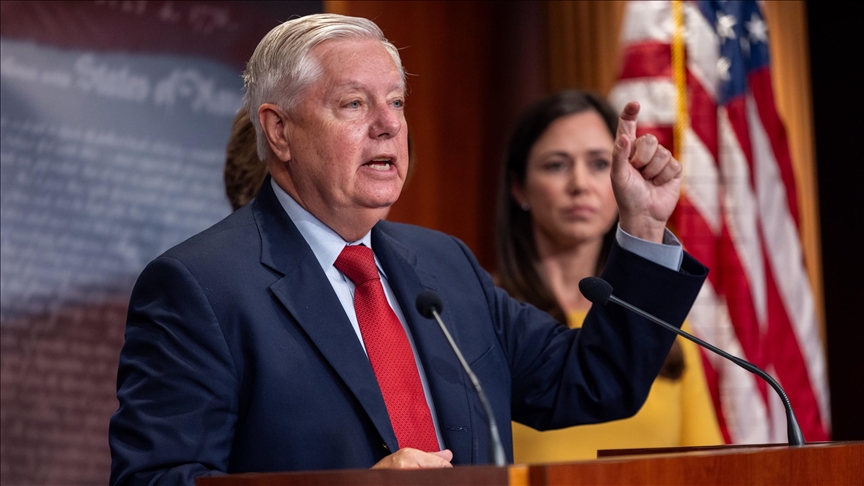
The move has elicited polarized responses. Republican Senator Lindsey Graham took a hardline stance, linking the Venezuela raid to broader regional threats. "Just wait for Cuba. Cuba is a communist dictatorship that has killed priests and nuns, they have preyed on their own people," Graham said, per Anadolu Agency, signaling possible U.S. designs on Havana next.
Support came from unexpected quarters, with North Macedonia's Prime Minister Hristijan Mickoski voicing "full backing" for the U.S. intervention, including Maduro's arrest. Mickoski criticized "selective concern" over international law violations, framing the action as necessary amid Venezuela's turmoil, as reported by Ekathimerini.
In contrast, 26 European Union countries issued a joint statement urging "respect for international law," calling for calm and restraint in the wake of the U.S. operation. Notably absent was Hungary, which did not join the communiqué, highlighting fractures within the bloc on U.S. foreign policy.
Economic Ripples and Oil Defiance
The crisis has already impacted global markets, particularly energy sectors. Indian oil stocks surged on Monday, with Reliance Industries Limited (RIL) hitting a 52-week high and state-run firms like ONGC, HPCL, IOC, and Oil India posting gains of around 1%. Analysts attribute the rally to speculation that a U.S.-led restructuring in Venezuela could unlock unpaid dividends owed to ONGC from its investments there, potentially injecting billions into the company's balance sheet, according to the Times of India.
Venezuela's oil sector remains a flashpoint. The country's vast reserves, once the world's largest, have been crippled by U.S. sanctions imposed since 2017 over human rights abuses, electoral fraud, and alleged narco-terrorism ties. The recent arrival of tankers despite the blockade illustrates PDVSA's determination to sustain exports, primarily to buyers in China, Russia, and India, amid production hovering around 800,000 barrels per day—far below pre-sanctions peaks.
Background: A Decade of Turmoil
Venezuela's crisis traces back to 2013, when Maduro succeeded Hugo Chávez amid economic collapse triggered by oil price drops, mismanagement, and hyperinflation peaking at over 1 million percent in 2018. Disputed 2018 and 2024 elections solidified U.S. non-recognition of Maduro, backing opposition figure Edmundo González as interim president-elect. Sanctions have slashed GDP by 75% since 2013, fueling mass migration of over 7 million Venezuelans.
The U.S. has long accused Maduro's regime of facilitating cocaine trafficking to America, with indictments issued in 2020 against Maduro and allies for narco-terrorism. Maduro's recent overture on drug talks hinted at possible détente, but the raid suggests Washington opted for direct action.
Allied nations like Russia, China, Iran, and Cuba have propped up Maduro with loans, arms, and oil shipments, complicating U.S. efforts. Senator Graham's Cuba remarks evoke Cold War-era hostilities, where Havana has hosted Venezuelan military trainers and intelligence operations.
Outlook: Brink of Broader Conflict?
As Maduro's court appearance unfolds, the world watches for U.S. next steps. Trump's openness to further action raises fears of regional escalation, potentially drawing in Maduro backers. European pleas for de-escalation underscore concerns over sovereignty norms, while market optimism reflects bets on post-Maduro stability unlocking Venezuela's oil wealth.
The coming days will test alliances and markets alike, with Venezuela at the epicenter of renewed hemispheric power struggles.
(Word count: 682)






