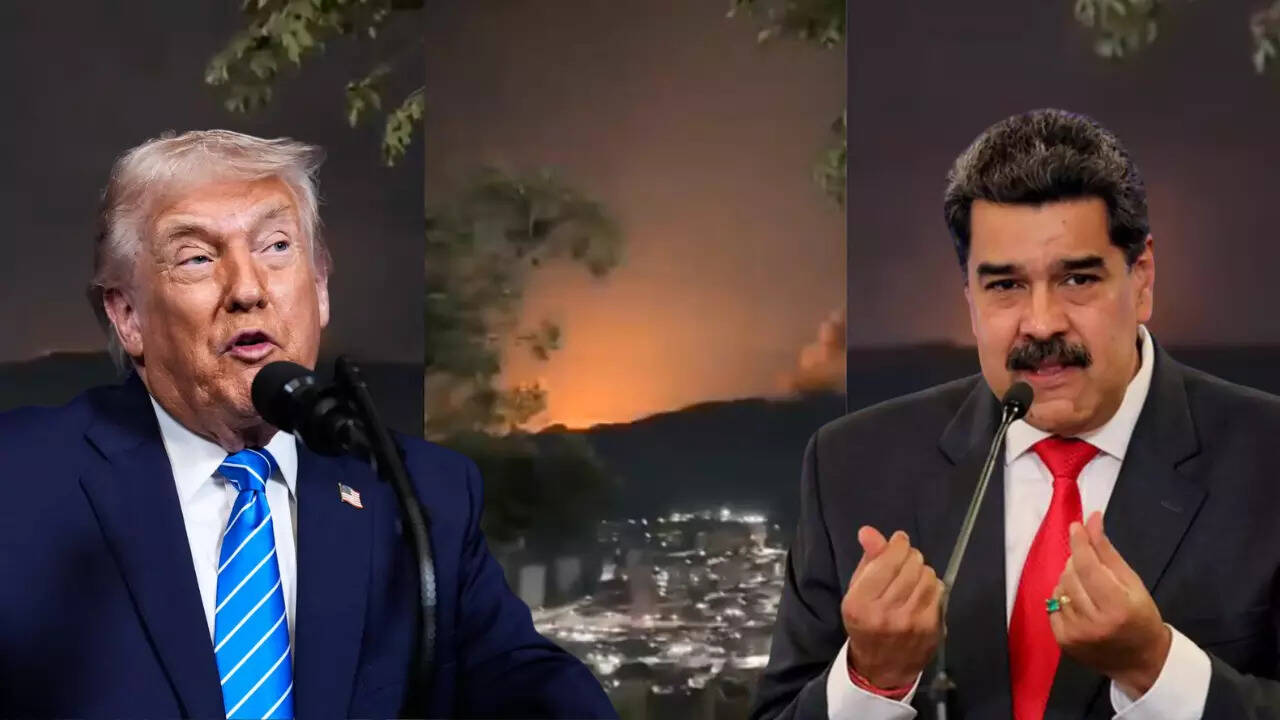
US Captures Maduro in Dramatic Raid, Venezuela Faces Uncertain Future Amid Geopolitical Tensions

Latest from X
US Captures Maduro in Dramatic Raid, Venezuela Faces Uncertain Future Amid Geopolitical Tensions
In a stunning turn of events, Venezuelan President Nicolás Maduro was captured by US special forces in a pre-dawn raid on January 3, 2026, named "Operation Absolute Resolve," and has been transported to a detention center in New York to face drug trafficking charges. This unprecedented military action, coupled with ongoing tensions over oil exports and drug trafficking, has plunged Venezuela into a political crisis and sparked a global outcry, with world leaders and analysts grappling with the implications for the region and beyond.
The operation, detailed by the Times of India, involved months of intelligence gathering by the CIA, drone surveillance, and meticulous military planning. US President Donald Trump announced that the US would temporarily "run" Venezuela until a "safe" transition could be ensured, a statement that has raised significant legal and ethical questions, as reported by France 24. In Maduro's absence, Venezuela’s Supreme Court appointed Vice President Delcy Rodríguez as interim president, who has called for calm and unity while condemning the US action as an act of aggression with "Zionist undertones," according to Middle East Eye.
Prior to the raid, tensions between the US and Venezuela had already escalated. On December 30, 2025, oil tankers arrived in Venezuela despite a US blockade aimed at crippling the state-run PDVSA’s crude sales, highlighting the country’s defiance in maintaining economic lifelines. Additionally, on January 2, 2026, Maduro had expressed a willingness to engage in talks with the US over drug trafficking allegations and military actions targeting Venezuelan infrastructure, though he avoided addressing specific US-claimed attacks, as per event reports.
Rodríguez’s interim leadership has drawn mixed reactions domestically and internationally. While she has publicly demanded Maduro’s release and insisted he remains the legitimate leader, Trump claimed she signaled cooperation in a conversation with the US Secretary of State, saying, “We’ll do whatever you need,” according to France 24. This contradiction has fueled uncertainty about who truly holds power in Caracas. Meanwhile, the Venezuelan opposition, led by figures like María Corina Machado, is torn between enthusiasm for Maduro’s ouster and caution over Trump’s apparent reservations about their leadership, as noted by El País.
Global Reactions and Geopolitical Implications
The international community has responded with a mix of condemnation and cautious support. North Korea and China have strongly denounced the US operation, with North Korea labeling it “the most serious form of encroachment of sovereignty” and calling for global protests, per the Times of India. China urged the US to “stop toppling” the Venezuelan government and release Maduro, though analysts suggest Beijing’s response will likely remain diplomatic rather than militaristic, according to Al Jazeera. Other world leaders, from Paris to Beijing, have expressed disquiet and urged adherence to international law, as reported by France 24.
In the US, the operation has deepened political divisions. Republicans have largely supported Trump’s actions, while Democrats have condemned them as “blatantly illegal,” arguing that Congress was not briefed or consulted, per France 24. Trump’s invocation of the Monroe Doctrine—a 19th-century policy asserting US dominance in the Americas—has further fueled debate over the legality and intent of the intervention, as explored by Al Jazeera.
Background: A History of Tensions
US-Venezuela relations have been strained for decades, exacerbated by Venezuela’s socialist policies under Maduro and his predecessor, Hugo Chávez, and the country’s vast oil reserves. The US has long accused Maduro’s regime of narco-terrorism and imposed sanctions to pressure political change, while Venezuela has maintained alliances with nations like China, Russia, and Iran to counterbalance US influence. Recent events, including the blockade of oil tankers and military actions against alleged drug trafficking infrastructure, reflect a culmination of these longstanding frictions.
Outlook: A Nation at a Crossroads
As Maduro awaits arraignment in New York, Venezuela stands at a critical juncture. The power struggle between Rodríguez and opposition leaders like Machado, combined with Trump’s assertion of temporary US control, raises profound questions about the country’s sovereignty and future governance. Analysts warn of a potential power vacuum that could destabilize the region further, with ripple effects on global oil markets and geopolitical alignments, as highlighted by El País and the Jerusalem Post.
For now, the world watches as Venezuela navigates this unprecedented crisis, with the outcomes of US-Venezuela talks—if they materialize—and the international response likely to shape the trajectory of this volatile situation. Posts on X from verified accounts reflect the polarized sentiment, with some viewing the US action as a necessary strike against corruption, while others decry it as an imperialist overreach, underscoring the complexity of this unfolding story.
Track this story live
Live World Map
Monitor global events in real time with a live activity map and hotspot summaries.
Markets
Connect live events to Catalyst market signals across crypto, commodities, indices, and forex.
Geopolitical Risk
Live geopolitical risk index tracking conflict zones, sanctions, and global threat levels.
Original Sources
- •
- •
- •
- •Venezuela’s acting president says US attack had 'Zionist undertones'— Middle East Eye
- •
- •
- •
- •
- •
- •
- •
- •
Editorial process: This article was synthesized from the original sources cited above using The World Now's AI editorial system, with byline accountability from our editorial team. We grade every story for source grounding, factual coherence, and on-topic match before publication. Read more about our editorial standards and contributors. Spot something inaccurate? Let us know.
Last updated: January 11, 2026






