United States Tensions Ease as Trump Cites Iran Nuclear Deal and Strait Reopening
The United States tensions are easing as the country reduces its military assets in Europe while advancing a potential nuclear agreement with Iran. According to two high-ranking European officials, the US plans to significantly reduce the fighter jets and warships it provides for NATO operations in Europe. The plan reduces F-16 and F-15E jets from around 150 to 100, maritime surveillance planes from 26 to 15, and removes eight aerial refueling planes along with a missile-armed submarine and an aircraft carrier. [1]
US Military Drawdown in Europe
According to two high-ranking European officials, the US plans to significantly reduce the fighter jets and warships it provides for NATO operations in Europe. The plan reduces F-16 and F-15E jets from around 150 to 100, maritime surveillance planes from 26 to 15, and removes eight aerial refueling planes. A missile-armed submarine and an aircraft carrier are also being pulled from European NATO support. [1] These reductions reflect a broader shift in US force posture across the continent as resources are reallocated amid other diplomatic priorities. The changes affect multiple categories of aircraft and naval assets that have long supported alliance operations. European officials described the scale of the drawdown as notable given the previous levels of US contributions to NATO missions. The adjustments come at a time when the alliance continues to monitor regional security developments. [1]
Trump Announces End to Iran Conflict
U.S. President Donald Trump said on Friday that the United States had ended its war with Iran and secured a major agreement preventing Tehran from obtaining nuclear weapons, although Iranian authorities have not confirmed any final deal. [2] Speaking remotely at a campaign event in the U.S. state of Georgia, Trump said Washington had achieved nearly complete progress toward the settlement. [2] In a separate statement at the White House, Trump announced that a deal aimed at ending the conflict with Iran could be finalized within days. [4] He described the agreement as a “great settlement” and revealed that planned military strikes against Iran had been cancelled after negotiations advanced. [4] According to Trump, the agreement is in its final stages and could be formally signed during a ceremony in Europe over the weekend. [4] He added that the reopening of the Strait of Hormuz would follow immediately once the deal is completed. [4]
United States Tensions and Strait of Hormuz Status Amid Tensions
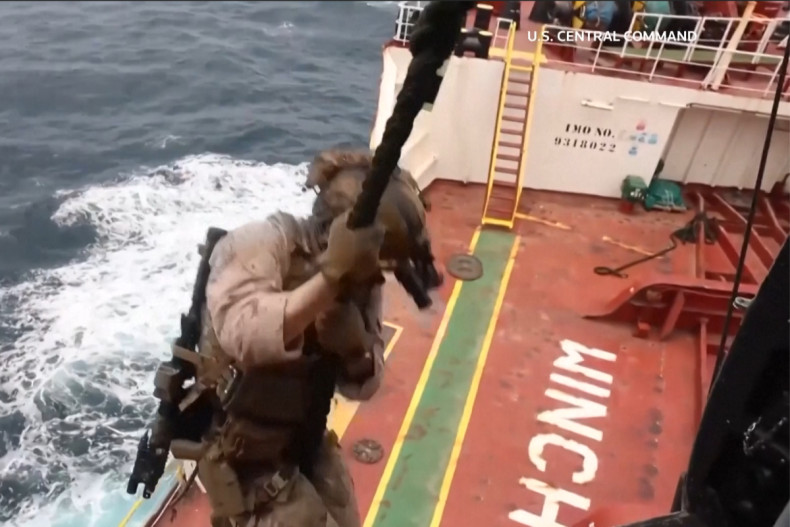
Despite Iran’s announcement of a blockade of the Strait of Hormuz, the United States says the strategic waterway remains open to shipping. [4] The US Central Command said commercial vessels continue to transit the waterway and confirmed that safe navigation corridors remain in place. [4] Iran’s Persian Gulf Strait Authority announced the closure of the strait on Thursday, citing escalating tensions following recent US military actions. [4] Iranian armed forces warned that any vessel violating the blockade could be targeted. [4] However, maritime monitoring data suggests traffic has not completely stopped, with satellite imagery and shipping analysis indicating that several vessels have continued to move through the strategic passage. [4] The United States has rejected Iran’s claim that it has effectively closed the Strait of Hormuz. [4] Washington maintains that Iran has no authority to control international navigation through the strait and insists lawful commercial shipping remains free to pass. [4] The US Central Command confirmed that American forces recently struck multiple vessels accused of breaching US-imposed restrictions, including the Guinea-Bissau-flagged tanker M/T Jalveer, which was hit by Hellfire missiles after allegedly ignoring instructions. [4] Other vessels were also intercepted or disabled for attempting to transport Iranian oil or access Iranian ports. [4]
New Eastern Mediterranean Energy Partnership
The United States, Cyprus, Greece, and Israel have formalized a new energy partnership aimed at securing infrastructure and boosting natural gas development in the Eastern Mediterranean. [3] US Energy Secretary Chris Wright signed a Declaration of Intent alongside Cypriot Energy Minister Michael Damianos, Greek Environment and Energy Minister Stavros Papastavrou, and Israeli Ambassador to the US Dr. Yechiel Leiter. [3] To anchor the initiative, the group partnered with Rice University President Reginald DesRoches to establish the Eastern Mediterranean Energy Center on the university’s Houston campus. [3] The agreement operationalizes a core objective of the Eastern Mediterranean Security and Energy Partnership Act, a bipartisan framework originally passed by Congress in 2019 to counter Russian and Chinese influence in the region by solidifying US allied energy ties. [3] According to the agreement, the center will serve as a hub for both public and private sector collaboration, with key priorities including expanding natural gas development and US Liquefied Natural Gas infrastructure, securing regional energy transportation networks, and bolstering power grid reliability. [3] The decision to place the center in Houston is aimed at directly connecting Eastern Mediterranean policymakers with American industry leaders and engineering talent. [3] Secretary Wright noted that the Eastern Mediterranean is an increasingly important region for global energy development. [3] Papastavrou described the occasion as a “historic moment,” saying that Greece, Cyprus, Israel and the United States are joining forces to deepen strategic cooperation and enhance connectivity in the Eastern Mediterranean through the establishment of the East Med Energy Center. [3]
Strategic Context and Reactions
Iranian Foreign Ministry spokesman Esmaeil Baghaei said discussions were ongoing and that reports of a completed deal remained speculative. [4] He acknowledged that mediators from Qatar and Pakistan were actively involved but stressed that Iran would not compromise on what it considers its core national interests. [4] Baghaei also reiterated that the Strait of Hormuz remains closed from Iran’s perspective due to what he described as unlawful actions by the United States. [4] Iran’s Defense Ministry warned that any new attack against the country would trigger a stronger response than previous confrontations. [4] Israel has expressed support for negotiations but insists that any final settlement must address Iran’s nuclear programme, missile capabilities and support for armed regional groups. [4] The narrow waterway serves as a vital route for global energy supplies, and any prolonged disruption could have significant consequences for oil prices, shipping costs and economic stability. [4] The partnership arrives as Europe and the Mediterranean continue to reshape their supply chains, with the US currently operating as the world’s leading oil and gas producer and largest LNG exporter. [3]
What to watch next: Trump indicated the agreement could be formally signed during a ceremony in Europe over the weekend, with the reopening of the Strait of Hormuz to follow immediately once the deal is completed, while Iranian officials continue to describe reports of a completed agreement as speculative.