
Ukraine's Western Allies Advance Security Guarantees as Zelensky Pushes for UK-French Military Presence
Paris, January 6, 2026 – Western allies of Ukraine have agreed to "robust" and multi-layered security guarantees for Kyiv, including potential deployments of UK and French troops following a ceasefire in Russia's ongoing war, aligning with recent calls from Ukrainian President Volodymyr Zelensky for such a military presence to underpin any peace deal.
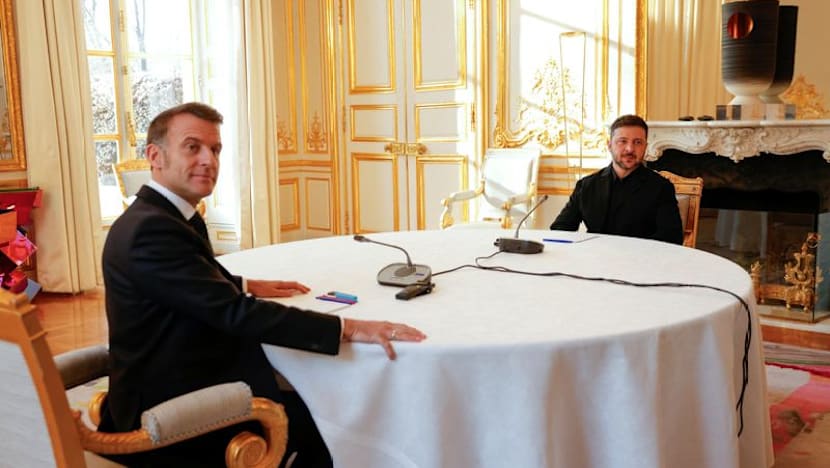
The commitments emerged from high-level talks in Paris on Tuesday, where European and U.S. leaders outlined a framework featuring a U.S.-led monitoring mechanism for any truce and a European multinational force to bolster Ukraine's security post-ceasefire. French President Emmanuel Macron announced the accord from the Élysée Palace, emphasizing its role in deterring future aggression. This development follows Zelensky's statement on January 4, in which he insisted that a sustainable peace agreement must incorporate British and French military personnel on Ukrainian soil to ensure long-term stability.
Details of the guarantees remain under negotiation, with binding commitments yet to be finalized. Reports indicate the "willing coalition" – involving nations like the UK, France, and others – has been planning a multinational force, now aiming to integrate U.S. and European support. Alexander Stubb, Finland's president, highlighted this shift toward a world defined by power dynamics, underscoring the strategic necessity of combining transatlantic resources.
The UK and France have explicitly signaled readiness to deploy troops after a ceasefire, as reported by The Guardian. This pledge addresses Kyiv's security concerns amid stalled frontline advances and Russia's persistent threats. Channel News Asia noted that while ceasefire talks are advancing, unresolved elements could complicate implementation.
Ukrainian Intelligence Scores Deception Win Against Moscow
In a parallel development exposing ongoing hybrid warfare, Ukrainian intelligence conducted a successful deception operation against Russia. On January 2, Kyiv's agencies faked the death of a prominent Russian far-right activist, luring and identifying several enemy agents operating within Ukraine. The medium-severity operation, detailed in recent security briefings, underscores Ukraine's proactive countermeasures against infiltration amid peace overtures.
This intelligence coup reveals persistent Russian covert activities, even as diplomatic channels open on security pacts. It provides Kyiv with leverage in negotiations, demonstrating resilience without direct ties to the allied guarantees discussions.
Diplomatic Normalization Efforts
Complementing these security moves, Czechia's foreign minister is set to visit Ukraine soon, signaling a "turning of the page" on controversial remarks by the Czech parliament chairman. The Kyiv Independent reported this as a step to strengthen bilateral ties, amid broader European alignment against Russian aggression. Such visits aim to solidify unified Western support as peace frameworks take shape.
Background on Ukraine-Russia Conflict and Peace Prospects
Russia's full-scale invasion of Ukraine, launched in February 2022, has resulted in hundreds of thousands of military casualties, widespread destruction, and a humanitarian crisis displacing millions. Ceasefire talks have gained momentum in recent months, driven by battlefield stalemates, U.S. political shifts post-2024 elections, and European fatigue with aid commitments totaling over $100 billion from the West.
Zelensky's call for foreign troops echoes NATO's historical peacekeeping roles, such as in the Balkans, but risks escalating tensions with Moscow, which views any Western military presence as a red line. Putin has repeatedly demanded Ukraine's neutrality and rejection of NATO membership. The proposed U.S.-led monitoring draws parallels to OSCE missions in frozen conflicts like Donbas pre-2022.
Newsmax highlighted allies' optimism, describing the Paris meeting as the largest yet on the issue. However, experts caution that without Russian buy-in, these guarantees remain aspirational. France 24's coverage from the Élysée emphasized Macron's vision of a "robust" deterrent, potentially involving thousands of troops in a rotational multinational framework.
Outlook: Balancing Diplomacy and Deterrence
As details solidify, the security package could redefine Europe's post-Cold War order, blending American oversight with European boots on the ground. Ukraine's intelligence successes bolster its negotiating position, while diplomatic gestures like the Czech visit foster coalition cohesion. Yet, with ceasefire terms elusive and winter offensives looming, the path to implementation remains fraught.
Allies must navigate domestic politics – from U.S. congressional scrutiny to European budget constraints – while ensuring guarantees are credible against Russia's nuclear saber-rattling. For Zelensky, these pledges offer a lifeline; for Putin, a potential flashpoint. Observers await Moscow's response, expected in coming days, as global markets watch for ripples in energy and grain supplies.
(Word count: 682)