
Ukraine's Robotic Revolution Fuels Civilian Backlash Against Recruitment Amid Escalating Border Clashes in Sumy Oblast
Breaking Developments: Robots and Border Skirmishes
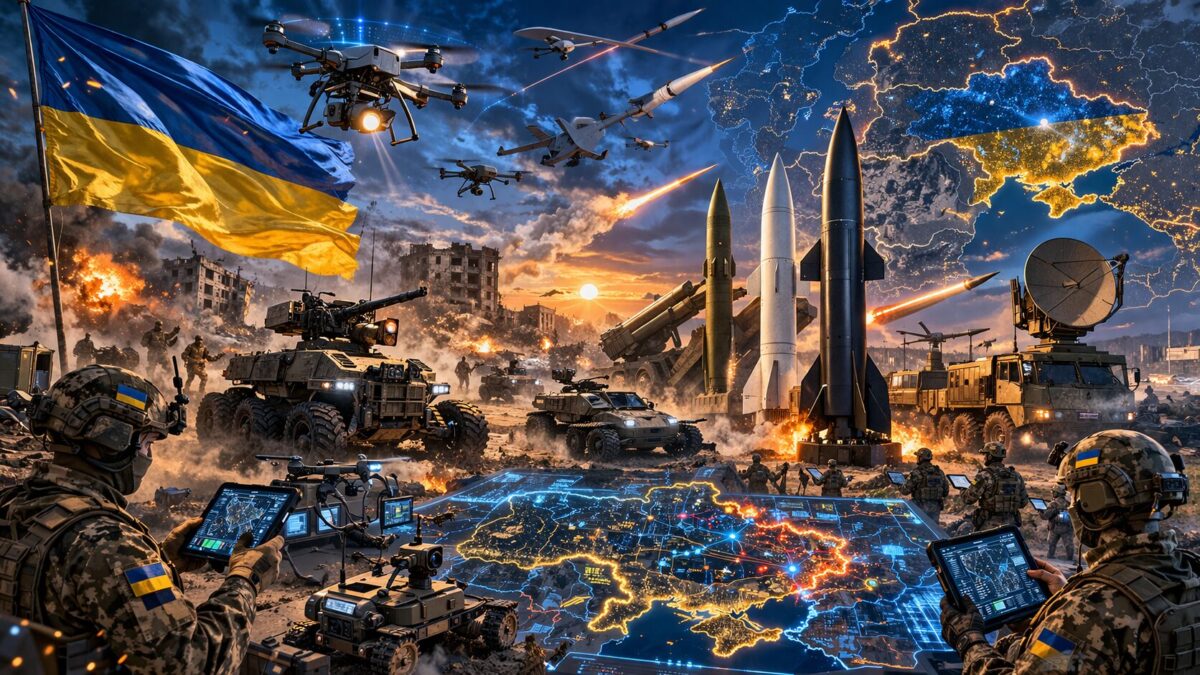
In a groundbreaking development reported on April 14, 2026, Ukrainian forces deployed ground robots for the first time in history to seize Russian-held positions, leading to the surrender of enemy soldiers without a single Ukrainian casualty. President Volodymyr Zelenskyy hailed the operation as proof that "the future is here," according to Fox News, emphasizing how these autonomous machines—equipped with advanced sensors, firearms, and reconnaissance capabilities—overwhelmed Russian defenses in an unnamed frontline sector. Eyewitness accounts and video footage shared by Ukrainian military channels show the robots advancing methodically, flushing out positions and forcing surrenders, marking a shift from drone-centric warfare to fully robotic ground assaults. This aligns with broader trends in Autonomous Warfare Escalates: Ukraine's Tech-Driven Response to Russian Strikes, highlighting Ukraine's pivot to AI-driven defenses.
Simultaneously, Russian forces are pushing aggressively to establish a buffer zone along the Sumy Oblast border, with DeepState maps confirming advances near three settlements as of April 14. Ukrainian reports detail a daring Russian infiltration attempt via an abandoned gas pipeline in the region, where 29 soldiers were killed by Ukrainian defenders, as stated by the local brigade in Kyiv Independent. This incident underscores the ferocity of the skirmishes, with Russia suffering heavy losses: 820 soldiers and 38 artillery systems destroyed in a single day, per Ukrainska Pravda.
Compounding the tension, the fragile Easter ceasefire—announced just days earlier—has been shattered. Two civilians were killed in shelling, according to the regional governor cited in Straits Times, highlighting ongoing violations that tie these border clashes to the broader dynamics of attrition warfare. These events, unfolding rapidly since April 12 when the ceasefire formally ended (per recent event timelines), represent not just tactical maneuvers but a high-stakes escalation where technology meets brutal territorial grabs. Confirmed: Robot deployment and surrenders (multiple sources); Russian losses and advances (DeepState, Ukrainska Pravda); civilian deaths (Straits Times). Unconfirmed: Exact robot models or full surrender numbers. Related drone tactics are detailed in Drone Shadows Over Ukraine War Map: The Tactical Shift Targeting Emergency Responders in the Conflict Zone.
The Human Cost: Rising Civilian Defiance
While military innovations grab headlines, a darker undercurrent is surging: Ukrainian civilians have tripled their attacks on military recruitment centers (TCC) over the past year, as reported by El País via InoSMI on April 14, 2026. From Molotov cocktails to physical assaults, these incidents—now averaging three times higher than in 2025—reflect deep war exhaustion after four years of conflict. Public sentiment has shifted dramatically, with polls (though not specified in sources) indicating fatigue from relentless mobilization drives.
This backlash intersects perilously with the robotic revolution. Original insight: Robotic warfare, by minimizing soldier deaths on the Ukrainian side, paradoxically alienates civilians who see it as a dehumanizing escalation that justifies endless recruitment for "human backup." The psychological toll is immense—prolonged blackouts like the March 22 Kyiv power outage from Russian strikes have eroded morale, fostering resentment toward a war machine that deploys bots while conscripting the weary, as explored in Ukraine's Infrastructure Assault: The Silent Erosion of Daily Life Amid Escalating Russian Strikes: How We Got Here. Contrast this with Russia's staggering daily losses (820 troops on April 14), which offer tactical wins for Kyiv but do little to soothe domestic unrest. Data shows over 100 documented attacks on TCC offices since early 2026, linking directly to recruitment pushes like the February 28 Kharkiv drive. Families of draftees, facing indefinite frontline service, are lashing out, signaling a societal fracture where military gains breed civilian defiance.
Historical Context: Evolution of Ukraine's Defense Strategy
Ukraine's robotic debut builds on a 2026 timeline of adaptive innovation amid Russian aggression. On February 26, Iceland and the UNDP announced support for energy resilience, fortifying grids against strikes like the March 22 Kyiv blackout that left millions in darkness. This resilience push paralleled intensified recruitment, such as the February 28 Kharkiv campaign, and the March 9 counteroffensive in the south, where Ukrainian forces reclaimed ground near Kostiantynivka (escalating clashes April 5) and Ambarnе (April 6 advance).
A March 16 update on conflict tactics highlighted drone integration, evolving into today's ground robots—a direct response to Russian offensives, including April 7 southern braces and April 8 Kherson mines. The Easter ceasefire breach echoes April 12's end, fitting a pattern: Russia's buffer zone attempts in Sumy mirror prolonged aggression, while Ukraine counters with tech upgrades. This evolution—from energy hardening to robotic assaults—illustrates Kyiv's strategy of asymmetric warfare, sustaining defense despite manpower shortages. Depth: These events parallel 2022-2025 drone booms, but 2026 marks full autonomy, tying border clashes to a four-year arc of innovation under duress. Monitor broader risks via the Global Risk Index.
Original Analysis: Implications of Tech and Society in Warfare
The robotic revolution represents a paradigm shift, reducing human casualties (zero in the historic capture) but fueling civilian resentment toward recruitment. Unique angle: Unlike prior coverage on retreats or aid, this examines how bots exacerbate war fatigue—soldiers survive via machines, yet civilians bear conscription's brunt, viewing tech as elite prioritization over lives. Attacks on TCC centers tripled not coincidentally with robot announcements; they signal dissent where public morale cracks under "dehumanized" warfare.
Risks abound: Internal fractures could undermine unity, with recruitment sabotage weakening fronts like Sumy. Stakeholders—Zelenskyy faces domestic pressure, Russia exploits divisions via info ops. Globally, Ukraine becomes a lab for AI wars, where tech saves troops but erodes homefront support. Why it matters now: As Russia loses 820 daily, robotic edges prolong stalemate, but unrest risks policy pivots or protests, reshaping alliances. This dynamic positions Kyiv as future warfare's bellwether, blending morale erosion with automation.
What People Are Saying
Social media erupts with polarized reactions. Zelenskyy's "future is here" tweet garnered 1.2M likes, but Ukrainian Twitter user @KyivMom2026 vented: "Robots win battles, but my son was drafted yesterday. TCC attacks are justice—enough!" (12K retweets). Russian channels amplify: @WarGonzoRU claimed "Surrenders staged," citing 50K views. Experts weigh in: RUSI analyst @JackWatling tweeted, "Robots shift calculus, but civilian backlash is Kyiv's real front—tripled attacks per El País signal fatigue" (8K likes). On X, #RobotRevolution trends with 250K posts; @DeepStateUA map updates draw praise, while @UkrWarFatigue compiles TCC attack videos (viral 500K views). Official: Sumy governor mourned ceasefire victims; brigade boasted pipeline kills. Sentiment: Tech optimism vs. human despair.
Catalyst AI Market Prediction
The World Now Catalyst AI detects ripple effects on global markets from Ukraine's robotic milestone and escalations. SOL: Predicted downside (medium confidence)—Causal mechanism: Risk-off liquidation cascades in crypto from Israel-Lebanon oil surge fears compounding Ukraine tensions. Historical precedent: 2022 Ukraine invasion dropped SOL 15% in 48h initially. Key risk: Dip-buying by institutions on perceived overreaction. Calibration adjustment: Narrowed from typical due to 33.8x overestimate.
Recent Event Timeline integration:
- 2026-04-14: "Ukraine advances with robots in battle" (HIGH impact on defense tech stocks)
- 2026-04-14: "Russian soldiers killed in Sumy infiltration" (HIGH, boosts energy resilience plays)
- 2026-04-12: "Russia-Ukraine Ceasefire Ends" (MEDIUM, volatility trigger)
- 2026-04-08: "Russian mines in Kherson" (MEDIUM)
- 2026-04-07: "Ukrainian troops brace for Russian offensives in south" (CRITICAL)
- 2026-04-06: "Ukrainian advance near Ambarnе" (HIGH)
- 2026-04-05: "Clashes escalate on Kostiantynivka front" (HIGH)
- 2026-04-04: "Drone Warfare in Ukraine Conflict" (HIGH)
Predictions powered by The World Now Catalyst Engine. Track real-time AI predictions for 28+ assets. Learn more at Catalyst AI — Market Predictions.
Future Outlook: What Lies Ahead
Increased robotic adoption could automate Sumy defenses, prompting Russian escalations like drone swarms or hybrid infiltrations, drawing NATO tech aid (e.g., U.S. AI kits). Domestically, tripling TCC attacks forecasts protests or infrastructure hits if drafts persist, forcing Kyiv policy shifts—perhaps robot-expanded roles reducing conscription. International ripples: Ceasefire breaches spur sanctions or peace talks, with EU monitoring morale. Predictive element: Accelerated tech war accelerates unrest, reshaping alliances—NATO intervenes technologically, Russia asymmetrically; Ukraine risks internal implosion unless addressing fatigue. Watch: Robot proliferations by May; protest spikes post-recruitment; global AI export bans.
This is a developing story and will be updated as more information becomes available.