Ukraine War Surpasses World War I at 1,569 Days as Russian Losses Mount
Russia's full-scale invasion of Ukraine has now reached 1,569 days, surpassing the length of World War I, with Ukrainian forces reporting 1,310 Russian soldiers lost in the past day alone amid ongoing fighting and nuclear rhetoric from Moscow. The Ukraine war has extended well beyond initial expectations of a quick victory, now matching and exceeding historical benchmarks for major conflicts.
War Duration Milestone
The war has lasted 1,569 days or four years and three months, exceeding World War I's duration and becoming longer than the Great Patriotic War. [1] Russia's full-scale invasion reached 1,569 days, a milestone that surpasses the duration of World War One, with the two conflicts often compared for their brutal infantry assaults and heavy casualties. [1] From 24 February 2022 until today, the conflict has become as long as World War I, which ran from 28 July 1914 to 11 November 1918. [5] This marks the second historical threshold crossed by the aggression, after it already exceeded the duration of the Great Patriotic War in January of last year. [5] The next symbolic threshold would be the total length of the Second World War at 2,193 days, which the Ukraine war would reach only if it continues until 26 February 2028. [5]
Daily Russian Losses
Russian forces lost 1,310 soldiers in the past day, bringing total personnel losses to 1,378,820 since February 2022, along with thousands of pieces of equipment including 74 artillery systems and over 2,000 UAVs. Russia has lost 1,310 soldiers killed and wounded over the past day, bringing its total number of personnel losses to 1,378,820. [3] The total combat losses of the Russian forces between 24 February 2022 and 11 June 2026 are estimated to include approximately 1,378,820 military personnel, 12,010 tanks, 24,727 armoured combat vehicles, 43,787 artillery systems, 1,859 multiple-launch rocket systems, 1,416 air defence systems, 436 fixed-wing aircraft, 353 helicopters, 1,628 ground robotic systems, 342,651 operational-tactical UAVs, 4,733 cruise missiles, 33 ships or boats, 2 submarines, 105,498 vehicles and fuel tankers, and 4,277 special vehicles and other equipment. [3]
Russian Nuclear Rhetoric and Setbacks
Russia has revived nuclear blackmail with threats of tactical nuclear weapons use as its military faces strategic setbacks, including retreats from the Kinburn Peninsula after Ukraine recaptured over 600 square kilometers this year. Moscow is intensifying aggressive rhetoric and launching new threats with nuclear weapons at a time when the international community and Western allies warn that the war in Ukraine has turned into a strategic disaster for Vladimir Putin. [4] The reactivation of radical discourse coincides with the start of large-scale NATO military exercises. [4] In response, the Russian Deputy Foreign Minister Mikhail Galuzin reaffirmed Moscow's readiness to resort to its nuclear arsenal, citing an alleged concentration of NATO forces on the borders of the two states as justification for maintaining a state of maximum alert. [4] Radical voices in Moscow are calling for the assassination of Zelensky and tactical strikes. [4] The growing pressure felt by Russian forces on the front due to Ukrainian drone and missile attacks has led to a radicalization of public discourse in Russia. [4] In the pages of the pro-Kremlin daily Rossiiskaia Gazeta, military analyst Colonel Yuri Knutov publicly called for declaring President Volodymyr Zelensky an "international terrorist" to facilitate an elimination operation by the secret services. [4] Knutov also suggested that the Russian army is approaching the point where it will be forced to use tactical nuclear weapons to break through Ukrainian defensive lines and regain the initiative. [4] The massive use of drones by Ukraine has slowed the Russian offensive, forcing troops to disperse into small groups. [4] The proposed solution from radicals involves the use of small-caliber nuclear munitions, such as 152 mm shells with special charges, to break the deadlock on the front. [4] While political rhetoric in Moscow becomes increasingly virulent, the reality on the ground shows a significant withdrawal of occupation forces. [4] The Ukrainian army has managed to recover more than 600 square kilometers of territory since the beginning of this year, reversing the balance of power in its favor. [4] According to data provided by the resistance movement "Ateș," units of the Russian 337th regiment were forced to abandon their positions on the Kinburn Peninsula in the Mykolaiv region, a critically important area located at the mouth of the Dnieper into the Black Sea. [4] The loss of this strategic position significantly weakens the defense capability of occupied Crimea and gives Ukraine greater control over maritime routes in the northwestern Black Sea. [4] Logistics in the area have been completely paralyzed due to intense drone attacks by Ukraine's Special Operations Forces. [4] Russian military experts, including Lieutenant General Evgeny Buzhinsky in reserve, warn that Ukraine could be preparing a large-scale airborne operation to penetrate Crimea. [4]
Russian soldiers stand amid destroyed military vehicles during the Ukraine war now exceeding World War I duration. — Source: gdelt
Frontline Situation and Ukrainian Tactics
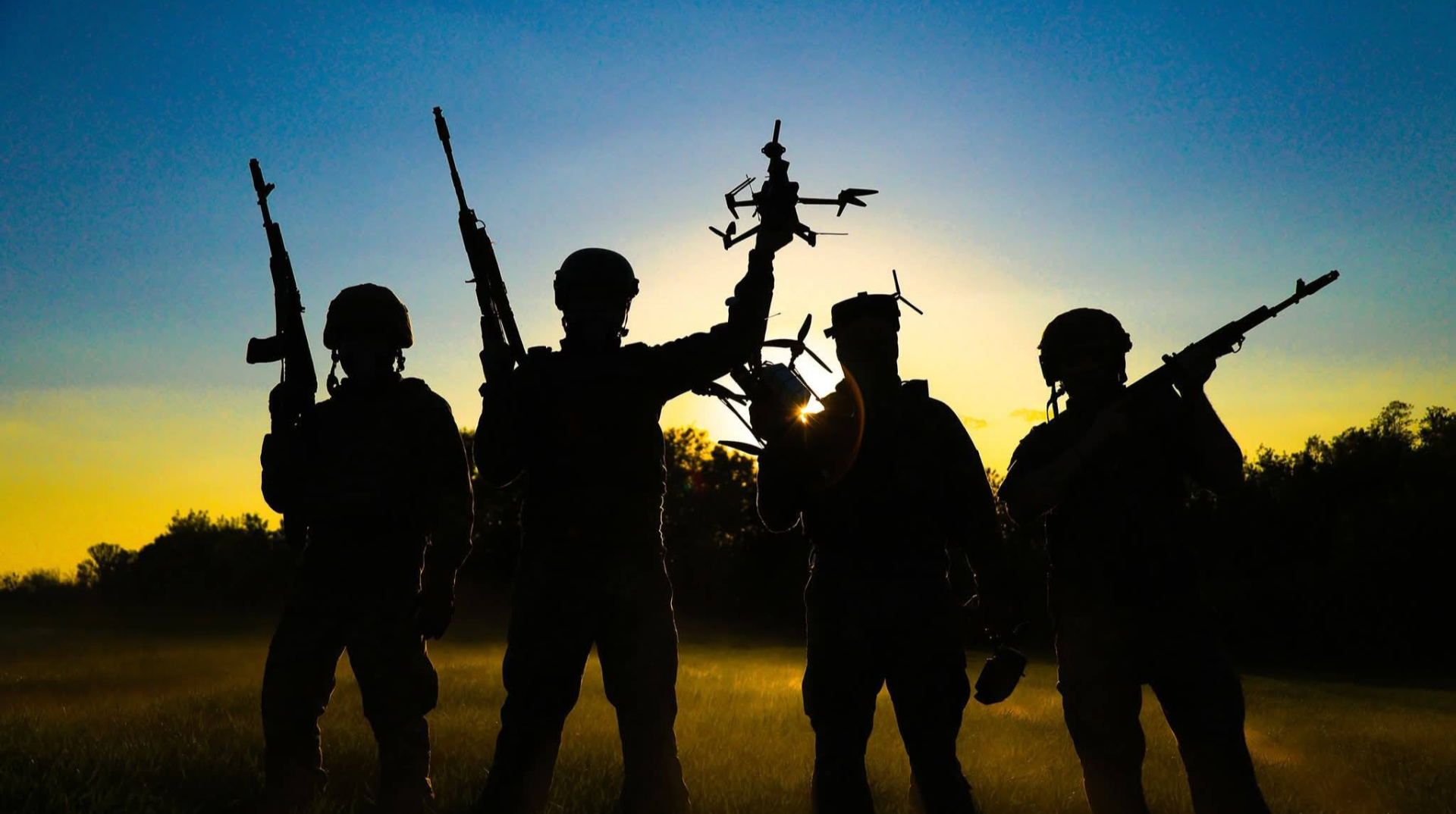
Ukrainian forces report 1,310 Russian soldiers lost and over 430 pieces of equipment destroyed in one day. — Source: ukrainskapravda
The military situation on the ground has remained generally stable over the past six months with no major Russian advances, while Zelensky has proposed a direct meeting with Putin and international support for Ukraine continues. According to the French Ministry of Defense, the military situation on the ground has remained generally stable over the past six months. [5] No significant Russian advances have been observed on the fronts in Sumy, Kupiansk-Pokrovsk, or Zaporizhzhia-Kherson. [5] At the same time, the Ukrainian army continues to attack Russian logistics through targeted drone strikes, such as the one on the city of St. Petersburg even at the opening of the World Economic Forum. [5] Analysts warn that despite obvious difficulties, "the Russians are not losing the war," recalling that Ukraine faces questions about the number of casualties and has suffered significant material losses. [5] Ukrainian drone and missile strikes have slowed Russian advances, paralyzed logistics, and prompted radical calls in Russian media for declaring Zelensky an international terrorist and using small-caliber nuclear munitions.
Diplomatic and International Context
Ukrainian drone and missile strikes have slowed Russian advances, paralyzed logistics, and prompted radical calls in Russian media for declaring Zelensky an international terrorist and using small-caliber nuclear munitions. On the diplomatic front, Ukrainian President Volodymyr Zelensky has proposed a direct meeting with his Russian counterpart Vladimir Putin in an open letter sent last week. [5] At the same time, international support for Kyiv continues, including through the unlocking of a European loan of 90 billion euros. [5] Leaders of the Baltic states have also reaffirmed their support for Ukraine's integration into NATO through a joint declaration describing Ukraine's path to the North Atlantic Alliance as "irreversible." [5] The invasion of Russia in Ukraine is a strategic disaster. [4] Its oil refineries are in flames, and the Russian army loses approximately 5,000 men every month. [4] Moscow cannot achieve its objectives on the battlefield, and any attempt at escalation will only worsen this critical situation. [4]
Civilian Impact and Broader Outlook
The military situation on the ground has remained generally stable over the past six months with no major Russian advances, while Zelensky has proposed a direct meeting with Putin and international support for Ukraine continues. In spite of these internal tensions and tactical pressures, the civilian reality remains tragic: Russian forces continue to strike civilian infrastructure in Kharkiv, with the latest attacks again resulting in casualties among the population, including children. [4] While Russia relies on numerical superiority and mass industrial production, Ukraine has built in just a few years a military ecosystem based on rapid innovation and technology. [4] Failures and logistical risks, illustrated by recent incidents such as the explosion of an ammunition depot in the Belgorod region attributed to an internal error of the Russian army, have accentuated the state of insecurity at the top of power in the Kremlin. [4] Political sources indicate that the Russian president shows a high degree of paranoia at this time. [4] Putin reportedly ordered his two older daughters to move to his fortified residence to protect them from possible assassination attempts. [4] An emergency check and cyber security of the entire video camera system around government locations has also been ordered, for fear of security breaches that could disconnect the Russian leader's routes. [4]
What to watch next: The Ukraine war shows no resolution horizon as the situation remains generally stable on the ground with continued Ukrainian drone strikes on Russian logistics and ongoing Russian strikes on civilian infrastructure in Kharkiv.