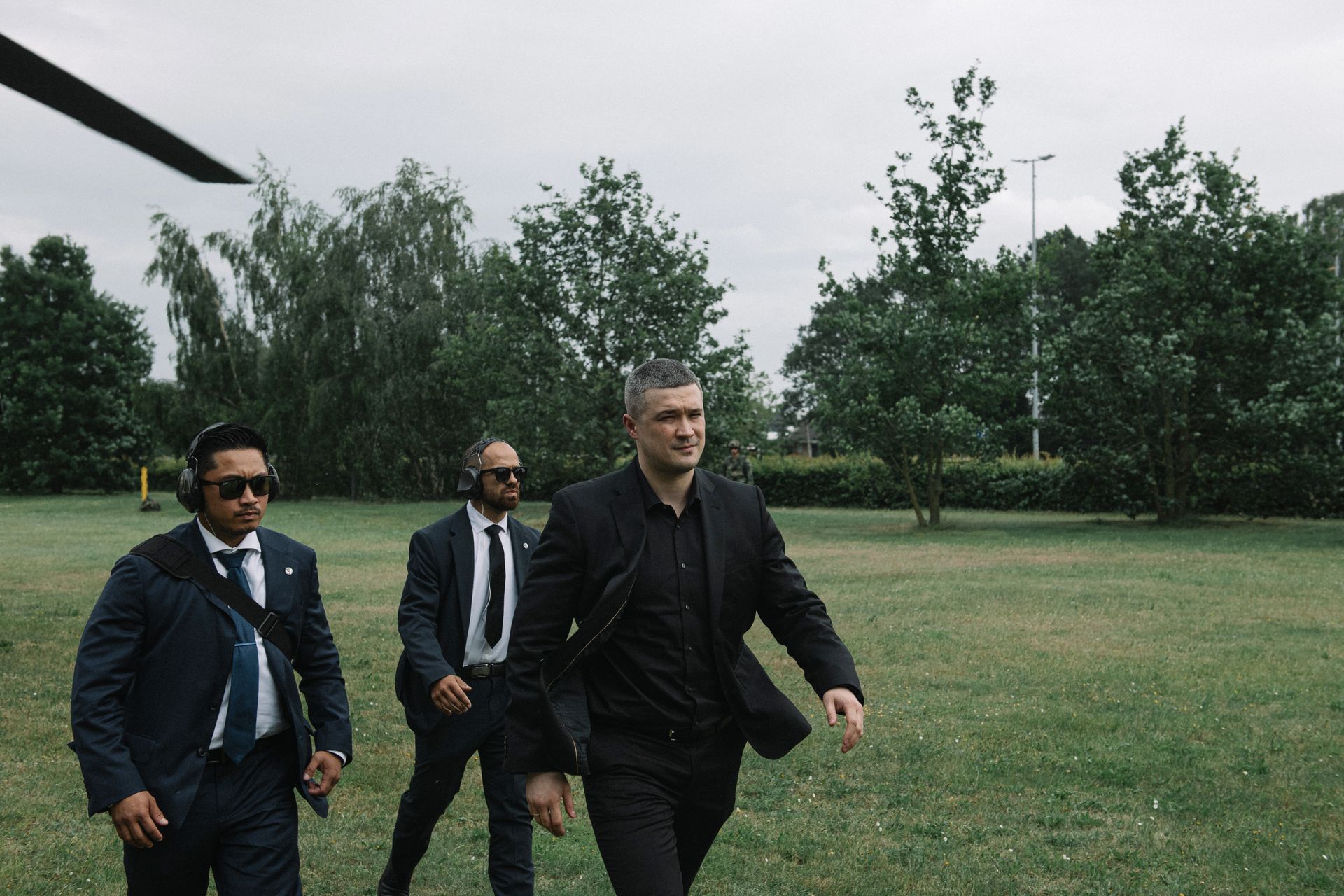

Ukraine War Sees Defense Minister Fedorov Dismissed Amid Military Protests
Ukraine dismissed Defense Minister Mykhailo Fedorov on July 15, 2026, prompting protests from military members and civilians who fear it will hinder the war effort against Russia, despite his key achievements in drone warfare, Starlink restrictions, and logistics disruption campaigns that have inflicted heavy losses on Russian forces. [1]
Fedorov Dismissal Sparks Protests
Among those gathered in Kyiv on July 16 to protest the dismissal of Defense Minister Mykhailo Fedorov were members of Ukraine's military voicing fears that the controversial decision could seriously hinder the country's war effort. [1] "People who are actually trying to bring our victory closer keep getting removed or replaced," Serhii, a 43-year-old veteran protesting alongside active-duty soldiers, told the Kyiv Independent. [1] President Volodymyr Zelensky's decision a day earlier to dismiss Fedorov from his role has been met with outrage across Ukrainian society, largely due to a long list of his achievements during his productive, albeit short, six-month tenure. [1]
Fedorov's Background and Digital Innovations
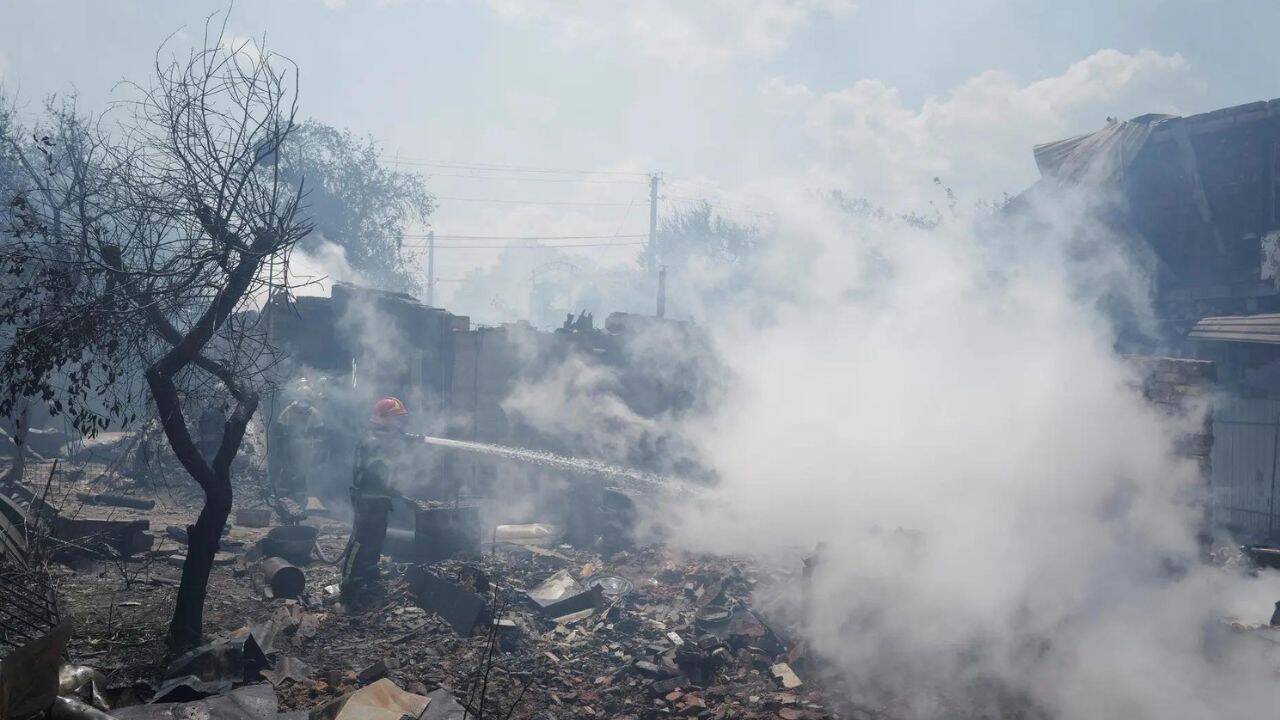
Ukrainian military members and civilians protest in Kyiv against Defense Minister Mykhailo Fedorov's dismissal. — Source: timesofindia
Originally from the now Russian-occupied town of Vasylivka in Zaporizhzhia Oblast, Fedorov spent his youth in the southeast, which has faced the brunt of the full-scale war since it began in 2022. [1] After graduating from the Sociology and Management Faculty at Zaporizhzhia National University in 2014, he founded a digital marketing agency, SMMSTUDIO, which offers targeted advertising, social media marketing, and web development. [1] Fedorov worked as a digital marketer for Zelensky's Kvartal 95 production company through SMMSTUDIO, promoting projects, including the now president's shows. [1] After four years as the CEO of SMMSTUDIO, Fedorov left the company in 2019 to become the head of digital for Zelensky's presidential campaign. [1] Following Zelensky's victory in the presidential campaign in April 2019, Fedorov initially served as a non-staff advisor on digital affairs to the president before being appointed Ukraine's Vice Prime Minister and Minister of Digital Transformation later that year. [1] As the country's first-ever Digital Transformation Minister, Fedorov spearheaded the development of the Diia mobile application and online portal, where citizens can access digital documents, including passports, driving licenses, and tax numbers, as well as public services, to pay taxes or register a business. [1] In the wake of the full-scale war, Fedorov launched the Army of Drones initiative with the General Staff and the government's fundraising platform, UNITED24 in 2022. [1] The Army of Drones, a program established to build and maintain a massive number of aerial and ground-based drones and to train operators, helped transform the war. [1] In January, Fedorov assumed his role as defense minister, bringing with him his digital-first approach and reliance on data gathering. [1]
Starlink Restrictions and Counterattack Support
One of Fedorov's first major achievements after becoming defense minister was convincing Elon Musk to restrict unauthorized Russian Starlink access on the battlefield in early February, shortly after Ukraine launched a surprise counterattack operation in the southeast. [1] SpaceX's satellite internet network, Starlink, has long become an integral part of battlefield communications for the Ukrainian military, offering a much safer and faster channel of communication, especially when compared to radio transmissions. [1] While Starlink service is formally blocked in Russia itself, its use has been recorded in Russian-occupied territories, allowing Russian command posts to view drone footage via high-speed satellite internet, and to guide long-range drones. [1] Fedorov, who worked closely with Musk through his years as the digital transformation minister, described Russia's sudden loss of access to Starlink as "a catastrophe." [1] The Russian cutoff of Starlink on the battlefield helped Ukrainian counterattacks along the border of Zaporizhzhia and Dnipropetrovsk oblasts, according to top commanders of brigades taking part in the operation. [1] The cutoff occurred less than a week into the operation, allowing Ukraine to buy time as the Russian army scrambled to look for alternatives, the 95th Air Assault Brigade's deputy battalion commander, Dmytro, previously told the Kyiv Independent. [1]
Logistics Lockdown and Crimea Siege
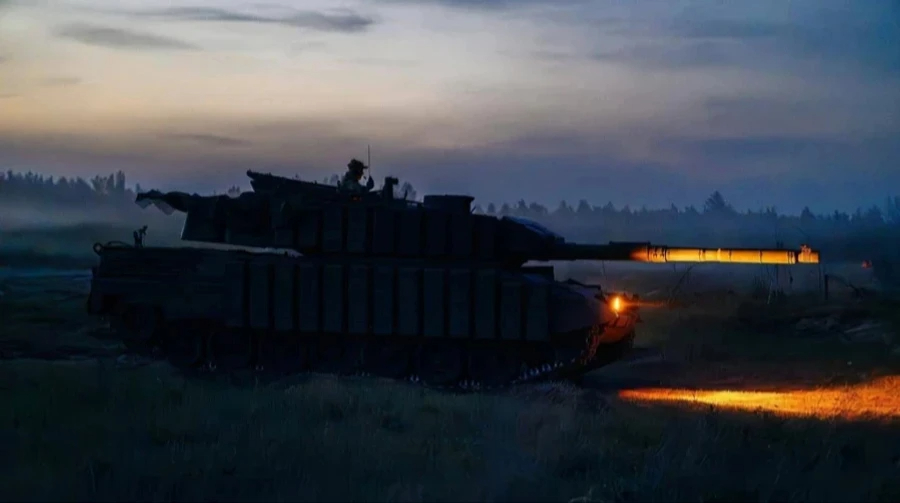
Ukrainian military members and civilians protest the dismissal of Defense Minister Mykhailo Fedorov in Kyiv. — Source: ukrainskapravda
Fedorov launched Ukraine's "Logistics Lockdown" campaign on May 27, an effort to "systematically destroy Russian logistics, warehouses, equipment, command posts, and supply routes at operational depth". [1] Five billion UAH was dedicated to purchasing middle-strike drones and loitering munitions to support the campaign. [1] Fedorov's technocratic approach to leadership and his long and close relationship with ex-Google CEO Eric Schmidt paid dividends. [1] The "Hornet" mid-range strike drone, developed by Schmidt's "Perennial Autonomy" became the backbone of Ukraine's campaign. [1] Perennial Autonomy's close relationship with the Ukrainian military, fostered by Fedorov, allowed quick adaptation and innovation such as integrating Starlink satellite communications on Ukraine's Hornets. [1] The campaign had a near-immediate impact. [1] Videos of Ukraine's Hornets, operated by Azov Corps, flying over occupied Donetsk and Mariupol first raised Ukrainian morale. [1] As the campaign matured, the systematic destruction of Russian logistics vehicles caused severe problems for Russian military logistics and near panic among Russian military bloggers. [1] In late May, Russian war correspondent Dmitry Steshin claimed that unless action was taken immediately to mitigate the threat of Ukraine's middle-strike drones, "in the coming months, logistics will collapse." [1] Ukraine's determined middle-strike campaign helped set the stage for the ongoing drone-led siege of Crimea. [1] Strikes on the occupied peninsula were nothing new, but the funding addition of Ukraine's new middle-strike drones allowed the pressure to be amped up significantly. [1] Ukraine's new fleet of cheap and mass-produced drones enabled a systematic campaign of strikes against Russian logistics vehicles transiting the R-280 highway, which stretches from Rostov Oblast in Russia and through occupied Donetsk and Kherson oblasts in Ukraine, before snaking down to Crimea. [1] The process of the siege also included the targeting of bridges connecting the occupied peninsula to the Ukrainian mainland, the ferries that carried heavy cargo across the Kerch Strait, and fuel and electrical infrastructure across Crimea. [1] The end goal was to weaken Russia's control of Crimea, making it a liability. [1] Crimea has suffered fuel, electricity, and water shortages as a result of the siege, and kilometer-long lines to flee the peninsula via the Kerch Strait. [1]
Russian Casualties and Drone Warfare Impact
Russian soldiers arriving on the front lines in Ukraine live an average of estimated 20 to 30 minutes before being killed or wounded, CIA Director John Ratcliffe said. [2] Speaking at the Pennsylvania Defense and Innovation Summit on Wednesday, Ratcliffe said US intelligence backed earlier reports about the mounting Russian losses. [2] "Our intelligence is consistent with some of the open-source reporting you may have seen in Ukraine," he said. [2] "The average life expectancy of a Russian recruit right now, arriving on the battlefield in Ukraine, is estimated to be between 20 and 30 minutes," he added. [2] Ratcliffe attributed the staggering casualty rate to the rapid evolution of drone warfare. [2] "That's because AI-powered drones have gotten to be such specialized, low-cost killing machines," he said. [2] "The takeaway is that the mastery of these emerging technologies is every bit as important as military strength. That's why an inferior force, four and a half years later, has held off the superior force of Russia," he added. [2] According to the Center for Strategic and International Studies, the Russia-to-Ukraine casualty ratio rose to nearly 8:1 in the first half of 2026, compared with roughly 2:1 or 3:1 for most of the war, as AI-enabled drones became widespread along the front. [2] CSIS estimates that more than two million soldiers on both sides have been killed or wounded since Russia invaded Ukraine in February 2022. [2] Of those, about 1.4 million casualties were Russian troops, including as many as 450,000 deaths. [2]
Daily Combat Losses and Repatriations
Russia has lost 1,370 soldiers killed and wounded over the past day, bringing its total number of personnel losses to 1,425,990. [3] The total combat losses of the Russian forces between 24 February 2022 and 17 July 2026 are estimated to be as follows: approximately 1,425,990 (+1,370) military personnel, 12,148 (+4) tanks, 24,946 (+6) armoured combat vehicles, 46,084 (+65) artillery systems, 1,943 (+7) multiple-launch rocket systems, 1,496 (+4) air defence systems, 437 (+0) fixed-wing aircraft, 354 (+1) helicopters, 1,932 (+13) ground robotic systems, 412,884 (+1,879) operational-tactical UAVs, 4,909 (+3) cruise missiles, 34 (+0) ships/boats, 2 (+0) submarines, 121,216 (+489) vehicles and fuel tankers, and 4,424 (+4) special vehicles and other equipment. [3] Ukraine repatriated the bodies of 501 people whom Russia claims are Ukrainian service members, the Coordination Headquarters for the Treatment of Prisoners of War said on July 16. [5] During previous repatriations, Russia at times returned the bodies of its own soldiers to Kyiv, with Ukrainian officials alleging the practice may have been aimed at avoiding compensation payments to Russian families or reflected a "negligent attitude toward their own people." [5] Ukrainian investigators and forensic experts will conduct examinations and identification procedures to determine the identities of the repatriated bodies. [5] The return of fallen Ukrainians has accelerated since peace talks resumed in early 2025. [5] Repatriation operations have become one of the few areas of continued humanitarian cooperation between Ukraine and Russia. [5]
What to watch next: Ukrainian drones struck 12 more Russian vessels in the Black Sea on Friday, including dry cargo ships, tankers and tugboats, bringing the total number of Russian vessels targeted this month in the Black Sea and the Sea of Azov to 159.





/data/photo/2026/07/13/6a54e9fe9f50b.jpg)