
Ukraine Strikes Destroy Russian Pantsir-S1 System Worth $15 Million in Crimea
Ukrainian forces conducted strikes on Russian targets including a Pantsir-S1 air defense system in occupied Crimea valued at around US$15 million, while Russian strikes across multiple Ukrainian regions killed at least three civilians and injured several others. Ukraine strikes have targeted Russian military assets in recent operations amid ongoing conflict.
Russian Drone Strike Kills Woman in Zaporizhzhia Oblast
A Russian FPV drone has attacked the settlement of Kushuhum in Zaporizhzhia Oblast, injuring two people. A 55-year-old woman subsequently died of her injuries. [1] Ivan Fedorov, Head of Zaporizhzhia Oblast Military Administration, stated: "The enemy attacked Kushuhum hromada: two people were injured. A Russian FPV drone struck the settlement of Kushuhum." [1] Fedorov reported that a 55-year-old woman and a 58-year-old man were injured in the attack. The woman died of her injuries. There is currently no information on the condition of the injured man. [1] A hromada is an administrative unit designating a village, several villages, or a town, and their adjacent territories. [1] Over the course of 6 August, Russian forces carried out 997 strikes against 56 settlements in Zaporizhzhia oblast; 10 people were injured as a result of attacks on the city of Zaporizhzhia and the district. [1]
Explosive Device Detonates off Mykolaiv Coast, Killing One
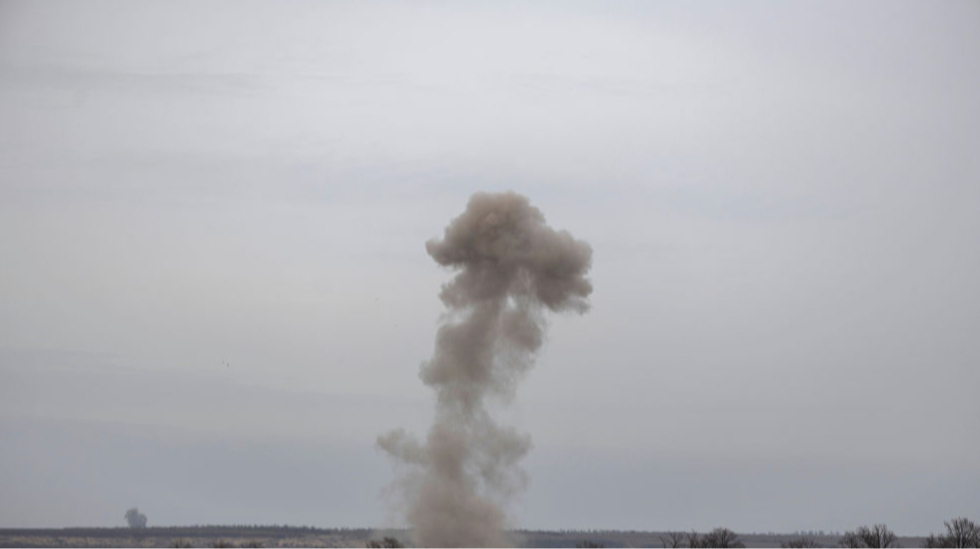
An explosive device has detonated in the waters of the Black Sea near the village of Kobleve in Mykolaiv Oblast, killing a 45-year-old man and injuring two women. [2] Heorhii Reshetilov, Head of Mykolaiv Oblast Military Administration, stated: "A 45-year-old man who was in the water was killed. I offer my sincere condolences to his family and loved ones." [2] Reshetilov said two women aged 47 and 63 who were on the shore were injured. The 47-year-old woman received medical assistance on site, while the 63-year-old was taken to hospital in a moderate condition. [2] The head of Mykolaiv Oblast Military Administration noted that the area where the explosion occurred had been fenced off and marked with mine hazard warnings. [2] He also reminded residents that swimming in the sea is prohibited within Mykolaiv Oblast. [2] Reshetilov added: "I draw attention once again: swimming in the sea is prohibited within Mykolaiv Oblast. This is not a formality – being in the water is extremely dangerous. I urge people not to disregard the prohibitions and warnings. Keep yourselves and your loved ones safe." [2]

Russian drone strike in Zaporizhzhia Oblast kills 55-year-old woman and injures two others. — Source: ukrainskapravda
Drone Attack on Civilian Vehicle in Kherson Oblast
Russian forces attacked a civilian vehicle on a highway in Kherson Oblast on the morning of 7 August with a drone, killing a 77-year-old woman. [3] Oleksandr Prokudin, Head of Kherson Oblast Military Administration, stated: "At about 08:00, Russian forces attacked a civilian vehicle on the highway near the village of Nova Kuban in the Borozenska hromada with a drone. Elderly people were in the vehicle." [3] A 77-year-old woman sustained fatal injuries as a result of a strike by a Russian Molniya-type drone and could not be saved despite the efforts of medical personnel. [3] A 70-year-old man was also taken to hospital. He was diagnosed with shrapnel wounds to the eye, arms and legs, a bone fracture, concussion, and blast and closed traumatic brain injuries. [3] Medical personnel are currently providing him with all necessary assistance. [3] A hromada is an administrative unit designating a village, several villages, or a town, and their adjacent territories. [3] Ukraine's National Police posted footage showing a Russian drone pursuing and attacking a civilian man at a farmers market in Kherson. [3]
Ukrainian Forces Destroy Russian Pantsir-S1 in Crimea
Ukraine strikes using naval platforms have destroyed Russian military equipment in occupied Crimea. Defence Intelligence of Ukraine has said its Group 13 special unit destroyed a Russian Pantsir-S1 surface-to-air missile and anti-aircraft gun system, along with a military crane, in temporarily occupied Crimea in early August. [5] The Defence Intelligence of Ukraine stated: "Another trophy for Defence Intelligence of Ukraine's Group 13 special unit in temporarily occupied Crimea: military intelligence operators destroyed a Russian Pantsir-S1 surface-to-air missile and anti-aircraft gun system, as well as the occupiers' military crane." [5] The operation used Magura naval platforms equipped with FPV drones to strike ground targets. [5] The military intelligence service estimated the value of the destroyed Pantsir-S1 system at approximately US$15 million. [5] Defence Intelligence of Ukraine also noted that Group 13 operators had previously destroyed a Podlyot radar command vehicle and a Parol-4 radar interrogation system in occupied Crimea. [5]
Legal Debate Over Ukrainian Strikes on Wildberries Warehouses
Ukraine has struck another Russian Wildberries logistics center, this time in Yekaterinburg, a city more than 2,000 kilometers from Ukraine. [4] Independent Russian media Meduza reported the strike citing the company's statement. [4] Ukraine has carried out strikes on the company's warehouse and logistics centers almost daily for about three weeks. [4] Ukrainian President Volodymyr Zelenskyy has justified the strikes by noting that Wildberries supplies components for drones and navigation devices to Russian troops. [4] He has called the strikes "justified countermeasures aimed at depriving the Russian war machine of its resources." [4] Yle examined Wildberries' product range and found many items that can also be used in warfare, including drones, night vision devices, and bulletproof vests. [4] On one bulletproof vest product page sold on Wildberries, a customer asked if the vest was for military or hobby use, and the response was for military use. [4] Emeritus Professor Martti Koskenniemi of international law at the University of Helsinki assessed whether these Wildberries warehouses and logistics centers are legitimate targets for Ukraine's drone strikes. [4] He referenced the Geneva Conventions, which state that civilian objects must not be made the object of armed action. [4] Military objectives are those whose nature, location, purpose, or use make an effective contribution to military action and whose destruction offers a definite military advantage. [4] Koskenniemi noted that one should not automatically trust Ukraine's own statement that Wildberries is a military target. [4] "It is useful for Ukraine to say so. From the Russian side, these are seen as civilian targets," Koskenniemi said. [4] The Kremlin has denied Ukraine's claims and stated that Wildberries is a purely civilian target. [4] Koskenniemi said it is currently impossible for outsiders to verify the actual situation. [4] "There is no international police or investigation procedure in international law where the parties can be bindingly determined what is there," he said. [4] Koskenniemi does not rule out that Wildberries warehouses may be important to Russia for military operations logistically or materially. [4] "If they are, then these are permitted targets," he said. [4] Wildberries delivers shipments throughout Russia and to occupied Crimea. [4] It is possible that Ukraine had intelligence on military supplies transported through Wildberries logistics centers, although this cannot be confirmed from open sources, according to the independent Meduza news site. [4] However, certainty is lacking. If there is doubt about the military use of a target, international law assumes it is a civilian target and it must not be attacked, Koskenniemi said. [4] "At present, the assumption is that Wildberries is a civilian target and Ukraine is committing a war crime. This assumption can be proven wrong if reliable evidence is obtained that Wildberries is being used in a significant way to support Russia's military operations," Koskenniemi said. [4] He also recalled the principle of proportionality from the laws of war. [4] "If there is one gun in a large Wildberries logistics center and it is hit with a huge bomb that kills dozens, then the principle of proportionality is not fulfilled," Koskenniemi illustrated. [4] The Geneva Conventions state that civilian casualties must not be disproportionate to the military advantage sought. [4] At least fourteen people have died in Ukraine's strikes on Wildberries facilities. [4] A Wildberries warehouse in the Leningrad region burned on Tuesday 4 August after a Ukrainian strike. [4] According to Meduza, Russian military forces do not receive equipment directly from Wildberries. [4] Volunteers publish fundraising campaigns on Telegram to procure supplies such as medical equipment and rubber boots for soldiers, and these campaigns have shared thousands of links to products sold on Wildberries. [4] Some soldiers who received equipment through the fundraisers have been accused of war crimes, according to Meduza. [4] The boundary between civilian and military equipment has blurred, as both Russia and Ukraine use FPV interceptor drones in the war. [4] Koskenniemi said that the use of elements of civilian society as part of warfare leads to more targets becoming legitimate military objectives. [4] "For example, data centers can become legitimate targets of warfare in a situation where they are used to maintain artificial intelligence that assists in warfare. This is tremendously worrying," Koskenniemi said. [4] Wildberries is not the only online store selling drones, bulletproof vests, and night vision devices. Similar products are available on Amazon in the United States. [4] Koskenniemi noted that if a country at war with the United States, such as Iran, were to strike Amazon warehouses in a similar manner, it could well be possible under the same logic. [4]
What to watch next: Further Ukrainian operations against Russian assets in Crimea using naval platforms and FPV drones, alongside continued Russian strikes on settlements in Zaporizhzhia Oblast and debates over the legality of strikes on dual-use logistics sites.