Ukraine Strike Hits Russian Oil Depot in Crimea
Ukraine's defense forces have conducted a series of strikes on Russian targets, marking a significant escalation in operations against key infrastructure and military assets. These actions included attacks on an oil depot in Crimea as well as air defense systems, radar installations, and UAV command posts located in occupied territories and within Russia itself [3]. Among the notable outcomes, oil pollution resulting from a Ukraine strike on facilities in Russia's Ust-Luga region has reached Estonia's beaches, highlighting cross-border environmental repercussions [1]. In parallel, Ukraine's air defense systems demonstrated robust performance by downing over 2,100 Russian assets during April 2026 [2]. Specific operations targeted Russian air defense assets, radar systems, and UAV command posts across Kursk Oblast, Crimea, Zaporizhzhia, and Donetsk [3]. A standout achievement was the destruction of a Russian Nebo-M radar system, valued at US$100 million, by Ukraine's Achilles Brigade in Belgorod Oblast [4]. President Volodymyr Zelenskiy has affirmed that Ukraine intends to continue extending the range of its strikes deep into Russian territory [5]. These developments underscore the evolving dynamics of the conflict, with Ukraine actively challenging Russian positions through precision targeting.
Overview of Ukrainian Strikes
Ukraine's recent military actions represent a coordinated effort to degrade Russian capabilities across multiple fronts, focusing on critical infrastructure and defensive systems. On 28 April and into the night of 28-29 April, Ukrainian defense forces executed strikes against a range of Russian targets, including an oil depot in the temporarily occupied Crimea, air defense assets, radar systems, logistics facilities, and UAV command posts [3]. These operations extended into Russia's Kursk Oblast and the occupied regions of Zaporizhzhia and Donetsk oblasts, demonstrating Ukraine's ability to project force into both occupied territories and sovereign Russian areas [3]. The strategic selection of targets—such as oil depots vital for fuel logistics and air defense systems essential for protecting Russian positions—aims to disrupt supply chains and aerial superiority [3].
This wave of strikes aligns with a broader pattern of intensified Ukrainian operations, as evidenced by President Zelenskiy's public statements emphasizing the expansion of strike ranges [5]. Zelenskiy highlighted footage of an attack on a target more than 1,500 km (930 miles) away, signaling Ukraine's growing reach into Russian depth [5]. Recent weeks have seen Ukraine ramp up such incursions, with the goal of neutralizing high-value assets that support Russian military efforts [5]. The overview of these strikes reveals a multifaceted approach: combining long-range precision with localized disruptions in occupied zones. For instance, the oil depot in Crimea serves as a key node for Russian fuel distribution in the Black Sea region, and its targeting could impede operational tempo [3]. Similarly, hits on UAV command posts in Donetsk and Zaporizhzhia undermine Russian reconnaissance and strike capabilities in frontline areas [3].
The temporal clustering of these actions—within a 24-48 hour window—suggests meticulous planning and improved intelligence, allowing simultaneous pressure on disparate targets [3]. This not only stretches Russian response resources but also forces reallocations across theaters. In Kursk Oblast, strikes on radar and air defense systems compromise early warning networks, potentially exposing Russian forces to further Ukrainian advances [3]. Overall, these operations reflect Ukraine's adaptive strategy, leveraging technological edges to counter Russian numerical advantages. As reported, the strikes have yielded tangible results, from destroyed infrastructure to environmental spillovers, setting the stage for detailed examination of individual components [3][5].
{IMAGE_2}
Specific Targets and Operations
The specifics of Ukraine's strikes reveal a deliberate focus on high-impact Russian military and logistical nodes. Ukrainian forces precisely targeted an oil depot in Crimea, a critical facility for sustaining Russian operations in the occupied peninsula [3]. Concurrently, air defense assets, radar systems, logistics facilities, and UAV command posts were hit in Russia's Kursk Oblast, as well as in the temporarily occupied Crimea, Zaporizhzhia, and Donetsk oblasts on 28 April and the night of 28-29 April [3]. These locations are strategically vital: Kursk Oblast borders Ukraine and hosts Russian staging areas, while Zaporizhzhia and Donetsk are active frontlines where UAVs play a pivotal role in surveillance and artillery guidance [3].
Logistics facilities struck in these areas likely include supply hubs that funnel munitions and equipment to forward positions, making their disruption a blow to Russian sustainment [3]. Air defense systems, often comprising surface-to-air missile batteries, protect these zones from Ukrainian drones and missiles; their neutralization opens windows for follow-on attacks [3]. Radar systems provide detection and tracking, essential for coordinating Russian responses, and their damage impairs situational awareness [3]. UAV command posts, central to operating reconnaissance and kamikaze drones, were also prioritized, reflecting Ukraine's emphasis on countering Russia's prolific drone warfare [3].
The operational tempo—spanning daytime and nighttime hours—indicates sophisticated execution, possibly involving a mix of drones, missiles, and special forces [3]. Crimea, with its oil depot, stands out due to its role in Black Sea logistics, where fuel supports naval and ground assets [3]. In occupied Donetsk and Zaporizhzhia, the strikes compound pressure on Russian-held territories, where control of airspace and supply lines is contested daily [3]. These actions, reported in detail by Ukrainian sources, confirm successful hits confirmed through battlefield intelligence [3]. The breadth—from border regions like Kursk to southern occupied areas—illustrates Ukraine's multi-axis strike doctrine, designed to create cascading effects on Russian command and control [3].
Destruction of High-Value Russian Radar
A particularly noteworthy operation within this campaign was the destruction of a Russian Nebo-M radar system by crews from Ukraine's 429th Achilles Brigade in Belgorod Oblast [4]. Valued at US$100 million, the Nebo-M is an advanced multi-band radar capable of detecting and tracking airborne targets, including stealth aircraft and ballistic missiles, over extended ranges [4]. Positioned in Belgorod Oblast, which lies adjacent to Ukraine's Kharkiv region, this asset provided critical early warning for Russian forces in the northeast, enabling air defense coordination and strike planning [4].
The Achilles Brigade's success, documented with video evidence, underscores the unit's specialization in targeting high-value surveillance systems [4]. Destroying such a radar not only eliminates a US$100 million investment but also creates a detection gap, potentially exposing Russian aircraft and missiles to Ukrainian intercepts [4]. Belgorod Oblast has been a frequent launch point for Russian cross-border operations, making the radar a linchpin for regional air dominance [4]. This strike exemplifies Ukraine's tactical prowess in asymmetric warfare, where specialized brigades like Achilles employ precision munitions—likely drones or anti-radiation missiles—to neutralize expensive Russian electronics [4].
The operation's confirmation via video adds credibility, showing the radar's destruction in real time and highlighting Ukraine's growing expertise in electronic warfare [4]. Economically, the loss represents a substantial setback for Russia, as replacing the Nebo-M requires years of production and deployment [4]. Tactically, it forces Russian forces to reposition defenses or rely on less capable systems, buying Ukraine time for maneuvers in the area [4]. Integrated with broader strikes, this event amplifies the pressure on Russian air surveillance networks across the theater [4].
Environmental and Regional Impacts
The environmental fallout from Ukraine's strikes has extended beyond the battlefield, with oil pollution from an attack on oil processing facilities in Russia's Ust-Luga region washing up on Estonia's northern coast [1]. Estonia's Environmental Board has confirmed that the fuel oil found on beaches originates from the Ust-Luga site, struck by Ukraine last month [1]. Ust-Luga, a major oil terminal on the Gulf of Finland, processes and exports vast quantities of fuel, and the attack appears to have caused a spill that carried across the Baltic Sea [1].
This incident marks a rare cross-border environmental impact from military actions, affecting Estonia—a NATO member—with polluted coastlines [1]. Cleanup efforts are underway, but the pollution underscores the risks of targeting energy infrastructure near maritime boundaries [1]. The fuel oil's spread highlights how strikes on Russian oil facilities can generate unintended regional consequences, straining relations and resources in neighboring states [1]. Ust-Luga's role as a hub for Russian energy exports amplifies the strike's economic ripple effects, while the pollution poses ecological threats to marine life and coastal ecosystems [1].
From a broader perspective, this event illustrates the interconnectedness of military operations and civilian domains, as pollution drifts far from the initial impact site [1]. Estonia's confirmation ties the spill directly to the Ukraine strike, providing forensic evidence through chemical matching [1]. Such outcomes may influence international discussions on targeting energy assets, balancing military necessity with environmental safeguards [1].
{IMAGE_3}
Ukrainian Air Defense Performance
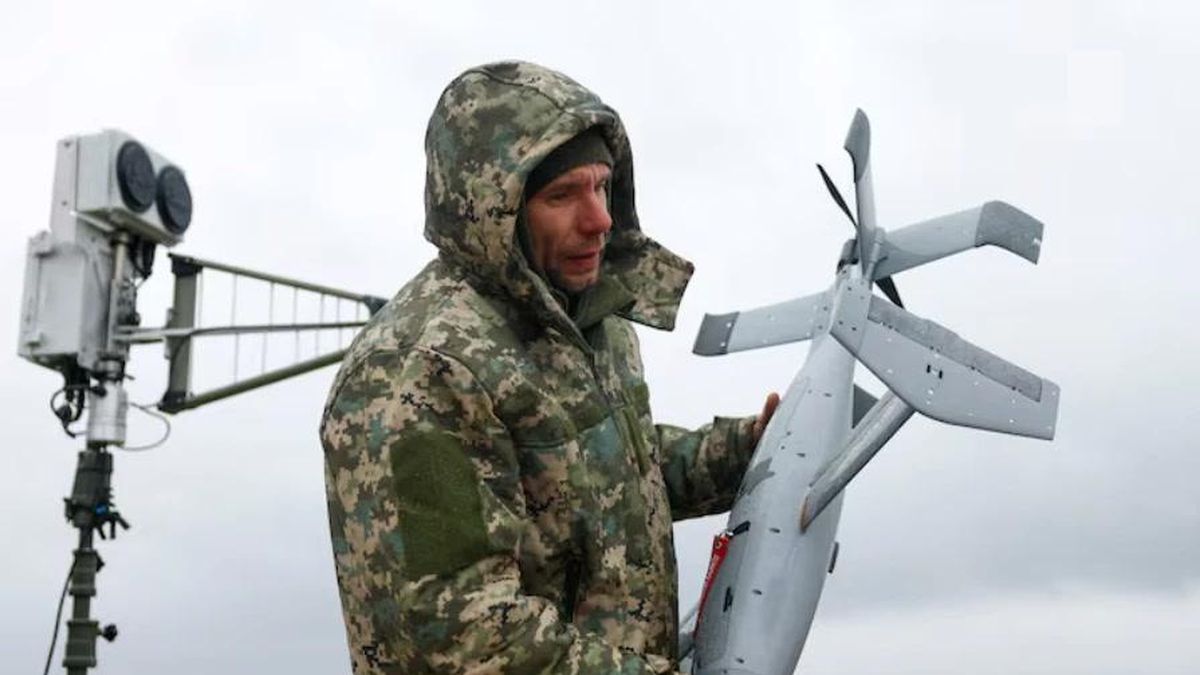
Ukraine's "small" air defense systems have proven highly effective, downing more than 2,100 Russian assets in April 2026 alone [2]. Comprising interceptor drone units and helicopters, these lightweight defenses target incoming threats like Shahed drones, cruise missiles, and decoys at lower altitudes where larger systems may struggle [2]. The monthly tally—over 2,100 intercepts—demonstrates exceptional volume, reflecting intensive Russian air campaigns met with resolute Ukrainian countermeasures [2].
This performance is particularly impressive given the scale of Russian assaults, which often involve saturation tactics with dozens of drones nightly [2]. Interceptor drones, mobile and cost-effective, extend coverage to remote frontlines, while helicopters provide rapid response for visual acquisitions [2]. April 2026's results build on prior successes, establishing a benchmark for attrition warfare where Ukraine imposes heavy costs on Russian aviation [2]. The "small" designation belies their impact, as these units neutralize assets that would otherwise strike infrastructure or troops [2].
Sustained effectiveness relies on integration with intelligence networks, allowing preemptive positioning [2]. By April's end, the cumulative toll exceeds thousands, eroding Russian stockpiles and forcing production ramps [2]. This defensive prowess complements offensive strikes, creating a balanced posture that protects skies while projecting power [2].
Future Strike Plans
President Volodymyr Zelenskiy has explicitly stated that Ukraine will continue extending the range of its strikes on Russia, signaling no letup in operations [5]. On Wednesday, he posted footage of an attack targeting a site over 1,500 km (930 miles) distant, exemplifying the depth now achievable [5]. This declaration comes amid stepped-up attacks inside Russia in recent weeks, aimed at knocking out strategic assets [5].
Zelenskiy's comments position range expansion as a core strategy, leveraging advanced munitions and intelligence to hit rear-area targets [5]. The 1,500 km strike video serves as visual proof, potentially involving long-range drones or missiles supplied by Western partners [5]. Future plans imply deeper incursions, targeting logistics, command nodes, and airfields far from frontlines [5]. This evolution pressures Russia to defend vast territories, diluting frontline strength [5].
The pledge underscores Ukraine's resolve, with Zelenskiy framing it as essential for shifting conflict dynamics [5]. Ongoing adaptations in strike capabilities promise sustained pressure, as demonstrated by recent long-range successes [5].
What to watch next: Further demonstrations of extended strike ranges beyond 1,500 km as pledged by President Zelenskiy [5], alongside continued high-volume intercepts by Ukraine's air defenses exceeding April 2026's 2,100 assets [2], and monitoring of environmental spillovers from oil facility strikes [1].