
Ukraine Conducts Largest Drone Attack in Two Years on Moscow Oil Refinery
In the Ukraine conflict, Ukrainian forces carried out their largest drone attack on Moscow in two years while repelling nearly 250 Russian assaults along the front line. The Pentagon noted that Ukraine has held its positions and improved in some areas amid ongoing Russian war crimes including documented sexual violence.
Russian Sexual Violence Documented as War Crime
Since the start of Russia's full-scale invasion, 401 cases of sexual violence committed by Russian military personnel against Ukrainian civilians have been recorded. The actual number may be higher, as these are only the cases that victims have been able to report. The victims include 250 women and 151 men, among them 23 underage girls and one boy. The highest numbers of documented cases of sexual violence were recorded in Kherson Oblast (124), Donetsk Oblast (92), Kyiv Oblast (60), Kharkiv Oblast (48) and Zaporizhzhia Oblast (33). A total of 148 cases of sexual violence against civilians have been solved. Notices of suspicion have been issued on 116 Russian military personnel. Prosecutors have submitted 64 indictments involving 81 individuals to court. Ukrainian courts have already delivered 19 verdicts against 26 individuals. All those convicted received prison sentences. Most of the perpetrators are currently hiding in Russia. However, the documented crimes, identified offenders and collected evidence provide a legal basis for holding Russia accountable, including in international courts. Conflict-related sexual violence is one of Russia's gravest war crimes. And it has no statute of limitations. For Russia, sexual violence is not a "side effect" of war. It is an instrument of terror. A way to break a person, humiliate them and spread fear in occupied territories and torture chambers. At the end of May, the United Nations included Russia for the first time in its annual blacklist of parties responsible for conflict-related sexual violence. Despite limited access for international investigators, the organisation reported 310 verified cases of sexual violence against prisoners of war and civilian detainees in Russia and in the temporarily occupied territories of Ukraine. [1]
Ukrainian Advances in Drone Technology
Ukrainian Armor is developing new FPV drone models equipped with integrated mortar bombs and new warheads. At its stand, the company presented for the first time the UB82D drone in a new airframe, which was codified in May this year. The system is an FPV drone built on a 10-inch frame and fitted with an 82 mm mortar bomb as its warhead. The UAV features a protective casing produced using 3D-printing technology. The company also displayed the UB60D kamikaze drone, armed with a 60 mm mortar bomb. It is based on the same concept and was codified last year. As mortar bombs are more suitable for engaging infantry, the company is also working on a proprietary warhead designed to destroy armoured vehicles and other protected targets. A proprietary explosively formed penetrator is already under development and will be integrated into drones built on a 10-inch frame. Ukrainian Armor also plans to conduct trials of its first fibre-optic drone by the end of the year. The system will be based on the company's own 82 mm mortar bomb integrated into a 15-inch frame, as the drone must carry both the warhead and a spool of fibre-optic cable. [2]
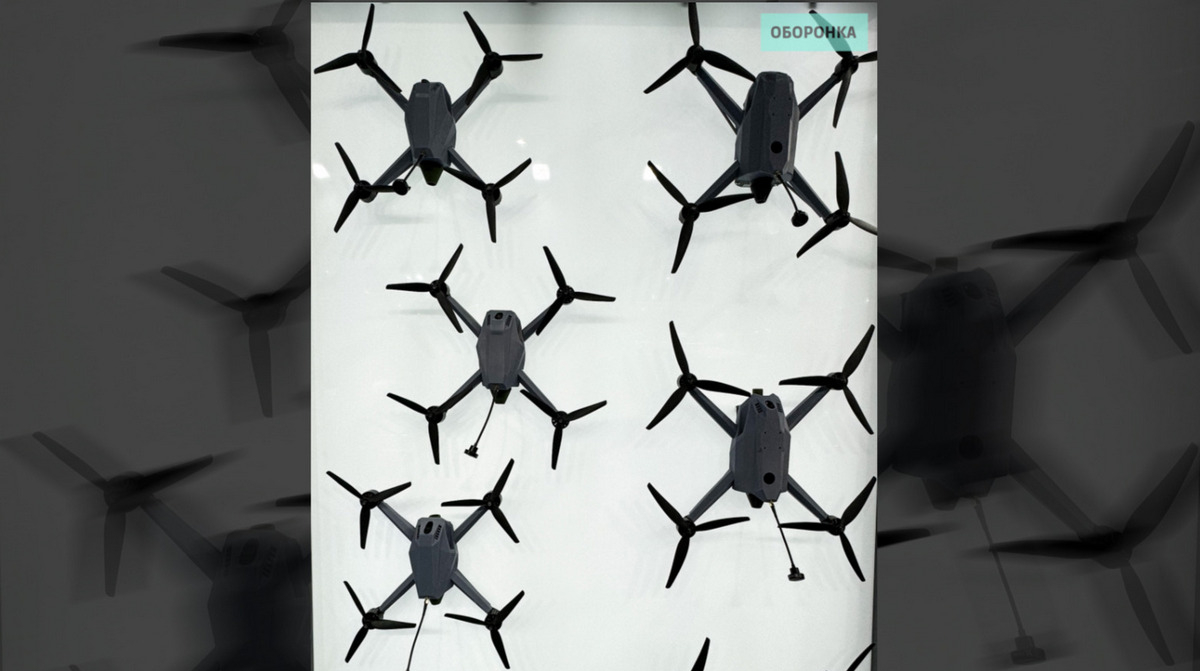
Ukrainian Armor develops new FPV drones equipped with proprietary warheads. — Source: ukrainskapravda
Major Ukrainian Drone Strike on Moscow
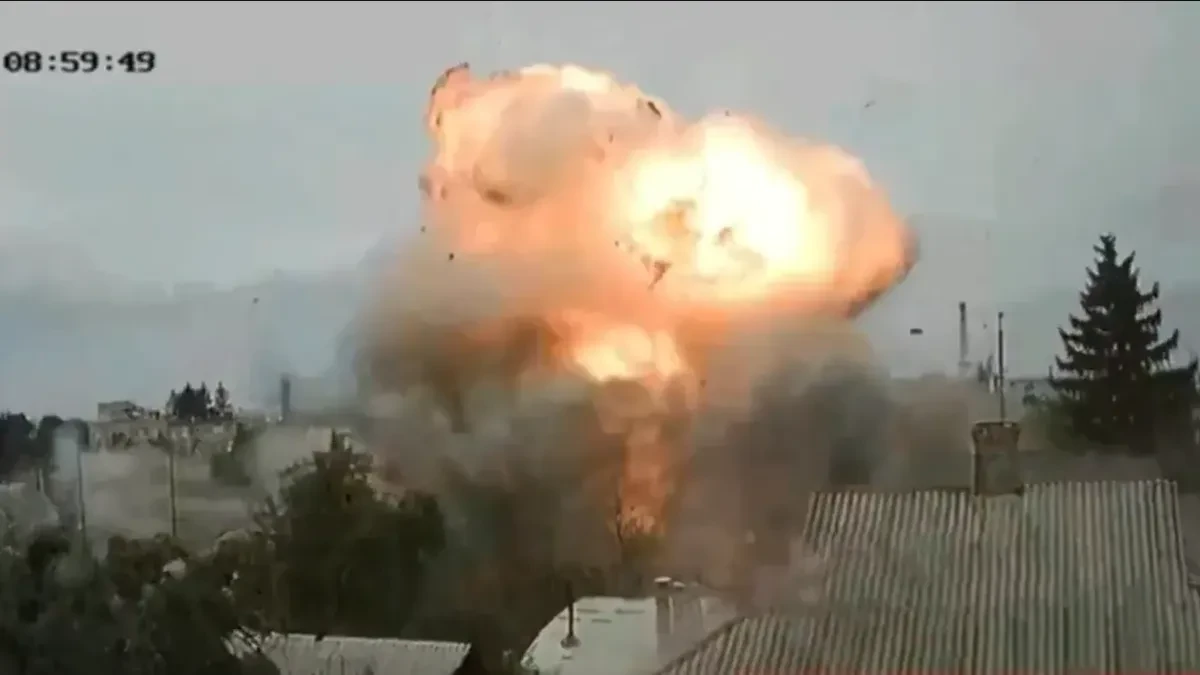
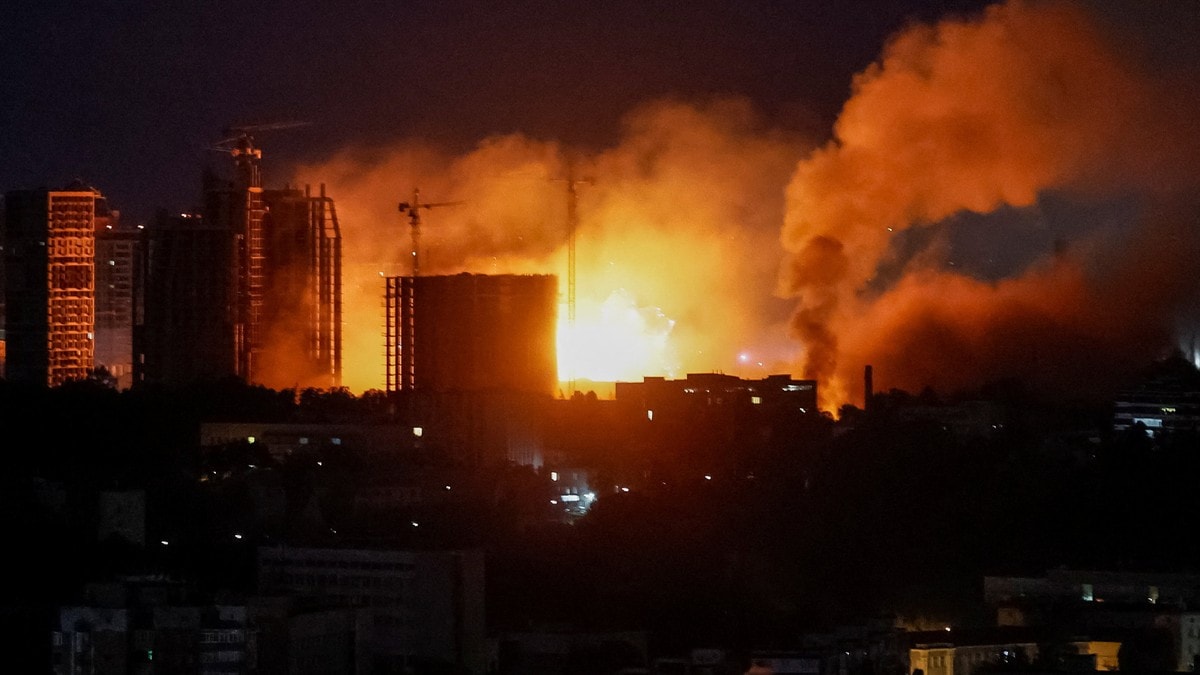
On 18 June, Total president Ukraine - ông Volodymyr Zelensky confirmed that Kiev forces had attacked with unmanned aerial vehicles (UAVs) overnight on 18 June targeting the Moscow oil refinery (Kapotnya district, Moscow capital of Russia), marking the second time this facility was attacked in just one week. On social media X, Zelensky described this as a "completely legitimate response" to Russia's attacks on Ukrainian cities and communities. "This is another important result in the efforts of Ukrainian fighters targeting facilities serving Russia's war effort" - Zelensky wrote, while affirming that "the time has come to end this war". The Ukrainian General Staff confirmed the attack on the Moscow oil refinery and stated that at least 5 fires were recorded at the facility. According to preliminary information, an oil processing complex, secondary refining workshops and a fuel storage area caught fire. Zelensky warned that Ukraine would continue to respond if Russia does not accept ending the war. For its part, Moscow Mayor Sergei Sobyanin confirmed that many Ukrainian UAVs attacked the Moscow oil refinery on 18 June, while Russian air defence forces continued to intercept numerous aerial targets. Sobyanin said authorities are implementing measures to deal with the consequences. According to the latest figures he announced, Russian air defence systems shot down more than 190 UAVs since the beginning of 18 June. In Moscow province, Governor Andrey Vorobyov said UAV debris fell on the roof of a shopping centre in Lyubertsy city. In Zhukovsky city, a UAV crashed into a residential building, causing damage. In addition, in Elektrostal city, a woman was slightly injured in the shoulder due to the impact of the attack. The Russian Ministry of Defence said Russian air defence systems shot down a total of 555 UAVs nationwide that night, marking one of the largest waves of attacks on Russian territory. Ukraine did not announce the number of vehicles used in the campaign. The attack wave also seriously affected aviation operations in the Russian capital area. Russia's Ministry of Transport said four major airports including Sheremetyevo International Airport, Vnukovo International Airport, Domodedovo International Airport and Zhukovsky International Airport temporarily stopped receiving and operating flights to ensure safety. Airlines were forced to adjust schedules, while passengers at Sheremetyevo Airport were urgently evacuated to safe shelters. Some passengers on planes were also asked to leave the cabin during security measures. Later, Sheremetyevo Airport announced that airspace restrictions had been lifted, staff returned to positions and passengers were guided back to the terminal. According to TASS calculations based on Sobyanin's reports, the attack on the Russian capital was the largest wave in the past two years. [3]
Intense Fighting Across Front Line
A total of 248 combat clashes have occurred on the battlefield over the past day, with the most intense fighting on the Pokrovsk, Kostiantynivka and Huliaipole fronts, where the Russians conducted more than 80 attacks in total. On the North Slobozhanshchyna front and in the operational zone in Russia's Kursk Oblast, six combat clashes occurred over the past day, with Russian forces conducting 74 strikes on the positions of Ukrainian forces and settlements, including six from multiple-launch rocket systems. On the South Slobozhanshchyna front, the Russians attacked the positions of Ukrainian units nine times near the town of Vovchansk and the villages of Lyman and Starytsia and towards Izbytske and Okhrimivka. On the Kupiansk front, Ukrainian defenders stopped four Russian attempts to advance towards Radkivka and Kolisnykivka. On the Lyman front, Russian forces attempted to break through Ukrainian defences 16 times towards the settlements of Shyikivka, Stavky, Drobysheve and Lyman and in the areas of the settlements of Novomykhailivka, Novoselivka, Derylove, Zarichne and Yampil. On the Sloviansk front, the Russians conducted 11 assaults towards the settlements of Rai-Oleksandrivka and Kryva Luka and in the areas of Zakitne and Kalenyky. On the Kramatorsk front, one combat clash with the Russians occurred in the vicinity of Malynivka. On the Kostiantynivka front, the Russians conducted 23 attacks near the settlements of Pleshchiivka, Kostiantynivka, Illinivka, Toretske and Sofiivka. On the Pokrovsk front, Ukrainian defenders stopped 36 Russian assault actions in the areas of the settlements of Novooleksandrivka, Kotlyne, Udachne, Rodynske, Novomykolaivka and Filiia and towards the settlements of Vasylivka, Bilytske, Dorozhnie, Shevchenko, Serhiivka and Novopavlivka. On the Oleksandrivka front, the Russians attacked four times towards the settlements of Oleksandrohrad and Nove Zaporizhzhia. On the Huliaipole front, the Russians conducted 24 attacks towards the settlements of Dobropillia, Huliaipilske, Hirke, Tsvitkove and Charivne. On the Orikhiv front, Ukrainian defenders stopped four Russian attempts to advance in the areas of Stepnohirsk and Stepove. On the Prydniprovske front, Russian forces showed no activity over the past day. Meanwhile, Ukrainian forces continue to systematically crush the Russians, putting up effective resistance along the entire front. [4]
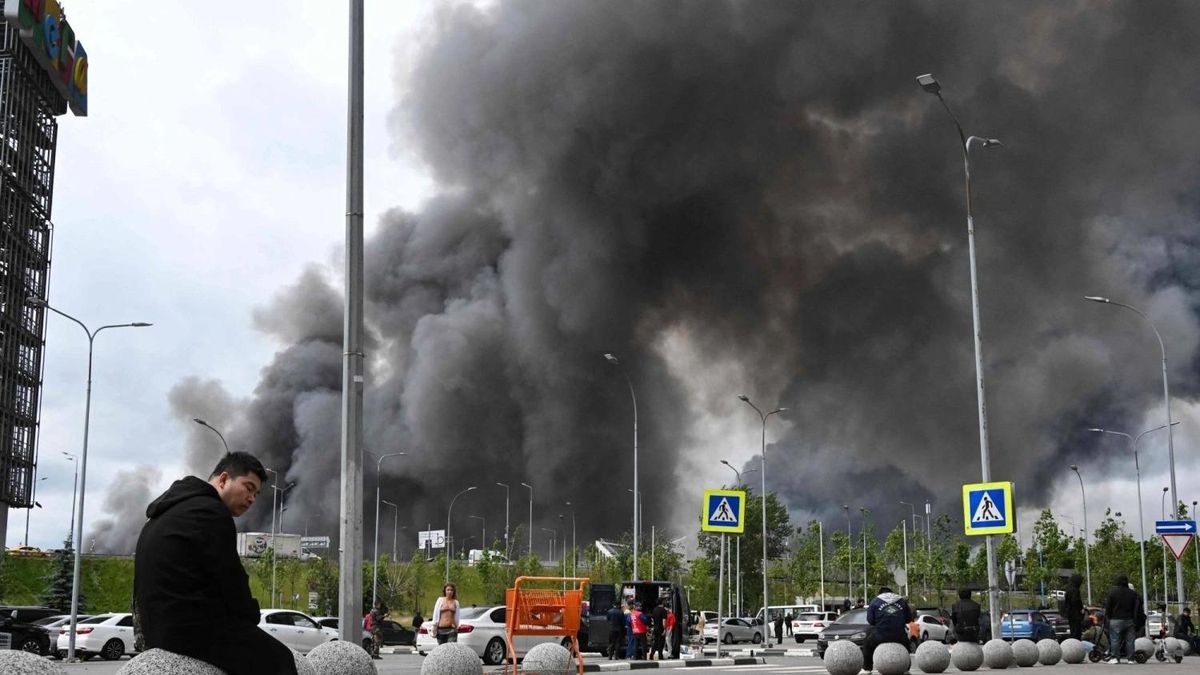
Ukrainian drones strike Moscow oil refinery in largest attack in two years. — Source: gdelt
Pentagon Assessment and Allied Support
Elbridge Colby, US Under Secretary of Defense for Policy, has said during a meeting of the Ukraine Defence Contact Group that Ukraine has managed to hold the front line and improve its positions in some areas. "Indeed, without engaging in hyperbole, in recent months we have reason to think Ukraine's situation has even improved." Colby stressed the importance of Europe taking on greater responsibility for its own defence. He said that since the beginning of last year, the Trump administration has maintained that Europe could and would take a leading role in ensuring its own defence, including by providing the bulk of support to Ukraine. "In the war, Ukraine has managed to hold the front line and even improve its position in some places, continuing to lay the groundwork for a lasting peace, built on Russia's understanding that perpetuating this war is not only condemnable, but also will not pay off for Moscow. This provides a critical underpinning for the peace that we under President Trump's visionary leadership are seeking." However, Colby called on the allies to "not lose sight of the task before us", stressing that "much has been done, but far more remains". He said the US also intends to continue supporting mechanisms that facilitate European support for Ukraine. Before the NATO defence ministers' meeting in Brussels on 18 June, Belgium, Germany, Sweden and the Netherlands announced new military aid packages for Ukraine, including the transfer of additional F-16 fighter jets. Zelensky said that strengthening air defence capabilities, especially Patriot systems and ballistic missile interceptors, would be one of the top priorities at the meeting. According to Zelensky, about 10 countries have expressed support for aid packages under Ukraine's Priority Requirements List. Belgian Defence Minister Theo Francken said his country would transfer 7 F-16 Fighting Falcon aircraft to Ukraine before the end of this year. Of these, 4 would be used as spare parts, while the remaining 3 would participate in combat operations, contributing to strengthening Ukraine's airspace protection against Russian attacks. Francken also said he would propose transferring all of Belgium's remaining F-16 fighters to Ukraine in the coming years. However, the handover schedule would depend on the Belgian Air Force receiving new F-35 Lightning II fighter jets. [3][5]
Russian Foreign Minister's Nuclear Warning
Russian Foreign Minister Sergey Lavrov warned that a direct confrontation between NATO and Russia could quickly escalate into nuclear conflict, causing catastrophic consequences for global security. In an article titled "Ukraine, Europe and global security" recently, Lavrov argued that the confrontational approach toward Russia and NATO's continued expansion are creating serious threats. "The current situation poses major risks to global security. A direct confrontation between NATO and Russia could quickly escalate into nuclear strikes, leading to catastrophic consequences" - he wrote. Russian Foreign Minister also accused European countries of preparing for a military confrontation with Moscow by 2030. According to Lavrov, Europe's political elite has bet its political credibility on confrontation with Russia, spending hundreds of billions of USD to support the Kiev government as well as sharply increasing the defence budgets of EU and NATO member states. "Europe now aims to achieve a state of defence readiness against Russia by 2030. From now until then, they seek to buy time by all possible means" - Lavrov assessed. Russian Foreign Minister said that military aid to Ukraine and plans to strengthen Europe's defence capabilities are part of a strategy to prepare for long-term confrontation with Russia. [3]
What to watch next: Belgium plans to transfer 7 F-16s to Ukraine before year end with further transfers proposed, while Ukrainian Armor plans to trial its first fibre-optic drone by the end of the year.