
UAE Suspends Scholarships for Emirati Students in UK Over Islamist Radicalization Concerns
Dubai/Abu Dhabi/London — The United Arab Emirates (UAE) has halted government scholarships for its citizens pursuing studies at UK universities, citing heightened fears of Islamist radicalization on British campuses. The decision, reported on January 10, 2026, underscores ongoing diplomatic frictions between the Gulf monarchy and the United Kingdom, particularly regarding the UAE's staunch opposition to the Muslim Brotherhood.
The move affects hundreds of Emirati students who previously benefited from fully funded scholarships to attend prestigious UK institutions. According to reports, UAE authorities have redirected funding toward universities in the United States, Australia, and other destinations perceived as safer from radical influences. The policy shift was first noted around January 9, 2026, amid broader concerns about exposure to extremist ideologies during formative academic years.
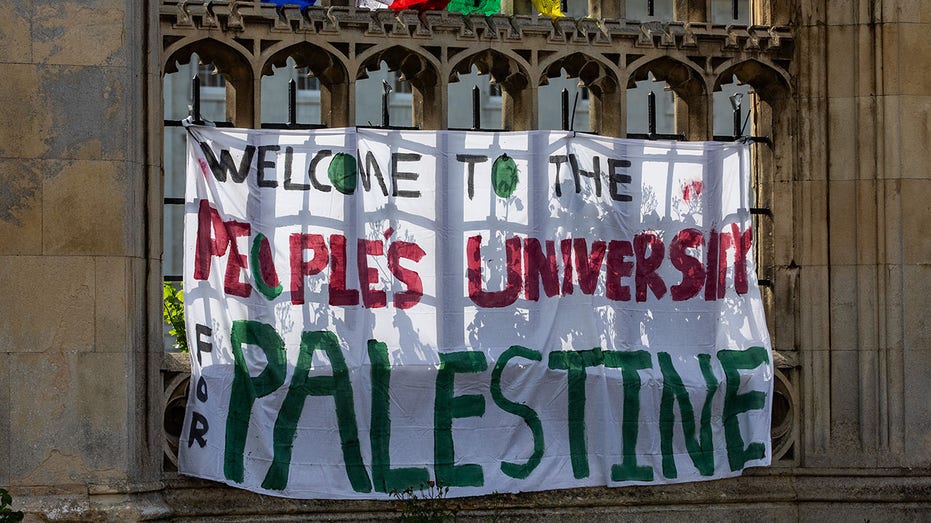
This development emerges from a Fox News report detailing how the UAE is "pulling scholarships from UK universities" due to fears that Emirati students could be radicalized. The article highlights tensions linked to Britain's approach to the Muslim Brotherhood, an Islamist group that the UAE has designated as a terrorist organization since 2014. UAE officials have long expressed alarm over what they view as permissive environments on UK campuses, where pro-Palestinian protests and related activism have occasionally intersected with Brotherhood-affiliated networks.
Details of the Restriction
The UAE Ministry of Education confirmed the policy change in communications to students and families, emphasizing a pivot to "safer academic destinations." While exact numbers of affected scholarships remain undisclosed, estimates suggest up to 500 Emirati students were enrolled in UK programs under government sponsorship in recent years. The restrictions do not apply to privately funded studies, but they represent a significant curtailment of state support for one of the UAE's key educational pipelines abroad.
Emirati officials have pointed to specific incidents bolstering their concerns. In recent years, UK universities have faced scrutiny for hosting speakers linked to Islamist groups, including events organized by societies with alleged Muslim Brotherhood ties. High-profile cases, such as protests at institutions like the School of Oriental and African Studies (SOAS) and University College London (UCL), have drawn UAE diplomatic protests. A 2023 UK government review into campus extremism further amplified these worries, though it stopped short of broad proscriptions.
The UAE's decision aligns with its domestic security priorities. Abu Dhabi has invested heavily in countering Islamist extremism, including through stringent laws against groups like the Muslim Brotherhood and operations targeting their networks in Europe. In 2014, the UAE convicted over 80 individuals in a high-profile trial dubbed the "UAE 94," accusing them of Brotherhood membership and plotting to overthrow the government.
Broader Geopolitical Context
Relations between the UAE and the UK have historically been robust, underpinned by deep economic ties. The UK is a major trading partner, with bilateral trade exceeding $20 billion annually as of 2025 figures. British firms dominate sectors like defense, aviation, and finance in the UAE, while Emirati sovereign wealth funds hold significant stakes in London real estate and infrastructure. However, flashpoints over ideology have periodically strained ties.
The Muslim Brotherhood remains a core irritant. While the UK does not classify the group as terrorist—viewing its political wing as legitimate in some contexts—the UAE sees it as an existential threat. This divergence intensified after the 2011 Arab Spring, when the Brotherhood briefly gained power in Egypt before its 2013 ouster, an event the UAE celebrated and supported through backing for President Abdel Fattah el-Sisi.
Previous diplomatic salvos include UAE complaints to London in 2021 over a UK-based Brotherhood TV channel, Al-Hiwar, accused of spreading propaganda. In 2024, Abu Dhabi summoned the British ambassador following remarks by UK figures perceived as sympathetic to Islamist causes. The scholarship cutoff fits this pattern, signaling a willingness to leverage soft power tools amid unresolved grievances.
The UAE's educational strategy reflects its broader geopolitical maneuvering. Abu Dhabi has aggressively expanded ties with the US, signing defense pacts like the 2020 Abraham Accords framework extensions and hosting American military assets. Australia has emerged as a favored destination, with new scholarship programs announced in 2025 emphasizing STEM fields. Domestically, the UAE continues to bolster its own universities, such as NYU Abu Dhabi and Khalifa University, to reduce reliance on foreign education.
Implications for Bilateral Ties
The scholarship restrictions carry medium-term implications for UK-UAE people-to-people exchanges. With Emirati youth forming a key demographic—over 60% of the population is under 30—this policy could reshape elite networks traditionally forged in British lecture halls. UK universities, facing funding pressures post-Brexit and amid declining international enrollments from the Middle East, may feel financial repercussions.
No immediate retaliatory measures have been announced by London, which has prioritized economic partnerships. A UK Foreign Office spokesperson noted ongoing dialogue with UAE counterparts, stressing shared commitments to counter-terrorism. However, the episode highlights fault lines in Western-Gulf alliances, where security perceptions diverge.
As the UAE calibrates its global posture—balancing US alignment, China outreach, and European engagement—this move reinforces its zero-tolerance stance on perceived radicalism. Observers will watch whether it prompts UK policy shifts or further diversifies Emirati academic footprints.
(Word count: 712)