
Turkey Faces Political Tumult Amid Mass Protests and Solidarity Rallies
Turkey is engulfed in a period of significant political unrest as mass protests and fragile peace talks dominate the national landscape. Events have escalated, particularly with a massive rally held in Istanbul on New Year’s Day, showcasing widespread solidarity with Gaza amidst ongoing regional tensions.
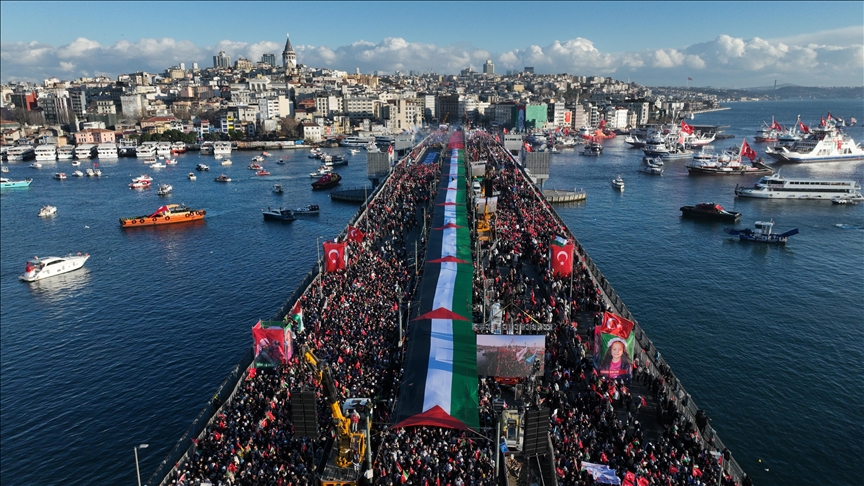
The New Year’s Day rally, organized by civil society groups, artists, and sports figures, drew over half a million participants to Istanbul’s Galata Bridge. Demonstrators gathered after morning prayers to call for an end to violence in Gaza, reflecting the strong public sentiment regarding the ongoing Israel-Gaza conflict that has escalated since October 2023. According to reports, the demonstrators expressed their grievances not only regarding the situation in Gaza but also towards the Turkish government's handling of regional issues and internal political challenges.
The protest comes at a time when Turkey is facing considerable political turmoil. This unrest has been characterized by increased pressure on opposition parties and fragile peace talks that have struggled to provide a resolution to the ongoing discontent among the populace. Analysts note that the political climate in Turkey has become increasingly polarized, with the ruling party facing criticism for its domestic and foreign policies.
Participants at the Istanbul rally highlighted the plight of civilians in Gaza, emphasizing the urgency for international intervention and solidarity. "We are here to show our support for our brothers and sisters in Gaza, and to demand that our government take a stronger stance against the violence," said one protester. The sheer size of the gathering indicates a significant mobilization of public sentiment, which could have implications for the current administration.
The events leading up to this rally have not only highlighted Turkey's internal divisions but also its relationship with the broader Middle East, particularly in the context of the Israel-Palestine conflict. Since the escalation of violence in Gaza, there has been a renewed focus on Turkey’s position in the region, which has historically been a vocal supporter of Palestinian rights.
Background
Turkey's political landscape has been marked by increasing tensions in recent years, especially following the country's 2023 elections. President Recep Tayyip Erdoğan’s administration has faced mounting challenges, including economic difficulties and public dissatisfaction. The ongoing Russia-Ukraine War and various conflicts in the Middle East have further complicated Turkey's foreign policy, straining its relationships with neighboring countries and altering its domestic political dynamics.
The recent protests are a continuation of a series of civil unrest events that have emerged as citizens grapple with economic hardships and political oppression. The government's response to dissent has been criticized for being heavy-handed, leading to a cycle of protests and crackdowns that have characterized the current political climate.
Conclusion
As Turkey moves into 2026, the combination of mass protests and fragile political negotiations indicates that the road ahead may be fraught with challenges. The New Year’s Day rally in Istanbul illustrates a critical juncture for public expression and political opposition, as citizens demand greater accountability from their government in addressing both domestic issues and international crises. With the potential for further unrest looming, the Turkish government will need to navigate these turbulent waters carefully to restore stability and address the concerns of its populace.






