
Trump Warns of Further US Airstrikes in Nigeria if Attacks on Christians Persist
Washington/Lagos — U.S. President Donald Trump has issued a stark warning of additional military strikes in Nigeria, conditioning future action on the cessation of violence against Christians in the country. The comments, made in response to questions about recent U.S. airstrikes on Christmas Day, come amid heightened scrutiny over the operations' targets, impacts, and broader implications, now two weeks after the initial strikes.
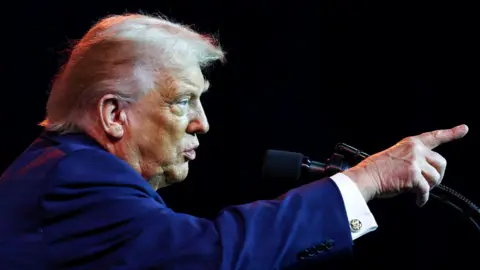
The remarks were delivered during a press interaction where Trump was queried on whether the December 25, 2025, airstrikes marked the beginning of a sustained U.S. campaign against threats in Nigeria. "If Christians continue to be killed, there will be more strikes," Trump stated, according to reports from the BBC. This follows U.S. drone operations in Nigeria's restive northeast, a region plagued by Islamist insurgencies for over a decade.
Details on the Christmas Day strikes remain limited, with ongoing questions about their precise targeting and collateral effects surfacing as of January 8, 2026. U.S. Africa Command (AFRICOM) has historically justified such actions as precision strikes against high-value targets affiliated with groups like Boko Haram and the Islamic State West Africa Province (ISWAP). These factions have been responsible for widespread atrocities, including church bombings, kidnappings, and massacres targeting Christian communities.
Context of the Strikes and U.S. Involvement
Nigeria's security crisis traces back to 2009, when Boko Haram launched an insurgency aimed at imposing strict Islamic rule in the northeast. The conflict has claimed over 35,000 lives and displaced more than 2.5 million people, according to United Nations estimates. Christian-majority areas in states like Borno, Adamawa, and Yobe have borne the brunt, with insurgents frequently attacking villages, schools, and places of worship.
The United States has provided counterterrorism support to Nigeria since the Obama administration, including intelligence sharing, training, and occasional drone strikes from bases in Niger and elsewhere in the region. Under Trump's first term (2017-2021), U.S. policy emphasized a hardline stance against Islamist extremism, with increased drone operations across Africa. Following his return to the White House in January 2025 after the 2024 election, Trump has signaled a revival of such assertive tactics.
The Christmas Day strikes, reportedly conducted via armed drones, targeted suspected militant positions, though official confirmation of casualties or objectives has been sparse. Questions have arisen over the strikes' timing—coinciding with a major Christian holiday—and their alignment with international law, particularly rules of engagement in sovereign nations. Nigerian officials have not publicly commented on the operations, maintaining a delicate balance between welcoming U.S. assistance and asserting national sovereignty.
Human rights groups, including Amnesty International, have previously criticized U.S. strikes in the Sahel region for potential civilian casualties. In Nigeria, past incidents have fueled local resentment, complicating counterinsurgency efforts. Two weeks post-strikes, analysts note a lack of transparency fueling speculation about whether the actions disrupted planned militant attacks or inadvertently escalated tensions.
Trump's Statement and Regional Ramifications
Trump's warning frames the U.S. posture as a direct response to religious persecution, echoing his administration's focus on protecting Christian minorities globally. "The killing has to stop," he emphasized, linking the strikes to a pattern of violence documented by organizations like Open Doors, which ranks Nigeria among the top 10 countries for Christian persecution.
In Nigeria, the federal government under President Bola Tinubu has intensified military operations via the Multinational Joint Task Force (MJTF), involving troops from Nigeria, Chad, Niger, and Cameroon. Recent successes include the rescue of hostages and neutralization of Boko Haram leaders, but insurgents continue hit-and-run attacks. The U.S. strikes add a layer of external involvement, potentially straining relations with regional partners wary of American unilateralism.
Nigerian Christian leaders have expressed cautious support for anti-terror measures but urged precision to avoid alienating Muslim communities, which form the majority in the north. The Catholic Bishops' Conference of Nigeria, in a statement post-Christmas, highlighted ongoing threats from " Fulani militants and jihadists," calling for international solidarity.
Broader Implications and Outlook
The episode underscores evolving U.S. strategy in Africa under Trump 2.0, shifting from multilateralism toward targeted interventions. With ISWAP pledging allegiance to ISIS and expanding operations, the Sahel-Nigeria corridor remains a hotspot. Analysts from the Council on Foreign Relations warn that escalated U.S. strikes could provoke retaliation, drawing in more fighters or spilling over borders.
As questions linger over the Christmas strikes' efficacy—did they prevent attacks, or merely provoke them?—stakeholders await further details from the Pentagon. Nigeria's government faces pressure to address root causes like poverty and governance failures fueling recruitment.
Trump's threat signals no retreat, positioning the U.S. as a defender against religious violence. Yet, in a nation divided along ethno-religious lines, sustained peace demands more than airstrikes: inclusive governance, economic development, and dialogue. For now, the northeast remains on edge, with communities bracing for potential escalation.
(Word count: 712)






