
Conflict in Ukraine: 241 Clashes Reported Over the Past Day
In the ongoing conflict in Ukraine, over the past day, 241 clashes were recorded along the line of contact, with the highest activity on the Pokrovsk and Huliaipole fronts.[3] This surge in engagements underscores the persistent intensity of military operations, as reported by Ukraine's General Staff. Russian forces suffered significant losses, including 810 soldiers killed and wounded alongside 26 artillery systems destroyed or damaged.[4] The Pokrovsk front experienced 55 clashes, while the Huliaipole front saw 37, marking them as the primary hotspots.[3] Ukrainian forces are actively exploiting vulnerabilities in Russian air defense systems to conduct deeper strikes into rear areas.[2] These developments are being monitored as part of broader global patterns of explosive violence in 2025.[1]
Latest Updates on Conflict Ukraine
The conflict in Ukraine continues to see high levels of combat activity, with Ukraine's General Staff providing detailed daily assessments of engagements along the line of contact.[3] Over the past 24 hours, a total of 241 clashes were documented, reflecting sustained pressure from Russian advances or defensive responses by Ukrainian troops.[3] This number highlights the scale of operations across multiple fronts, where each clash represents direct confrontations involving infantry, armor, and artillery exchanges. The concentration of activity on specific axes, such as Pokrovsk and Huliaipole, suggests these areas remain strategically vital, potentially due to their positions relative to key logistical routes and urban centers.[3]
Complementing these engagement figures, reports indicate substantial Russian personnel and equipment tolls, with 810 soldiers reported as killed and wounded in the same period.[4] This casualty figure, combined with the loss of 26 artillery systems, points to the effectiveness of Ukrainian counteractions in degrading Russian offensive capabilities.[4] Artillery systems are particularly critical in this theater, where long-range fire support often dictates the pace of advances. Meanwhile, Ukrainian operational tactics have evolved to target weaknesses in adversary defenses, enabling strikes beyond immediate frontline positions.[2] These updates are contextualized within international monitoring efforts that track explosive violence worldwide, including in Ukraine.[1] Such comprehensive reporting allows for a clearer picture of the conflict's dynamics, where daily tallies provide incremental insights into the broader military balance.
Overview of Recent Clashes
Ukraine's General Staff has reported a total of 241 clashes with Russian forces along the line of contact over the past day, marking a notably active period in the conflict.[3] This aggregate figure encapsulates a wide range of combat encounters, from small-scale infantry probes to larger mechanized assaults, occurring across various sectors of the frontline. The line of contact, stretching over hundreds of kilometers, serves as the primary zone of friction where both sides contest territorial control and inflict attrition on the opponent.[3]
The distribution of these clashes reveals patterns of intensified fighting in designated hotspots, with the Pokrovsk and Huliaipole fronts standing out due to their elevated engagement counts.[3] On the Pokrovsk front, 55 clashes were recorded, representing more than one-fifth of the daily total and indicating repeated Russian attempts to push forward or Ukrainian efforts to hold ground.[3] Similarly, the Huliaipole front logged 37 clashes, underscoring its role as another focal point of military activity.[3] These numbers suggest a tactical emphasis on these directions, where terrain, infrastructure, and proximity to major population centers may amplify their strategic value. The General Staff's daily summaries, as disseminated through outlets like Ukrainska Pravda, provide a structured overview that tracks not only the quantity but also the geographic concentration of hostilities.[3]
This level of activity—241 clashes in a single day—demonstrates the grinding nature of the conflict, where sustained engagements contribute to cumulative wear on both sides' resources. While specific outcomes for each clash are not detailed in the reports, the sheer volume implies ongoing maneuvers, counterattacks, and defensive stands that shape the frontline configuration.[3] Monitoring such overviews is essential for understanding the operational tempo, as peaks in clashes often correlate with broader offensive or defensive phases.
{IMAGE_2}
Russian Military Losses
According to updates from Ukraine's General Staff, Russian forces incurred 810 soldiers killed and wounded over the past day, alongside the destruction or disablement of 26 artillery systems.[4] This casualty assessment reflects the toll of frontline operations, where Ukrainian defenses and counterstrikes have evidently exacted a heavy price on advancing or positioned Russian units.[4] The combined killed and wounded figure of 810 personnel highlights the human cost of sustained assaults, particularly in high-activity zones where exposure to fire is maximized.[4]
Artillery systems, numbering 26 in losses, represent a critical category of equipment in this artillery-dominated conflict.[4] These systems—likely including towed guns, self-propelled howitzers, and multiple-launch rocket systems—are vital for providing suppressive fire, targeting fortifications, and supporting infantry movements. Their reduction diminishes Russian fire superiority, potentially slowing future advances and forcing reliance on less effective means.[4] The General Staff's methodology for tallying losses involves visual confirmations, intelligence reports, and battlefield assessments, ensuring these figures are methodically compiled.[4]
In the context of daily reporting, such losses contribute to a pattern of attrition that challenges Russian operational sustainability.[4] When viewed against the backdrop of 241 clashes, the personnel and equipment toll suggests that Ukrainian forces are effectively contesting Russian initiatives, inflicting disproportionate damage relative to the engagement scale.[3][4] These reports, published via Ukrainska Pravda, offer transparency into the asymmetric impacts of the fighting, where defensive advantages amplify the cost for the aggressor.[4]
Ukrainian Military Actions
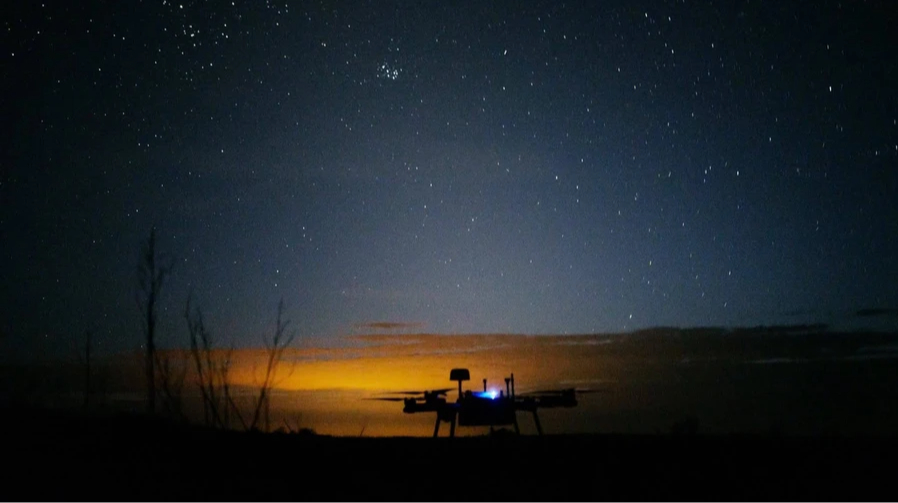
Ukrainian forces are exploiting vulnerabilities in Russian air defense systems to expand their attack operations deep into rear areas.[2] This strategic adaptation, as noted in recent analyses, involves identifying and penetrating gaps—referred to as "lỗ hổng" or holes—in Russian air defense coverage, allowing for more ambitious strikes beyond the immediate frontline.[2] Published on April 27, 2026, this development indicates a shift toward offensive depth, targeting logistics hubs, command nodes, and staging areas that support Russian frontline efforts.[2]
By khoét—drilling or exploiting—these weaknesses, Ukraine enhances the reach of its drones, missiles, and aircraft, disrupting Russian sustainment operations.[2] Rear areas, typically shielded by layered air defenses, become viable targets when coverage lapses occur due to overload, repositioning, or technical failures. This approach not only inflicts material damage but also compels Russia to redistribute defenses, potentially weakening frontline protections.[2]
The timing of this tactic aligns with intensified clashes, where Ukrainian actions complement ground defenses with aerial interdiction.[2][3] Such maneuvers reflect adaptive warfare, leveraging intelligence on enemy vulnerabilities to achieve effects disproportionate to resources committed. Reports from sources monitoring the conflict emphasize how this expansion into hậu phương—rear zones—alters the conflict's spatial dynamics, forcing Russian commanders to contend with threats from multiple depths.[2]
{IMAGE_3}
Broader Context of Explosive Violence
The ongoing events in Ukraine form part of a global monitoring effort on explosive violence patterns in 2025, as detailed in the Explosive Violence Monitor produced by Action on Armed Violence (AOAV).[1] This report, the fifteenth consecutive year of AOAV's monitoring project, encompasses multiple countries including Ukraine, Afghanistan, the Democratic Republic of the Congo, India, Iran, Israel, Lebanon, Myanmar, Nigeria, the occupied Palestinian territory, Pakistan, the Russian Federation, Sudan, the Syrian Arab Republic, and Yemen.[1]
Ukraine's inclusion highlights its status among persistent zones of explosive ordnance use, where clashes involve artillery, rockets, and munitions that define modern armed conflicts.[1] The Russian Federation's listing further contextualizes the bilateral nature of the violence, with cross-border implications tracked in the dataset.[1] AOAV's methodology focuses on verified incidents of explosive weapons deployment, providing a standardized lens for comparing intensity and impacts across theaters.[1]
This 2025 monitor attaches detailed findings in a referenced file, aggregating data to reveal trends such as frequency, civilian effects, and weapon types.[1] For Ukraine, the 241 clashes and associated losses exemplify the explosive violence patterns under scrutiny, contributing to the global tally.[1][3][4] Such oversight aids policymakers, aid organizations, and researchers in prioritizing responses to protracted conflicts. By situating Ukraine within this multinational framework, the report underscores the interconnected challenges of explosive warfare worldwide.[1]
Key Fronts and Activity Levels
The Pokrovsk front recorded 55 clashes over the past day, positioning it as the most active sector along the line of contact, according to Ukraine's General Staff.[3] This elevated activity level—accounting for roughly 23% of the total 241 engagements—signals intense combat operations, likely involving repeated assaults and counterassaults in a contested area critical for controlling eastern approaches.[3] The Huliaipole front followed closely with 37 clashes, comprising about 15% of daily actions and reinforcing its role as a secondary but significant hotspot.[3]
These fronts exemplify the uneven distribution of fighting, where specific directions absorb disproportionate engagements due to operational priorities.[3] Pokrovsk's prominence may stem from its linkage to major roads and supply lines, making it a linchpin for any advances toward central Ukraine.[3] Huliaipole, similarly, features rugged terrain that favors defensive positions, leading to prolonged battles.[3] General Staff reports, via Ukrainska Pravda, delineate these activity levels to illustrate frontline pressures, aiding in resource allocation and international awareness.[3]
Comparative analysis within the daily data shows other fronts contributing to the remainder, but none matching the intensity of these two.[3] Sustained high activity here correlates with reported Russian losses, suggesting Ukrainian resilience in key defensive zones.[3][4] Tracking these levels provides a granular view of the conflict's evolution, where hotspots can shift based on tactical gains or reinforcements.
What to watch next
As part of AOAV's 2025 Explosive Violence Monitor, continued tracking of patterns in Ukraine and the Russian Federation will offer updated insights into global trends.[1] Daily reports from Ukraine's General Staff are expected to detail further clashes along fronts like Pokrovsk and Huliaipole, alongside Russian losses.[3][4] Ukrainian exploitation of air defense gaps may lead to more reported deep strikes into rear areas.[2]