
Trump Tells Gulf Nations to Pay for U.S. Protection of Strait of Hormuz
Trump Demands Payment for Hormuz Protection
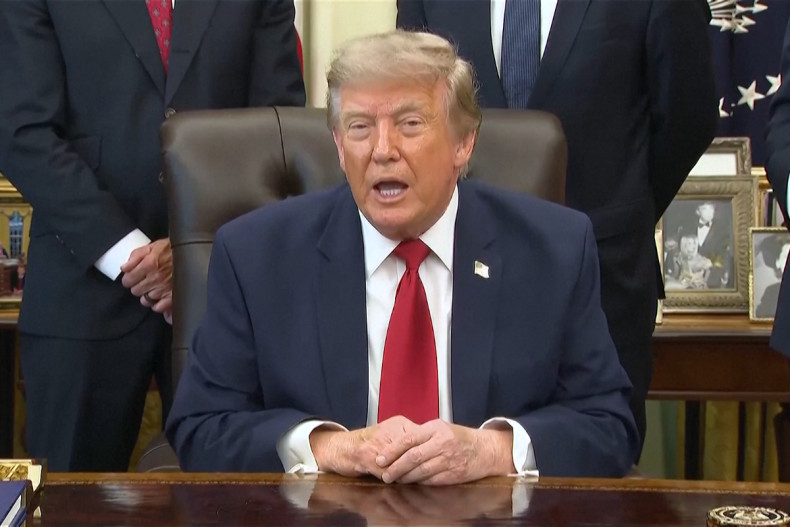
U.S. President Donald Trump said on Monday, July 13, that he wanted Gulf nations to reimburse the United States for helping protect the Strait of Hormuz and regional security. [1] On the same day, Trump declared that his country would be the “guardian of the Hormuz Strait” while adding that the blockade of Iran would resume. [3] The statement came as part of broader U.S. efforts to manage the international waterway, which plays a key role in global trade, particularly in the transport of hydrocarbons. [3]
Escalating U.S.-Iran Confrontation
Tensions flared last week when Iranian forces attacked ships using a route they had not authorised. [3] From that point, both the United States and Iran traded regular fire, with hostilities rising. [3] The U.S. has hit Iranian facilities close to the coast. [3] Tehran has responded by hitting U.S. bases and infrastructure from Jordan to the GCC states. [3] Tehran says the strait has been closed. [3] None of this bodes well for peace in the Gulf, and if the brinksmanship continues, a return to full-scale war is inevitable. [3] The roots of the crisis lie in the unprovoked U.S.-Israeli aggression against Iran. [3] Both states thought they had played a masterstroke by eliminating Iran’s top civilian leaders, such as Ayatollah Ali Khamenei and Ali Larijani. [3] In their hubris, Washington and Tel Aviv may have actually killed any chance of compromise with Tehran, clearing the way for hard-line factions within Iran, led by the Pasdaran, to get in the driver’s seat. [3] Many of those around the new supreme leader, particularly IRGC commanders, apparently believe in an ‘eye for an eye’ when it comes to the United States and Israel. [3] The counterattacks on U.S. allies in the region support this observation. [3] For its part, the U.S. should halt all attacks on Iran if the MoU is to be saved. [3] It is incumbent on regional countries to clearly inform the U.S. that further escalation will lead the entire Middle East towards a destructive new phase of the war. [3]
U.S. Targets International Criminal Court
The Trump administration announced a “whole-of-government” campaign against the International Criminal Court on Monday, after some judges filed a lawsuit alleging the U.S. was punishing and pressuring them over past legal decisions. [2] The State Department said on Monday it was considering travel bans and revoking visas for ICC officials as well as additional sanctions against the ICC and affiliated organizations because the “unaccountable” court posed a threat to U.S. sovereignty. [2] While the U.S. has historically objected to the court, the announcement comes just weeks after three ICC judges filed a complaint in the Southern District of New York against the administration over sanctions imposed last year, alleging the act was unlawful and retaliatory. [2] In February 2025, President Donald Trump issued an executive order authorizing sanctions on ICC officials after the court approved arrest warrants for Israeli Prime Minister Benjamin Netanyahu and former Defense Minister Yoav Gallant over the war in Gaza. [2] That executive order said the court had “engaged in illegitimate and baseless actions targeting America and our close ally Israel.” [2] In a video posted on Monday, Secretary of State Marco Rubio cast the court as a distant “radical and extreme” organization staffed by “unelected globalist bureaucrats” that could potentially target U.S. border agents, Marines or U.S. counterterrorism officials. [2] “As we speak, the ICC and its friends are waging a war against our country — not with bullets or missiles, but with statutes, compacts and the force of so-called international law,” Rubio said. [2] The ICC was established at The Hague in the Netherlands in 2002 to ensure that genocide, crimes against humanity, war crimes and the crime of aggression did not go unpunished. [2] The court steps in only when states are unable or unwilling to do so themselves, and was meant as a permanent replacement for ad hoc tribunals. [2] The U.S. is not a member of the ICC and has objected to the court’s ability to exercise power over nonmember state nationals for decades. [2]
EU Debates Trade Curbs on Israeli Settlements
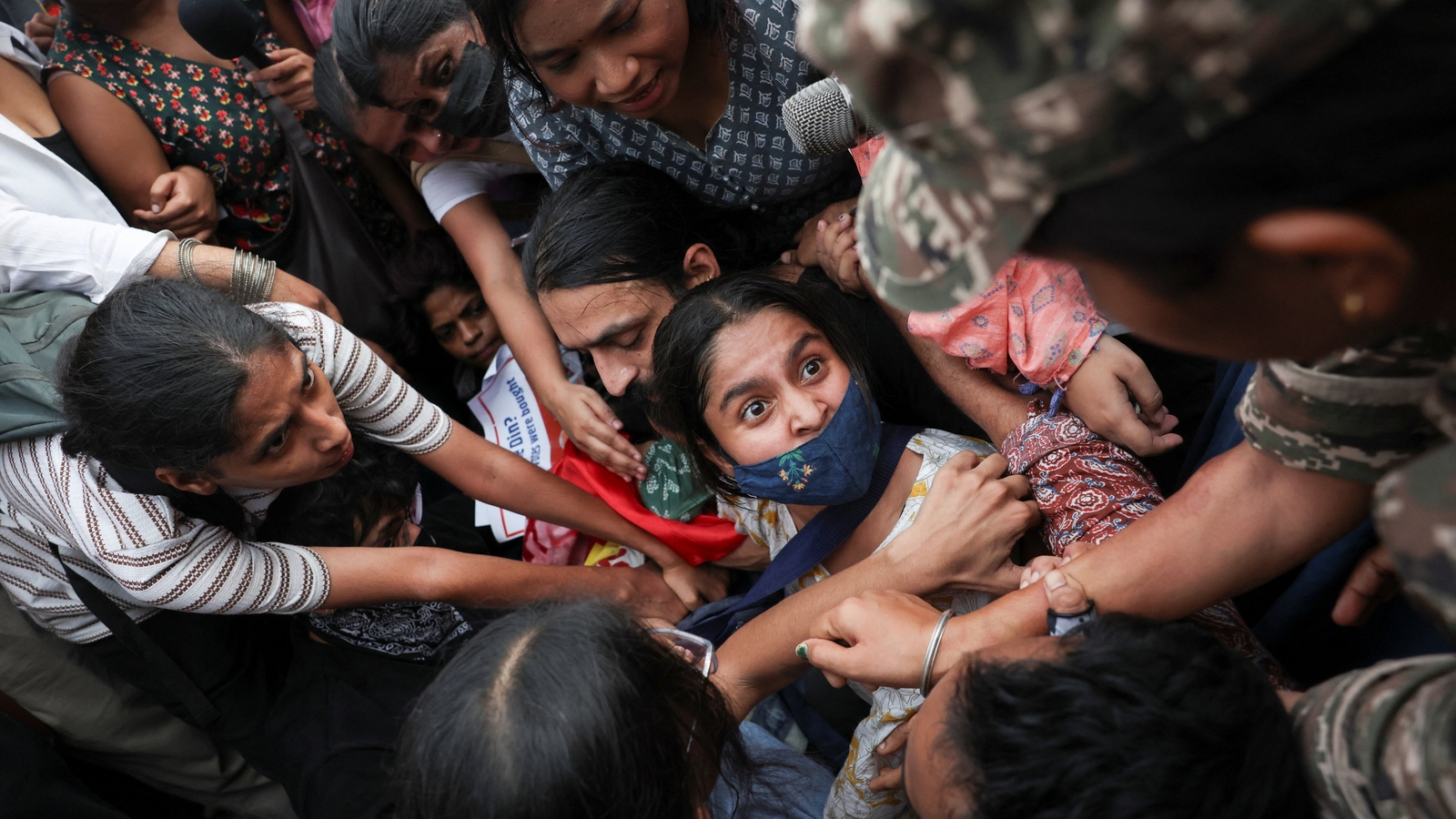
A ban on trade with Israeli settlements in the occupied West Bank received the strongest backing among European Union foreign ministers on Monday, EU foreign policy chief Kaja Kallas said, although the bloc remained divided over possible curbs on such commerce. [4] At a meeting in Brussels, the ministers debated three options set out in a confidential paper by the European Commission — an import licensing system, prohibitive tariffs or a ban. [4] Kallas said a ban received the most support among the representatives of the EU’s 27 countries but diplomats said there was no clear majority for any single option. [4] Kallas said ambassadors from member states had been tasked with further work on the issue. [4] Dutch Foreign Minister Tom Berendsen said EU members were split between those like his own that favour a ban, others who were opposed and a middle group of countries that are still considering their position. [4] “In the coming weeks, there needs to be clarity about where that group in the middle stands. Then we hope to be able to take another step at the end of the summer,” he said. [4] Divisions run deep as EU governments and institutions even disagree on the legal basis required for any move to curb trade with the settlements. [4] The European Commission and some EU governments say it would require unanimity among member states. [4] Other governments and the legal service of the Council of the EU, which represents member countries, say it would need a qualified majority — at least 15 EU states, representing 65pc of the bloc’s population. [4] Israeli Foreign Minister Gideon Saar accused Kallas of using diplomatic “tricks” to try to push through a ban. [4] “Israel’s relations with Europe should be based on dialogue and fairness,” Saar said on X. [4] Earlier in the day, Kallas declined to say what her preferred option was, adding it did not matter as she was seeking to find common ground among the EU’s members. [4] UN bodies and most countries have found Israel’s settlements in the West Bank to be illegal. [4] Israel rejects this, viewing the territory as disputed and saying a Jewish presence has existed there for thousands of years. [4] In a July 2024 advisory opinion, the International Court of Justice said Israel’s occupation of Palestinian territories and settlements in the West Bank are illegal and that states should take steps to prevent trade or investment relations that help maintain the situation. [4] Monday’s debate exposed longstanding differences among EU members on the Israeli-Palestinian conflict. [4] “There is no room for dilly-dallying,” Spanish Foreign Minister Jose Manuel Albares told reporters. [4] “We stand with international law and believe what needs to be done is banning that trade.” [4] But his German counterpart, Johann Wadephul, said the EU’s focus should be on pressing the Israeli government to take action against violent settlers. [4] “That is a united position shared by the whole European Union,” Wadephul said. [4]
Allies Gather in Paris to Support Ukraine
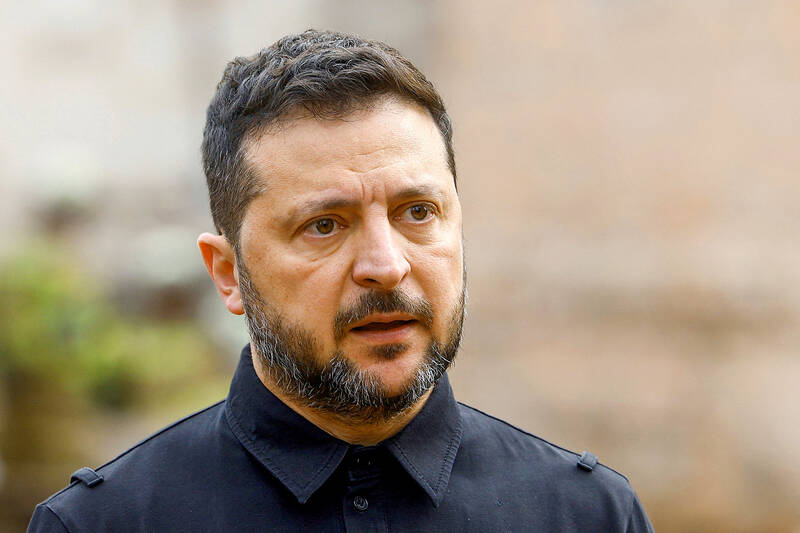
Ukraine’s allies gathered in Paris on Monday to ramp up support for Kyiv, particularly in air defence, and increase pressure on Russia to end the war, which is well into its fifth year. [5] Representatives of the 37 coalition members, including Ukrainian leader Volodymyr Zelensky, arrived at Les Invalides in the French capital for the summit of the Coalition of the Willing, launched by France and the United Kingdom to provide military support to Ukraine after Russia’s full-scale invasion in February 2022. [5] The coalition is expected to announce the first joint exercises of the Multinational Force for Ukraine, to demonstrate its readiness to deploy once the fighting has ended. [5] Leaders are also expected to focus on cooperation on air and missile defence with Ukraine, whose air defences have come under strain from repeated Russian ballistic missile strikes in recent weeks. [5] Before the summit, nine European countries and Ukraine announced the formation of a coalition to develop “purely defensive” anti-ballistic capabilities for Europe, citing a growing threat from such missiles. [5] “We do this not against any people, but in defence of our own,” said the joint declaration by Denmark, France, Germany, Italy, Netherlands, Norway, Spain, Sweden, Ukraine and the United Kingdom. [5] French President Emmanuel Macron said Europe was ready to defend freedom and the rule of law “at the cost of blood” on Monday, during a speech to the country’s armed forces. [5] “The message we send to the world is this: Yes, peace is our goal. Yes, we cherish freedom and the rule of law. And yes, we stand ready to fight to defend them. Always, and at the cost of blood if necessary,” Macron said. [5] “We are stepping up our support for Ukraine. Strengthening its defences, increasing the pressure on Russia and building the security guarantees of tomorrow,” added Macron on X with a photo of assembled attendees. [5] The meetings come the day before France’s national public holiday Bastille Day, which includes a military parade that this year will highlight support for Ukraine. [5] During the traditional speech delivered to the armed forces before Bastille Day, Macron said Europe was “in the process of becoming a power” ready to “defend itself”. [5] Macron in his speech also called for more European defence industry partnerships, despite France and Germany last month abandoning a joint fighter jet programme. [5] Moscow on Monday dismissed the summit as a gathering of leaders who “do not want peace”. [5] “This is a coalition of warmongers,” Kremlin spokesman Dmitry Peskov said. [5] The summit comes at a “powerful moment of renewed transatlantic convergence and unity”, but also of “more favourable developments on the ground” for Kyiv, the Elysee said. [5]
What to watch next: Ambassadors from EU member states have been tasked with further work on trade curbs with Israeli settlements, with hopes for another step at the end of the summer, while the Coalition of the Willing plans to announce the first joint exercises of the Multinational Force for Ukraine.